إجابة سريعة
للسيلان اليومي، اختاري مريلة قطنية ناعمة أو موسلين مع إغلاق بزر ضغط أو شريط لاصق (فيلكرو) تستقر بشكل مسطح وتمتص بسرعة. لبدء تقديم الأطعمة الصلبة، اختاري مريلة بسطح سهل المسح وجيب لالتقاط الطعام لتقليل الغسيل. للأطفال في مرحلة التسنين الذين يمضغون كل شيء، احتفظي بعضاضة من السيليكون الغذائي أو المطاط الطبيعي على مشبك حتى تبقى بعيدة عن الأرض وقريبة من الفم.
Most parents end up with a drawer full of bibs that only work for one stage. The bib that saves a onesie during a milk feed is not the bib that survives a bowl of pureed carrots. Understanding bib materials, closure types, and fit helps you stop guessing and start using the right bib for the job.
This guide walks through the main baby bib types, what each material does well, and how to match a bib to drooling, meals, and outings. You will also find decision rules for closures and fit, plus a few grounded product examples that show how these choices look in practice.
The main baby bib types and what they are for
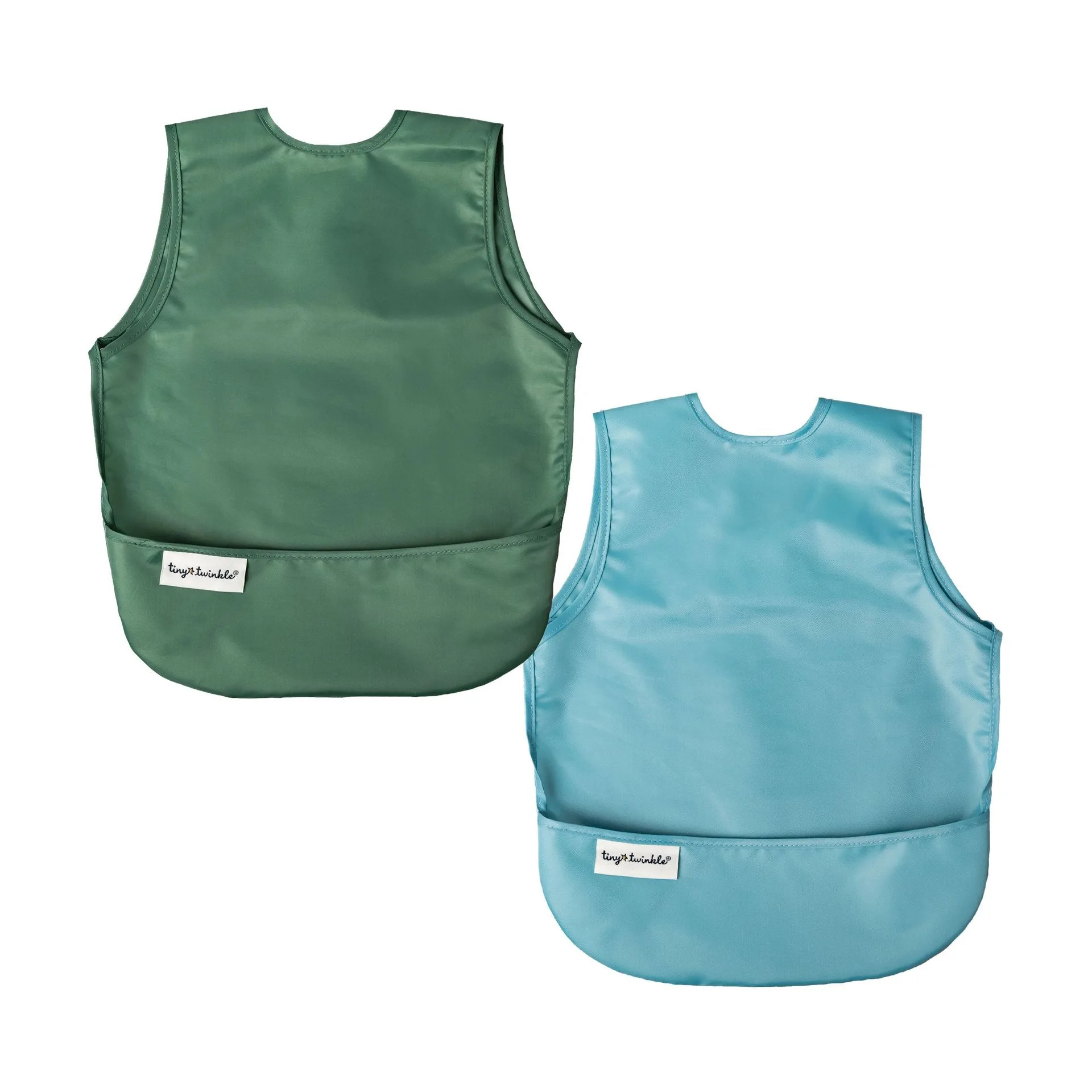
Baby bibs generally fall into three jobs: absorb drool, protect clothes during meals, and handle both on the go. Drool bibs are usually soft fabric, often cotton or muslin, and are designed to sit lightly against the neck for long stretches. Mealtime bibs need a surface that either absorbs a lot or wipes clean, and many add a catch pocket to keep food off the lap. Combination bibs try to do both, but they often trade some absorbency for easier cleaning.
The right choice depends on your baby's stage. A newborn who spits up needs a soft bib that will not irritate skin. A six-month-old starting solids needs a bib that can handle texture and volume. A teething baby who chews on everything may need a bib plus a tethered teether so the chewing happens on a safe object rather than on fabric.
- Keep at least two drool bibs and two mealtime bibs in rotation so one is always clean and dry.
- If your baby is between stages, start with a soft fabric bib and add a wipe-clean bib once solids begin.
Bib materials guide: cotton, muslin, silicone, and natural rubber
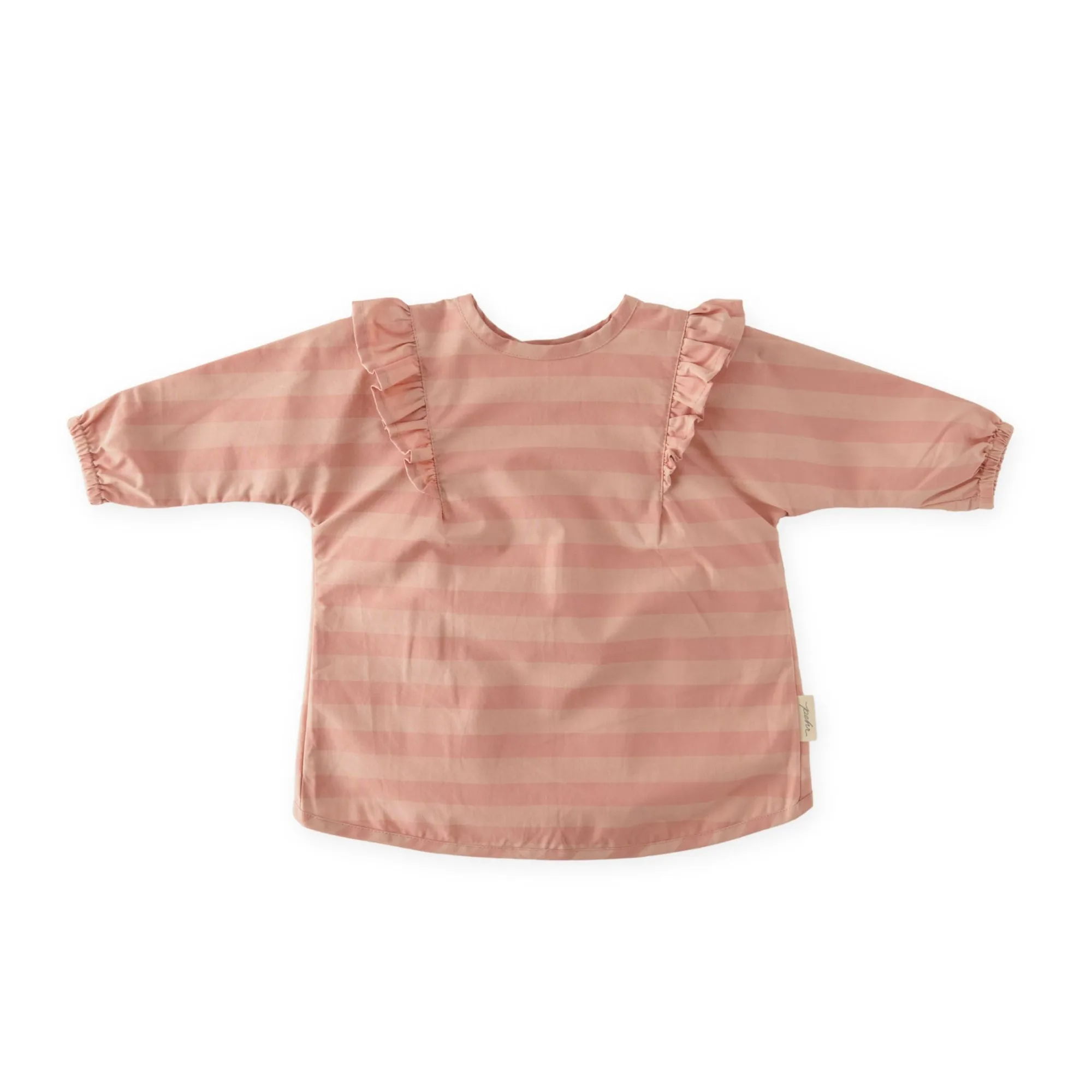
Cotton and muslin are the classic bib materials because they are soft, breathable, and absorbent. A three-layer cotton bib with a muslin front, a muslin interlining, and a towel back is designed to keep a baby dry while staying comfortable. These bibs are gentle on skin and easy to wash, but they will soak through during a heavy meal if you do not change them. Look for OEKO-TEX certified cotton if you want a documented safety standard.
Silicone and natural rubber bibs are the wipe-clean option. They do not absorb liquid, so they are best for messy solids rather than drool. Food-grade silicone is durable and dishwasher-friendly, while natural rubber is soft and flexible but may have a shorter lifespan with heavy daily use. Both materials can be rinsed and reused quickly, which reduces laundry. The trade-off is that they feel firmer against the neck and may not suit a baby who dislikes that sensation.
- Choose cotton or muslin for drooling and light spitups; choose silicone or natural rubber for starting solids.
- Check the label for OEKO-TEX certification on fabric bibs if you want an independent safety standard.
- Avoid guessing about a material's absorbency if the product page does not state layers or fabric content.
Bib closure types: snap, hook-and-loop, and tie
Closures decide how quickly you can get a bib on and off, and how well it stays put. Hook-and-loop is the fastest and most adjustable, which helps during a wriggly change, but it can snag other fabrics in the wash and may lose grip over time. Snaps are secure and smooth, but you need to line them up correctly, and some babies can pull them open once they are older. Tie closures are simple and adjustable but slower to fasten and easier for a toddler to undo.
For drooling, a snap or hook-and-loop closure that sits flat under the chin is usually the most comfortable. For mealtime, a snap closure on a wipe-clean bib is often easier to rinse without the strap absorbing food. If your baby is a determined puller, look for a closure that sits at the back of the neck rather than the side.
- Hook-and-loop is fastest for newborns and wriggly babies.
- Snaps are tidier for meals and easier to wipe clean.
- Tie closures suit older babies who leave bibs alone, but they are slower in a hurry.
When to use each bib type
Use a soft cotton or muslin bib during the newborn and drooling stages, when the main job is absorbing saliva and small spit-ups. These bibs should be thin enough to lie flat under a onesie or sleep sack and soft enough to wear for long periods. Keep a few in the diaper bag for outings, and change them as soon as they feel damp to protect the skin underneath.
Switch to a wipe-clean bib with a catch pocket when you introduce purees and soft solids. This is when volume and texture increase, and a fabric bib will soak through quickly. A pocket bib catches dropped food before it reaches the lap, which cuts down on outfit changes. For teething babies who chew on bib straps, pair the bib with a tethered teether so they have a safe object to mouth.
- Drooling stage: soft fabric bib, changed often.
- Starting solids: wipe-clean bib with a catch pocket.
- Teething stage: bib plus a tethered teether to redirect chewing.
Fit guidance: how a bib should sit
A well-fitting bib sits flat against the chest without gaping at the neck. The neck opening should be snug enough that food and drool do not slide underneath, but loose enough that you can slide one finger between the bib and the neck. If the bib rides up or twists, the closure is either too loose or positioned wrong for your baby's shape. Adjustable closures help, but a bib that only fits on the tightest setting is too big.
Length matters too. A bib that ends above the belly leaves the lap exposed during meals, while an overly long bib can bunch up when your baby sits. For drooling, a shorter bib that tucks under the chin is usually enough. For meals, look for a bib that covers from the neck to below the chest and has a pocket that stays open rather than collapsing flat.
- You should be able to fit one finger between the bib and the neck.
- For meals, choose a bib that reaches below the chest and keeps its pocket open.
- If the bib twists or rides up, try a different closure position before sizing up.
Decision rules for choosing a baby bib
- If the main problem is drool: Choose a soft cotton or muslin bib with a snap or hook-and-loop closure that lies flat. Look for multiple layers if the product page states them, and change the bib as soon as it feels damp. Prioritize absorbency and skin comfort over wipe-clean surfaces.
- If the main problem is starting solids: Choose a wipe-clean bib with a catch pocket that stays open. Silicone and natural rubber are easy to rinse, while a fabric bib with a towel back can work for lighter meals if you change it promptly. Prioritize a pocket and easy cleaning over softness.
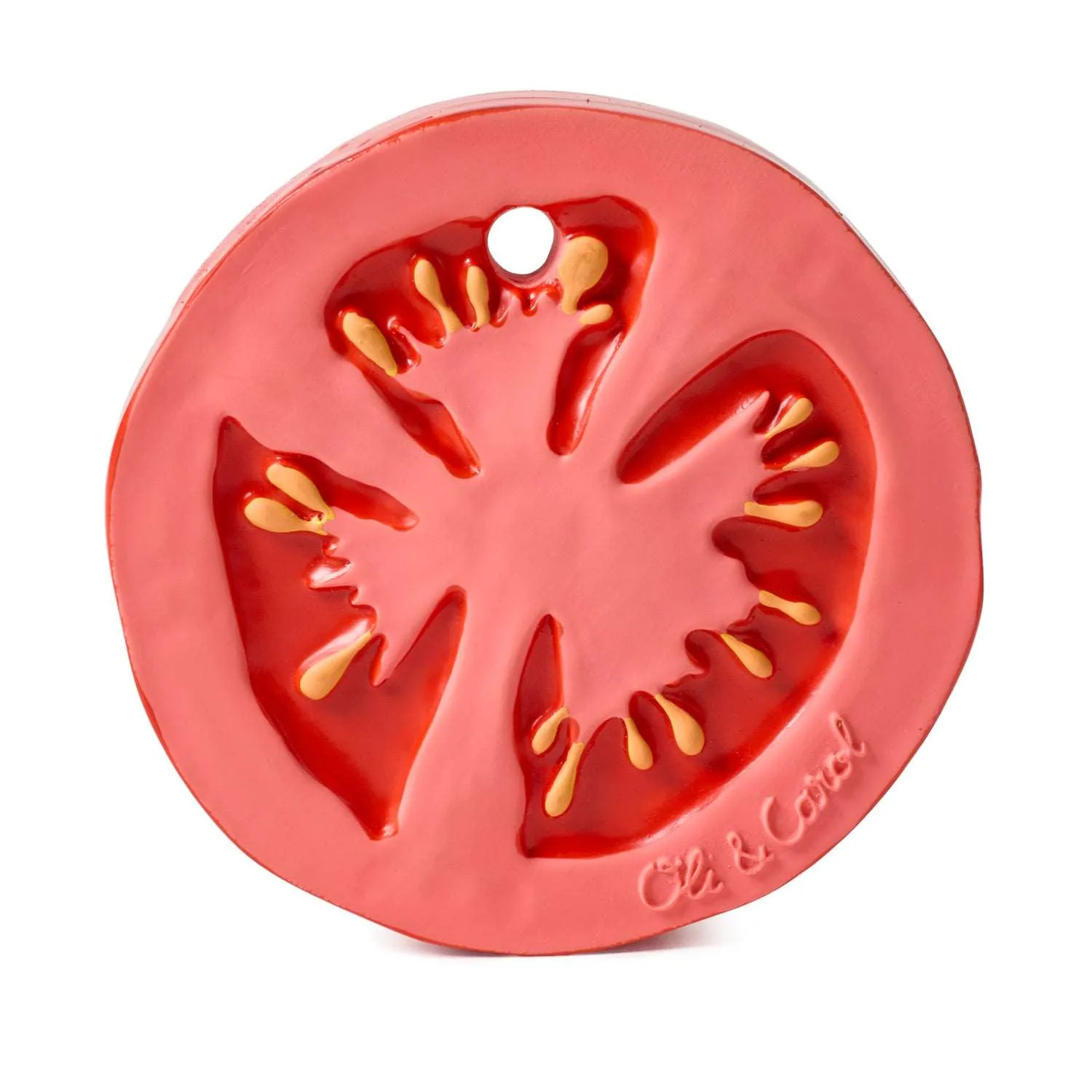
- If your baby pulls at the bib or chews the strap: Check the closure position and consider a back-closing snap. Pair the bib with a tethered teether such as Renato the Tomato Baby Teether so your baby has a safe chewing option. Redirect chewing to a teether rather than relying on the bib to survive it.
- If you are unsure about material safety: Look for OEKO-TEX certification on fabric bibs and food-grade or natural rubber claims on silicone alternatives. If the product page does not state the material or certification, treat that as a missing detail rather than assuming it is safe. Buy from listings that state their materials and certifications clearly.
Product facts that show these choices in practice
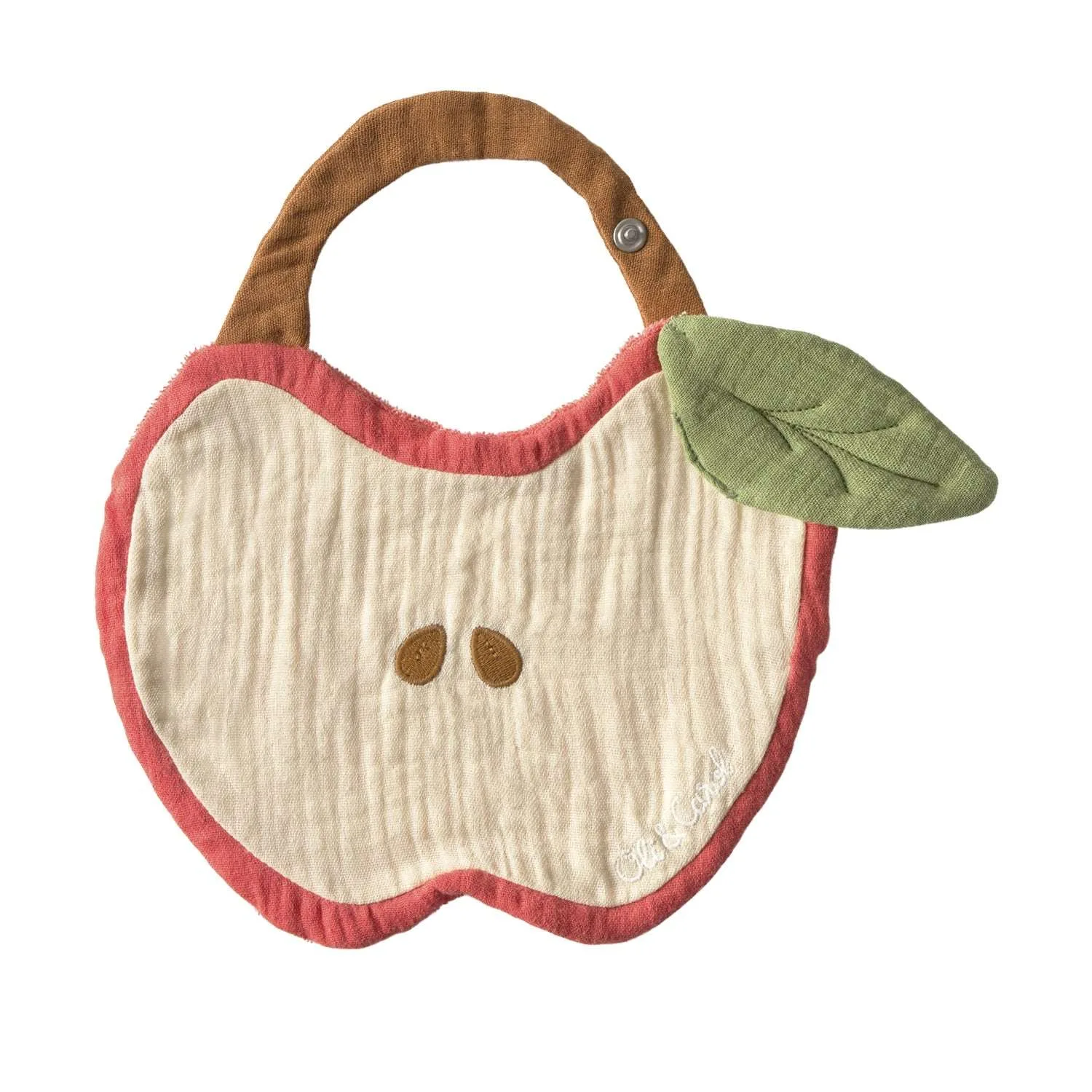
- Pepa The Apple Bib: Made from 100% cotton (OEKO-TEX certified), one size, with three layers: cotton muslin in front, cotton muslin interlining to keep babies dry, and a cotton towel back to absorb. This is a clear example of a drool and light-meal bib: the three-layer construction targets absorbency and dryness, while the OEKO-TEX certification gives a documented safety standard for the fabric.
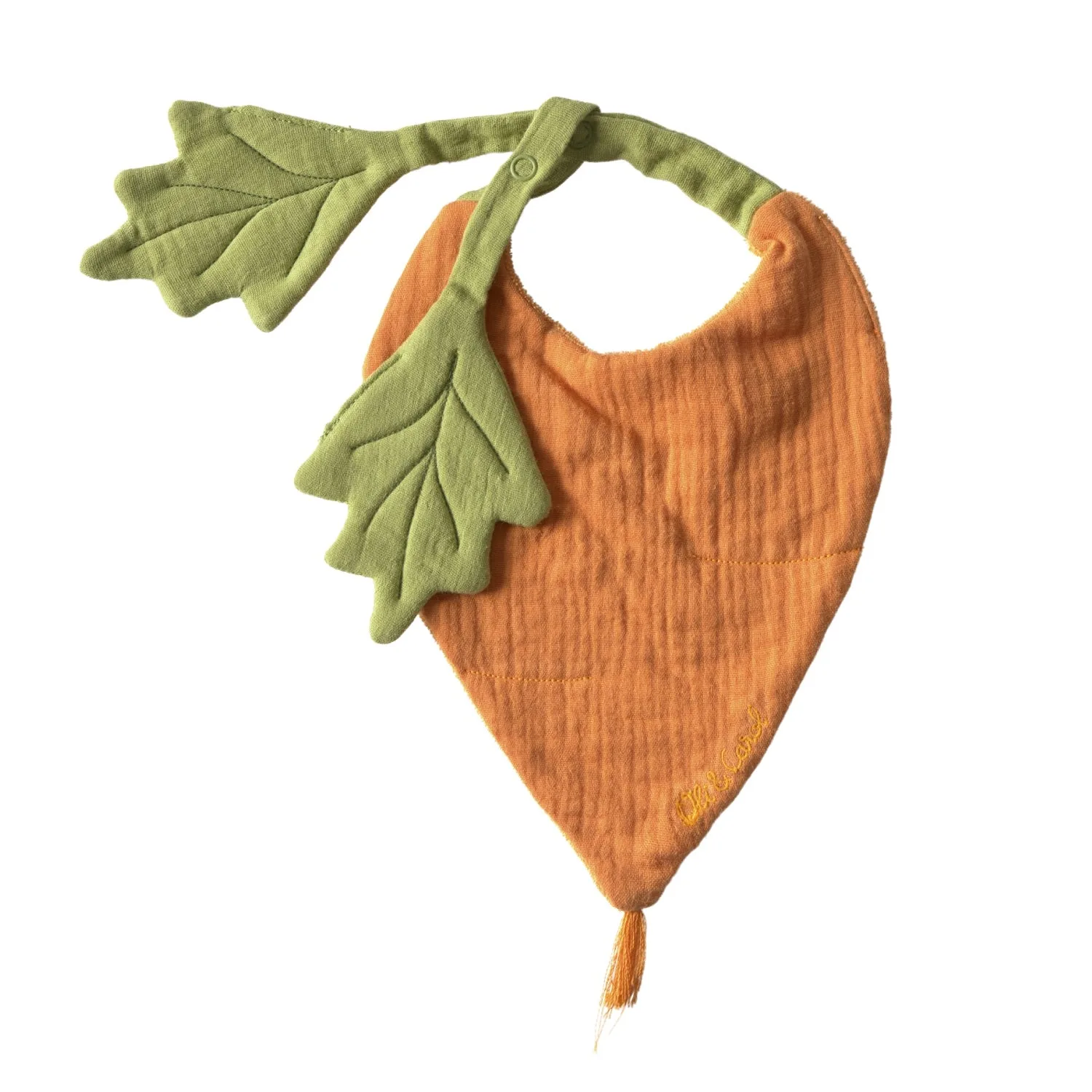
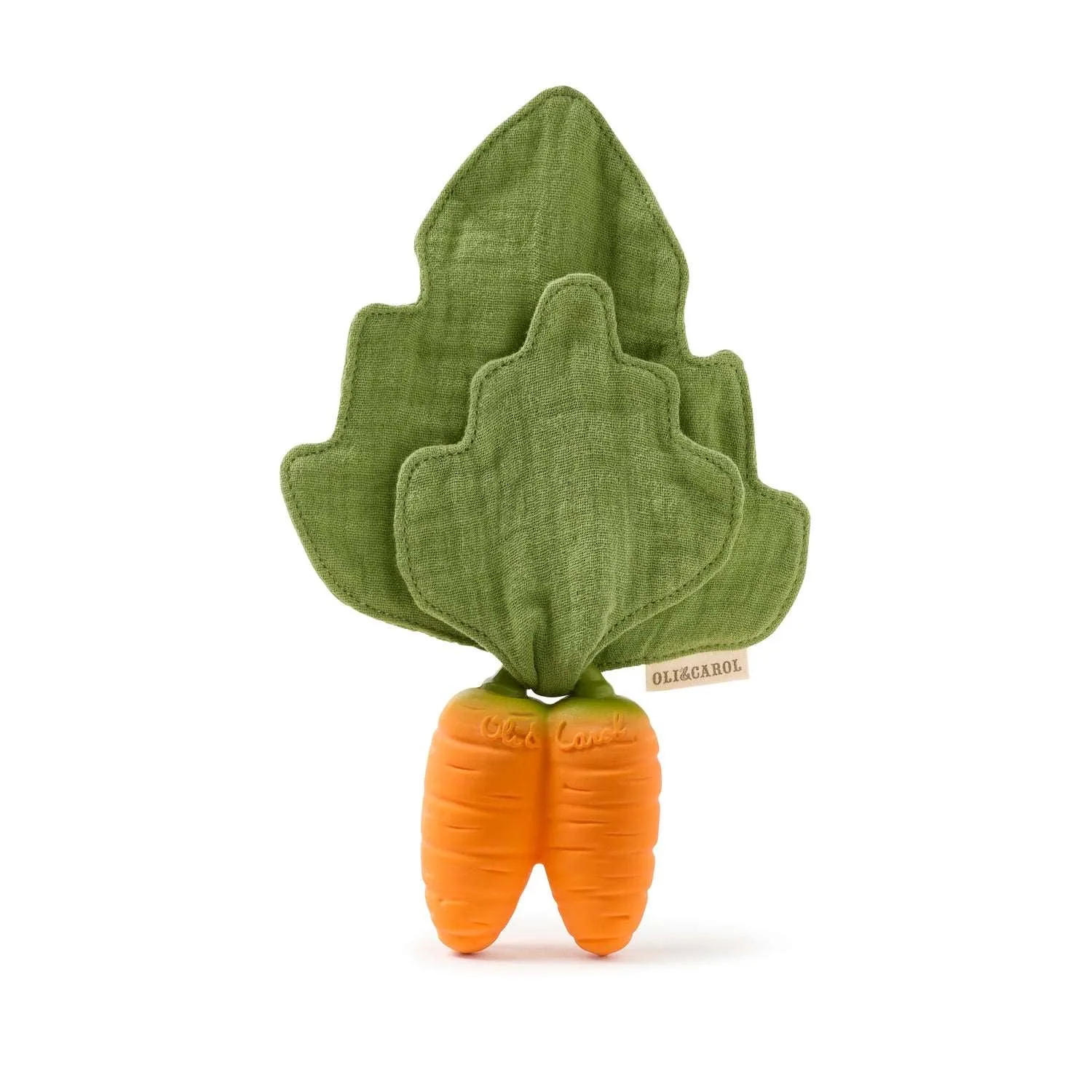
- Cathy The Carrot Bib: Made from 100% cotton (OEKO-TEX certified), one size, with the same three-layer build: cotton muslin front, cotton muslin interlining, and cotton towel back. If you want the same absorbent fabric bib in a different print, this is the sibling option. It shows that material and construction matter more than the design when you are comparing bibs for drooling.
- Renato the Tomato Baby Teether: A slice-of-tomato teether for teething, bath time, and sensory play, with realistic textures to stimulate senses and relieve teething gums; it is easy to hang from a strap and chew on the go. For babies who chew on bib straps, a tethered teether gives them a safe object to mouth. The strap-friendly design means you can clip it to a bib or carrier so it stays off the floor.
Who this guidance is for
Best for
- Parents who want a simple way to match bib type to their baby's current stage
- Caregivers building a small bib rotation for drooling, meals, and outings
- Anyone comparing fabric bibs with wipe-clean bibs before buying
Not for
- Parents looking for a single bib that works for every stage and every meal
- Shoppers who need specific size charts or custom-fit bibs, since the products shown here are one size
- Anyone seeking medical advice about reflux or feeding difficulties
A bib is a small purchase that solves a specific problem, so match the material and closure to the stage in front of you. Start with a soft cotton or muslin bib for drooling, add a wipe-clean bib with a pocket when solids begin, and keep a tethered teether handy for chewing. Replace bibs when the closure loosens or the fabric stays damp, and your laundry pile will thank you.