When you pick up a bag or can of cat food, one of the first things you see is the guaranteed analysis. This panel lists minimum percentages of crude protein and crude fat, and maximum percentages of crude fiber and moisture. But what do these numbers actually mean for your cat's health? Understanding the guaranteed analysis helps you compare foods, match your cat's life stage and activity level, and ensure they're getting balanced nutrition.
Many cat owners focus only on the ingredient list, but the guaranteed analysis provides a snapshot of the food's nutrient profile. In this guide, we'll break down each component—protein, fat, and fiber—explain how to interpret the percentages, and show you how to use this information to choose the best diet for your cat. Whether you're feeding a kitten, an adult, or a senior cat, knowing how to read these numbers empowers you to make smarter decisions.
What Is the Guaranteed Analysis?
The guaranteed analysis is a regulatory requirement on all pet food labels in the United States. It lists the minimum percentages of crude protein and crude fat, and the maximum percentages of crude fiber and moisture. Some labels also include maximum ash or omega-6 fatty acids. These values are determined by laboratory analysis and represent the nutrient content as fed—meaning they include the water content in the food.
It's important to note that the guaranteed analysis does not measure digestibility or quality of the ingredients. For example, a food may have 40% protein, but if that protein comes from low-quality sources, your cat may not absorb all of it. Still, the guaranteed analysis is a useful starting point for comparing products and ensuring basic nutritional adequacy.
- Crude protein: minimum percentage of protein in the food.
- Crude fat: minimum percentage of fat, a key energy source for cats.
- Crude fiber: maximum percentage of indigestible plant material.
- Moisture: maximum water content, often higher in wet foods.
Protein: The Foundation of Feline Nutrition
Cats are obligate carnivores, meaning they require a diet high in animal-based protein. Protein provides essential amino acids like taurine, arginine, and methionine that cats cannot synthesize on their own. The guaranteed analysis shows the minimum crude protein percentage. For adult cats, look for foods with at least 30-40% protein on a dry matter basis. Kittens and pregnant or nursing cats may need even higher levels.
When comparing wet and dry foods, remember that moisture dilutes the percentages. A wet food with 10% protein might actually have 40% protein on a dry matter basis after removing water. To calculate dry matter protein, divide the protein percentage by (100 minus moisture percentage) and multiply by 100. For example, a wet food with 10% protein and 78% moisture has about 45% protein on a dry matter basis. Brands like Open Farm offer recipes with high-quality animal proteins, such as their Harvest Chicken Freshly Crafted Meatballs for Dogs (though formulated for dogs, the principle applies to cat foods as well).
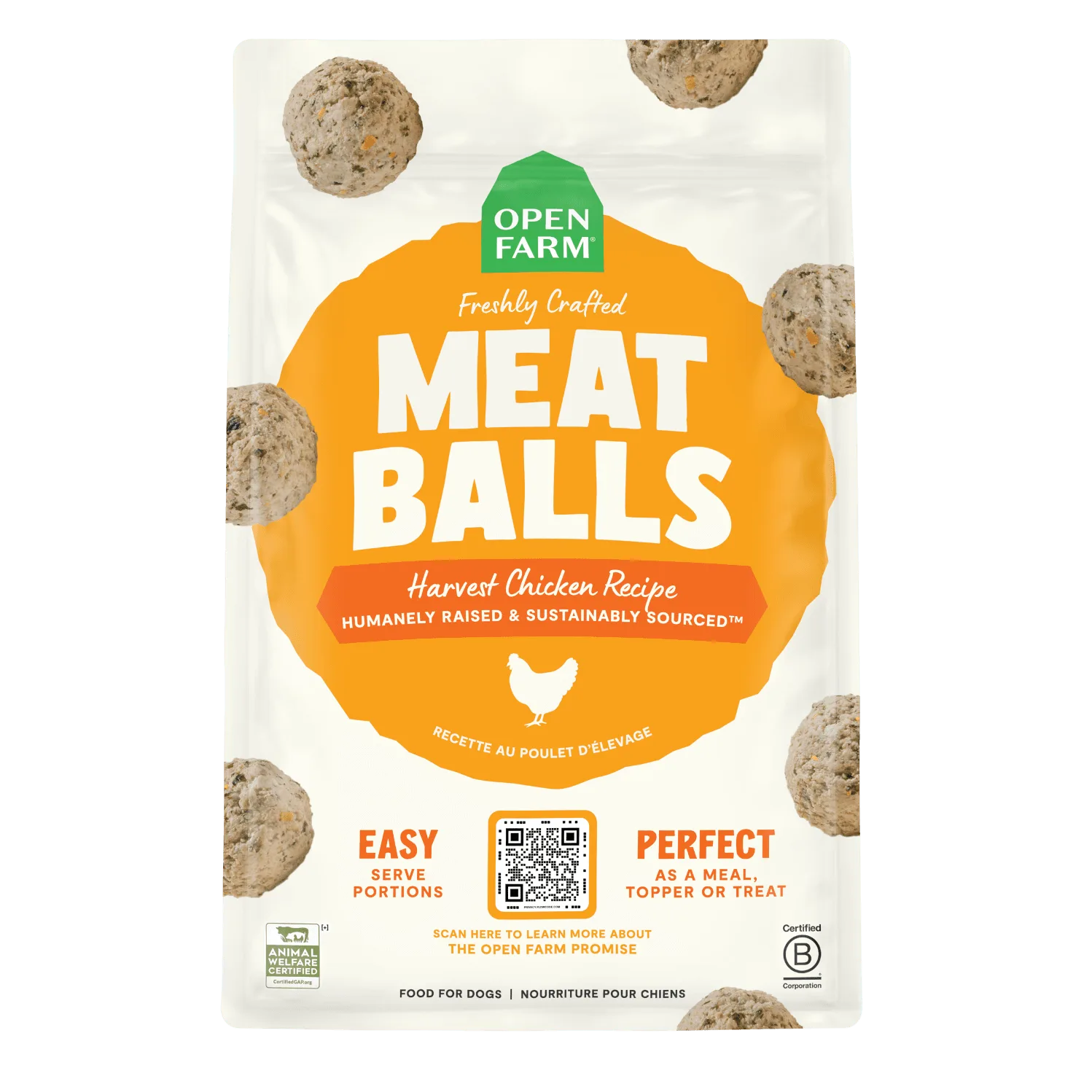
Harvest Chicken Freshly Crafted Meatballs for Dogs
- Look for named animal protein sources (chicken, salmon, turkey) rather than generic 'meat meal'.
- Kittens need more protein than adult cats—aim for 40%+ on a dry matter basis.
- Senior cats may benefit from slightly lower protein but still require high-quality sources.
Fat: Energy and Essential Fatty Acids
Fat is a concentrated energy source and provides essential fatty acids like omega-3 and omega-6, which support skin, coat, and immune health. The guaranteed analysis lists minimum crude fat. For most adult cats, a fat content of 15-25% on a dry matter basis is appropriate. Active cats and kittens may need higher fat for energy, while overweight cats may benefit from lower fat levels.
Omega-3 fatty acids, particularly EPA and DHA from fish sources, are beneficial for joint health, cognitive function, and reducing inflammation. Some cat foods include fish oil or salmon oil to boost these nutrients. For example, Open Farm's Icelandic Herring & Salmon Oil For Dogs is a popular supplement that can also be used for cats to add healthy fats. When reading the guaranteed analysis, check if the label specifies omega-3 or omega-6 percentages, as these are not always required but indicate added value.
- High-fat foods are calorie-dense—adjust portions to prevent obesity.
- Omega-3s from fish sources are more bioavailable than plant-based sources.
- If your cat has a sensitive stomach, start with moderate fat levels (around 15% dry matter).
Fiber: Digestive Health and Satiety
Fiber is listed as a maximum percentage in the guaranteed analysis because it is not a required nutrient for cats, but it plays a role in digestive health. Fiber helps regulate bowel movements, can aid in hairball control, and may promote a feeling of fullness. However, cats have a limited ability to digest fiber, so too much can lead to loose stools or reduced nutrient absorption.
Most cat foods contain 1-5% crude fiber on a dry matter basis. Foods with higher fiber (around 5-8%) are sometimes used for weight management or for cats with diabetes, as fiber slows glucose absorption. For healthy adult cats, moderate fiber is best. If your cat has a sensitive stomach, look for foods with easily digestible fiber sources like pumpkin or psyllium. Open Farm's Salmon Topper for Dogs is a low-fiber option that can add moisture and flavor, but always check the label for feline-specific formulas.
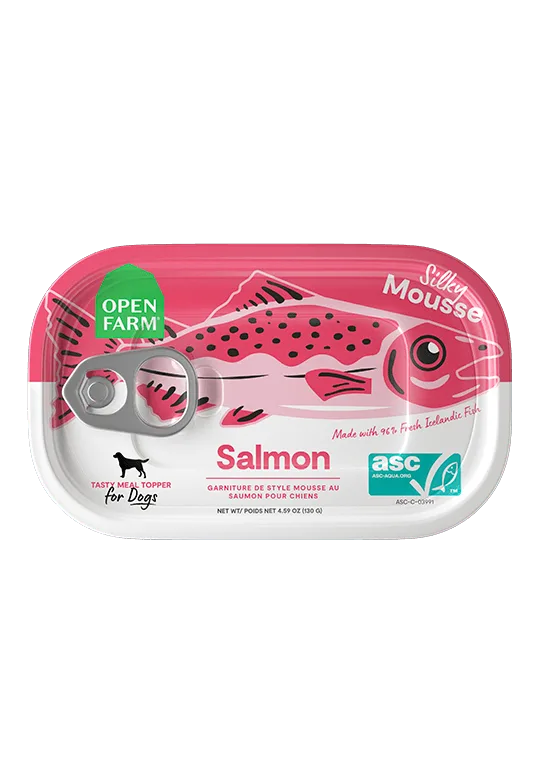
Salmon Topper for Dogs
- For hairball control, look for moderate fiber (3-4% dry matter) plus added moisture.
- Avoid extremely high-fiber foods for kittens, as they need calorie-dense diets.
- Cats with constipation may benefit from slightly higher fiber, but consult your vet first.
How to Compare Wet vs. Dry Food Using Guaranteed Analysis
Because wet food contains 75-85% moisture and dry food contains 10-12%, you cannot directly compare the percentages on the label. Always convert to dry matter basis. For example, a wet food with 10% protein and 78% moisture has 45% protein on a dry matter basis, while a dry food with 35% protein and 10% moisture has 39% protein. The wet food actually has higher protein density.
When choosing between wet and dry, consider your cat's hydration needs. Wet food provides additional water, which is beneficial for urinary tract health. However, dry food is more calorie-dense and convenient. Some owners feed a combination of both. For example, you might offer a complete wet food like Open Farm's Icelandic Salmon & Cod Wet Food for Dogs (though formulated for dogs, similar principles apply to cat wet foods) and supplement with a dry kibble that meets your cat's protein and fat targets.
- Use this formula: dry matter % = (label % / (100 - moisture %)) x 100.
- Wet foods generally have higher protein and fat on a dry matter basis than dry foods.
- Always ensure the food meets AAFCO nutrient profiles for your cat's life stage.
Beyond the Guaranteed Analysis: What Else to Look For
While the guaranteed analysis gives you a baseline, it doesn't tell you about ingredient quality, digestibility, or bioavailability. Look for foods that list specific animal proteins (like chicken, salmon, or turkey) as the first ingredient, and avoid foods with excessive fillers like corn, wheat, or soy. Also check for added taurine, an essential amino acid for cats, and probiotics for digestive health.
Certifications like the Global Animal Partnership (GAP) or Ocean Wise indicate ethical sourcing and sustainability. Open Farm is known for its transparent sourcing and third-party certifications. You can also consider variety packs or bundles to rotate proteins and prevent food fatigue. For example, the Pâté Variety Pack for Dogs offers multiple flavors, and similar concepts exist for cats. Rotation feeding can help ensure a broader nutrient profile and keep mealtime exciting.
- Look for AAFCO statement of nutritional adequacy on the label.
- Check for added vitamins and minerals, especially taurine for cats.
- Consider your cat's specific needs (e.g., urinary health, allergies) when choosing a formula.
Reading a cat food guaranteed analysis doesn't have to be overwhelming. By focusing on protein, fat, and fiber percentages—and converting to dry matter basis when comparing wet and dry foods—you can make informed choices that support your cat's health. Remember to consider ingredient quality, life stage, and any special dietary needs. For a high-quality option with transparent sourcing and balanced nutrition, explore the Salmon Topper for Dogs (also suitable for cats as a supplement) to add healthy fats and flavor to your cat's meals. Your feline companion will thank you for the extra care.