Beans are a cornerstone of Latin American cuisine, bringing protein, fiber, and rich flavor to countless dishes. Two beloved varieties—Cuban black beans and refried pinto beans—often spark lively debates among home cooks and food enthusiasts. Each has a distinct personality, from the brothy, aromatic complexity of Cuban-style black beans to the creamy, comforting richness of refried pintos.
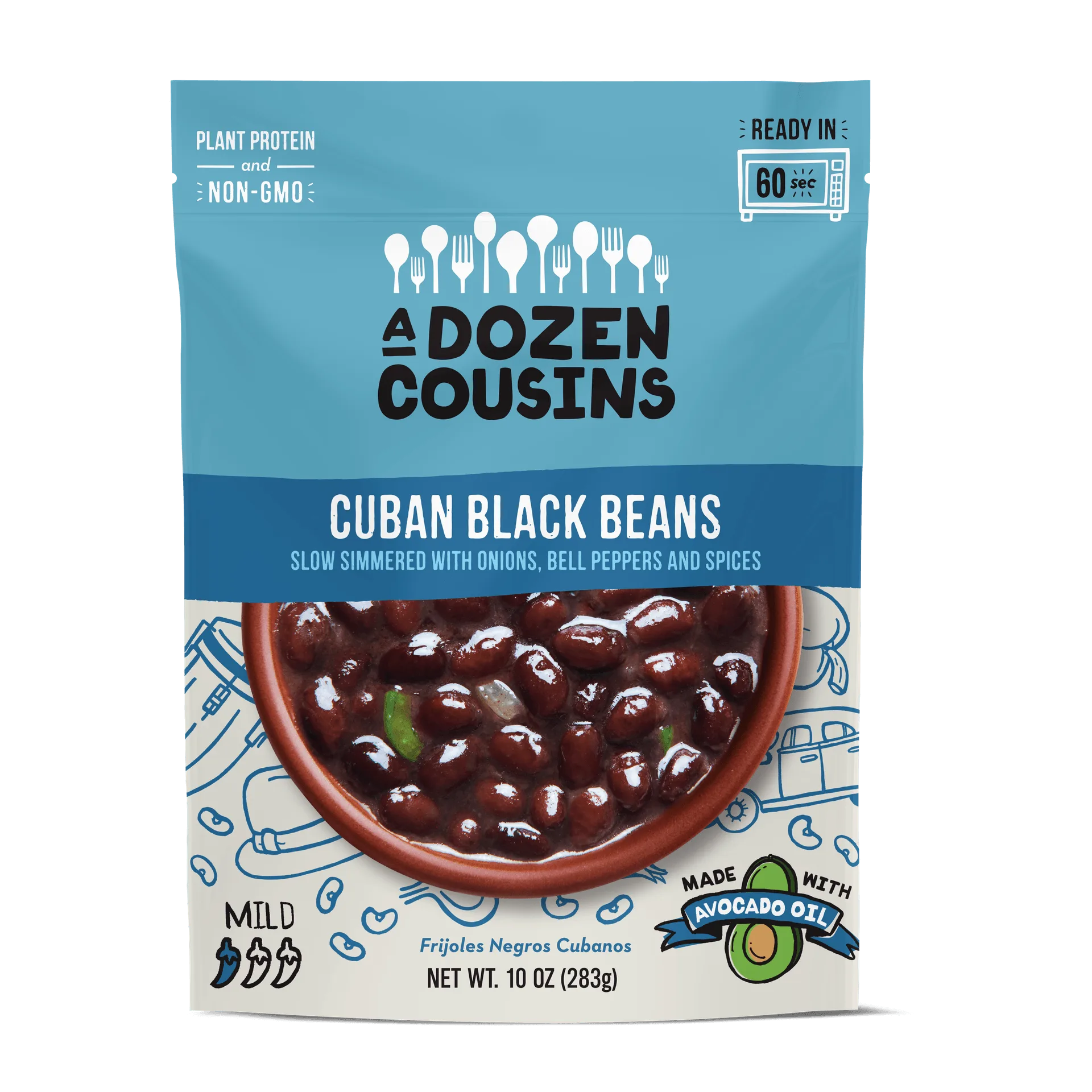
Cuban black beans
In this guide, we’ll break down the texture, flavor, and best uses of both bean styles. Whether you’re planning a hearty bowl, a side dish, or a main course, understanding these differences will help you choose the right bean for your meal. And with A Dozen Cousins' ready-to-eat seasoned beans, you can enjoy authentic taste without the long simmering time.
What Are Cuban Black Beans?
Cuban black beans, often called frijoles negros, are a staple in Caribbean cooking. They are typically simmered with sofrito—a blend of onions, garlic, bell peppers, and spices—along with cumin, oregano, and a splash of vinegar or citrus. The result is a savory, slightly tangy broth that coats each bean. The beans themselves remain whole and tender, offering a pleasant bite.
These beans are celebrated for their deep, earthy flavor and versatility. They can be served over rice, spooned into tacos, or enjoyed as a soup-like side. The cooking liquid is often as prized as the beans themselves, used to soak into rice or as a base for stews. A Dozen Cousins' seasoned beans capture this authentic profile, making it easy to enjoy Cuban black beans any night of the week.
- Whole beans in a flavorful, brothy sauce
- Key seasonings: garlic, cumin, oregano, citrus
- Ideal for rice bowls, soups, and grain salads
What Are Refried Pinto Beans?
Refried pinto beans are a classic of Mexican and Tex-Mex cuisine. The name can be misleading—the beans are not fried twice, but rather cooked, mashed, and then fried in fat (traditionally lard or oil) with seasonings like garlic, cumin, and chili. The result is a creamy, thick paste with a rich, savory flavor and a smooth, spreadable texture.
Unlike Cuban black beans, refried pintos are intentionally broken down. They can range from slightly chunky to velvety smooth, depending on preference. This makes them an ideal base for burritos, tostadas, and nachos, or as a dip for chips. A Dozen Cousins offers a Classic Refried Pinto Beans option that delivers that authentic, homemade taste without the labor.
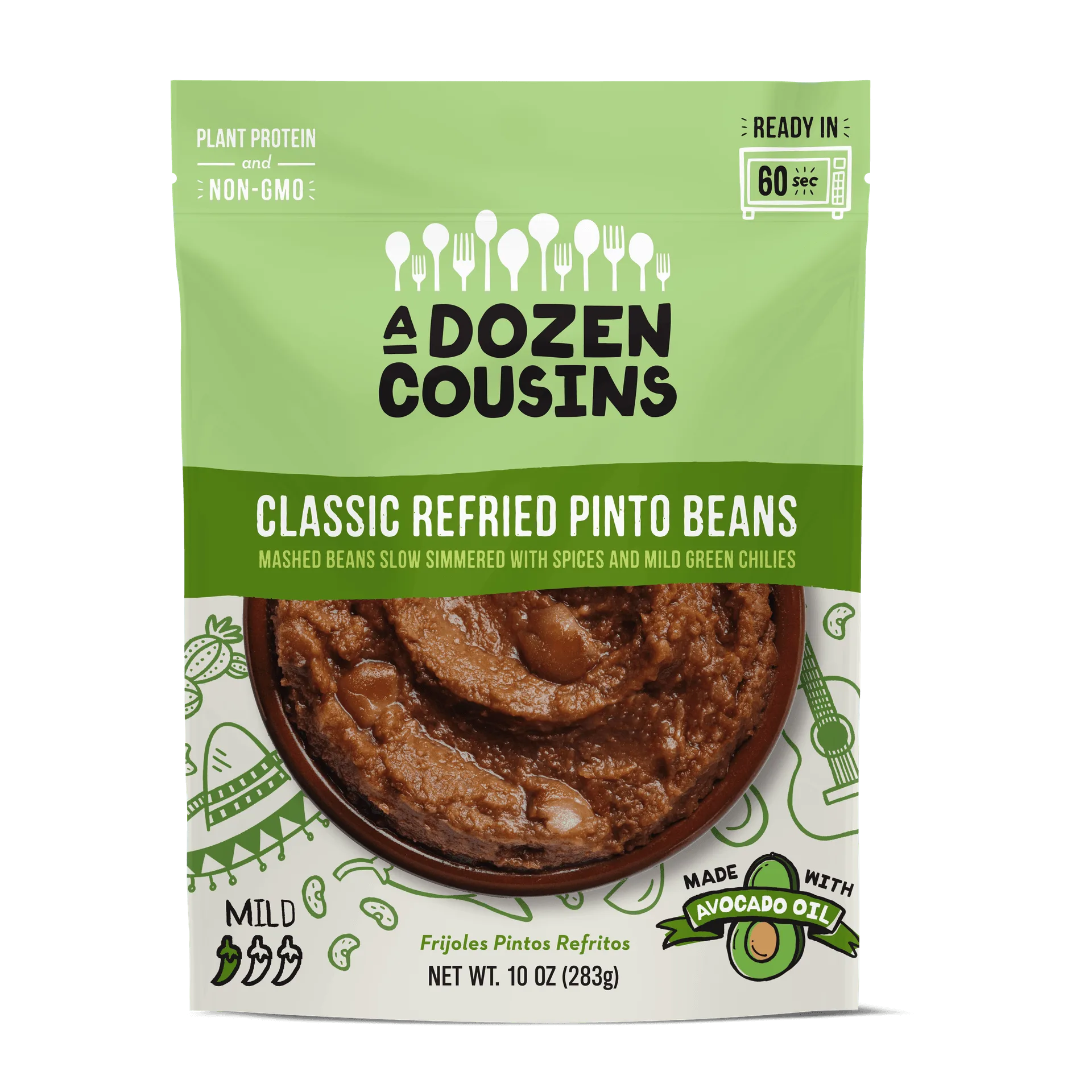
Classic Refried Pinto Beans
- Mashed or puréed beans with a creamy texture
- Rich, savory flavor from garlic, cumin, and fat
- Perfect for burritos, tacos, and as a spread
Texture Comparison: Whole vs. Creamy
The most obvious difference between Cuban black beans and refried pinto beans is texture. Cuban black beans are served whole in a light, flavorful broth. Each bean retains its shape and offers a slight firmness when bitten. This makes them excellent for dishes where you want distinct bean identity, such as in a rice bowl or as a topping for grilled meats.
Refried pinto beans, on the other hand, are intentionally broken down. The mashing process creates a creamy, almost buttery consistency that spreads easily. This texture is ideal for layering in burritos or smearing on a tostada. If you prefer a heartier bite, you can leave some beans partially mashed. For a completely smooth result, purée them fully.
Flavor Profile: Earthy vs. Rich
Flavor is where these two beans truly diverge. Cuban black beans are known for their complex, earthy taste, brightened by citrus and vinegar. The broth is savory but light, making it a perfect complement to rice or grilled proteins. The addition of bell peppers and oregano adds a subtle herbal note that sets it apart from other bean preparations.
Refried pinto beans offer a deeper, more indulgent flavor. The fat used in cooking—whether lard, butter, or oil—adds richness, while the mashing concentrates the bean flavor. Garlic and cumin are prominent, giving it a warm, comforting profile. This makes refried beans a favorite for hearty, filling dishes like burritos and enchiladas.
Best Uses for Cuban Black Beans
Cuban black beans shine in dishes where their broth can be appreciated. Serve them over white rice with a squeeze of lime for a classic Cuban meal. They also work beautifully in grain bowls, paired with roasted vegetables and avocado. The broth can be used to moisten rice or quinoa, adding flavor throughout.
For a quick weeknight dinner, use Cuban black beans as a base for a hearty soup. Add diced tomatoes, corn, and a dash of hot sauce for a satisfying bowl. They also make an excellent topping for baked potatoes or sweet potatoes, offering a savory contrast. A Dozen Cousins' seasoned beans make this effortless.
- Classic rice and beans (Moros y Cristianos)
- Grain bowls with roasted veggies
- Soups and stews
- Topping for baked potatoes
Best Uses for Refried Pinto Beans
Refried pinto beans are a staple in Mexican cuisine. Spread them on a warm tortilla for a quick quesadilla or use them as a base for nachos. Their creamy texture makes them ideal for layering in burritos, where they help bind other ingredients together. They also work as a dip for tortilla chips when thinned with a little broth.
For breakfast, refried beans are fantastic in a breakfast burrito with eggs, cheese, and salsa. They can also be used as a filling for enchiladas or as a side for grilled meats. The Classic Refried Pinto Beans from A Dozen Cousins offer that authentic, creamy consistency without the effort of starting from dried beans.
- Burritos and tacos
- Nachos and tostadas
- Breakfast burritos
- Side dish for grilled meats
Nutritional Comparison and Dietary Considerations
Both Cuban black beans and refried pinto beans are excellent sources of plant-based protein, fiber, and essential nutrients like iron and folate. However, there are slight differences. Black beans typically have a bit more fiber per serving, while pinto beans are slightly higher in protein. Both are low in fat when prepared without added oils or lard.
For those watching sodium or fat intake, check the preparation method. Traditional refried beans often use lard, but many modern versions use vegetable oil. A Dozen Cousins offers options that are gluten-free, non-GMO, and made with clean ingredients. The Bean Variety Pack (12 Pack) is a great way to sample both styles and find your favorite.
- Both high in fiber and protein
- Black beans: slightly more fiber
- Pinto beans: slightly more protein
- Check labels for added fats and sodium
How to Choose Between Them for Your Meal
Your choice between Cuban black beans and refried pinto beans depends on the dish you're making and the texture you prefer. If you want a brothy, whole-bean experience that pairs well with rice and light proteins, go with Cuban black beans. They are ideal for soups, bowls, and dishes where the bean's shape matters.
If you're after a creamy, spreadable bean that can anchor a burrito or serve as a dip, refried pinto beans are the way to go. They add richness and body to any dish. For the best of both worlds, consider keeping both in your pantry. A Dozen Cousins makes it easy with their range of seasoned beans, so you can switch between styles with zero hassle.
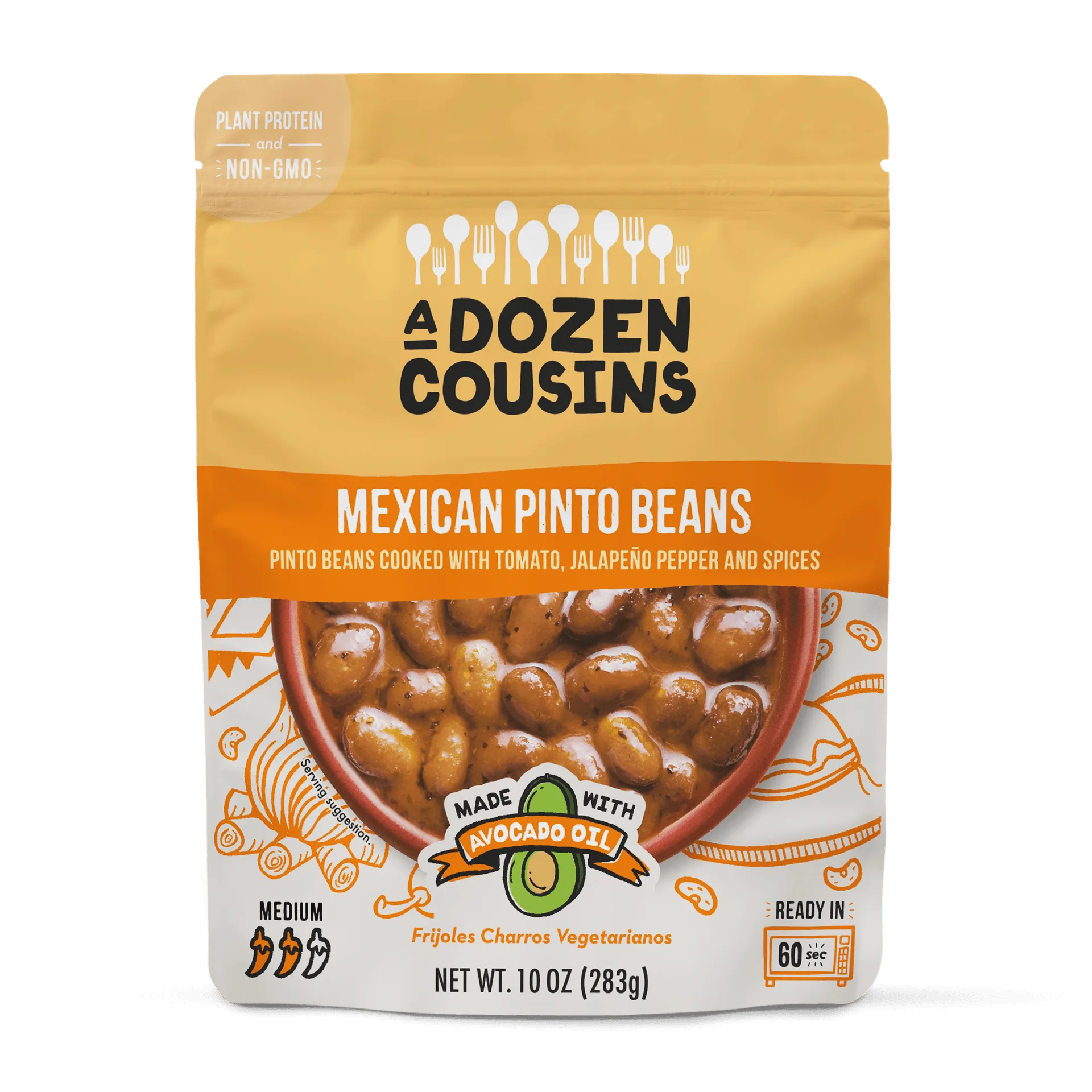
Whether you're team Cuban black beans or team refried pinto beans, both bring incredible flavor and nutrition to your table. The key is matching the bean style to your recipe and texture preference. Next time you're meal prepping or craving Latin comfort food, grab a pack of A Dozen Cousins' seasoned beans and enjoy authentic taste in minutes. Explore the Classic Refried Pinto Beans for a creamy classic, or try the Mexican Pinto Beans for a whole-bean option that's just as versatile.