Schnelle Antwort
Beginnen Sie bei den meisten rückenfreien und tief ausgeschnittenen Oberteilen mit einem gut sitzenden trägerlosen BH oder einem Rückenversteller für tiefe Ausschnitte, und wechseln Sie nur zu KlebebHs, wenn der Rücken des Kleidungsstücks vollständig offen ist. Wenn der Ausschnitt tief ist, suchen Sie nach einem Plunge- oder Tiefauschnitt-BH, anstatt einen normalen BH tiefer zu ziehen. Das Ziel ist, die Abdeckung des BHs an den Schnitt des Kleidungsstücks anzupassen, nicht einen BH für jedes Outfit zu erzwingen.
Rückenfreie und tief ausgeschnittene Oberteile verlangen von Ihrem BH etwas, wofür er nicht gemacht wurde: unsichtbar zu sein. Der Fehler, den die meisten machen, ist, zuerst den BH zu kaufen und zu hoffen, dass das Outfit mitspielt. Beginnen Sie stattdessen mit dem Schnitt des Kleidungsstücks—wie tief der Rücken fällt, wie tief der Ausschnitt sitzt und ob die Träger sichtbar wären—und wählen Sie dann den unkompliziertesten BH, der verborgen bleibt.
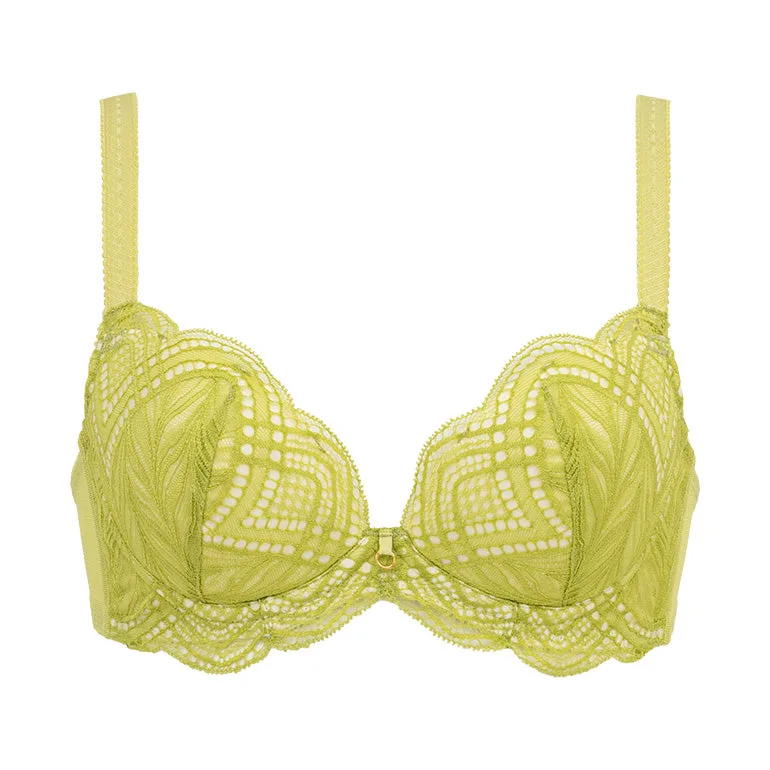
Dieser Leitfaden führt Sie in praktischen Schritten von der Messung des Rückenausschnitts bis zum Test der Bewegung. Dabei sehen Sie, wie bestimmte Stile wie der Naomi Push-Up Plunge Bra 24S2 und der Light Comfort Wireless Dress mit tiefen Ausschnitten und sauberen Rückenpartien umgehen—und wann ein einfacher Kleidungswechsel besser ist, als mit Klebepads zu kämpfen.
Light Comfort Wireless Dress
Schritt 1: Messen Sie den Rückenausschnitt, bevor Sie einkaufen
Ziehen Sie das Oberteil oder Kleid an und schauen Sie von hinten in den Spiegel. Achten Sie darauf, wo der Stoff endet: fällt der Rücken unter Ihr BH-Band, sitzt er auf mittlerer Rückenlinie oder öffnet er sich bis zur Taille? Ein BH für ein Kleid mit offenem Rücken braucht eine andere Lösung als ein Oberteil mit nur einem tiefen Ausschnitt. Messen Sie den vertikalen Abstand von Ihrer natürlichen BH-Bandlinie bis zum tiefsten Punkt des Rückens des Kleidungsstücks. Wenn dieser Abstand mehr als zwei Zoll beträgt, wird ein Standard-Band wahrscheinlich sichtbar sein.
This single measurement tells you which category to shop: a low-back converter for moderate dips, a strapless bra for open shoulders but a covered back, or adhesive cups for a fully open back. Skipping this step is the most common reason people buy a bra that still peeks out.
- Checkpoint: if the back opening crosses your bra band, a regular bra will show no matter how you adjust the straps.
Step 2: Match the neckline to the cup shape
A low neckline needs a cup that follows it, not one you tug down. Plunge and low-front bras are cut with a lower center gore and shorter cups so the fabric of your top can sit above them without gaping. If you pull a full-coverage bra lower to hide it, the band rides up in back and the cups wrinkle—two fit problems at once.
For a deep V, look for a plunge style with front shallow wires, which keep the cups anchored while allowing a lower front. The Naomi Push-Up Plunge Bra 24S2 is built this way, with front shallow wires and a push-up effect toward the center. That construction is what lets it sit under a low neckline without the top edge of the cup showing.
- Common mistake: sizing up in the band to make a full-cup bra sit lower. It won't stay put, and the back will ride up.
Step 3: Decide between strapless, low-back converter, or adhesive
Strapless bras work when your shoulders are bare but the back is covered. They rely on a firm band, so the fit has to be snug—if your usual band size slides down, go down a band size and up a cup. A low-back converter attaches to your existing bra straps and pulls the band lower in back; it's a good middle ground for dresses with a moderate dip.
Adhesive bras are the only option for a fully open back, but they have real tradeoffs: they offer limited lift, can lose tackiness with sweat, and aren't reusable forever. If your top has a low neckline and an open back, you may need to choose which feature matters more, or look for a garment that solves both.
- Checkpoint: test a strapless bra by raising your arms and bending forward. If it shifts more than a finger's width, the band is too loose.
Step 4: Consider a shaping dress as a one-piece solution
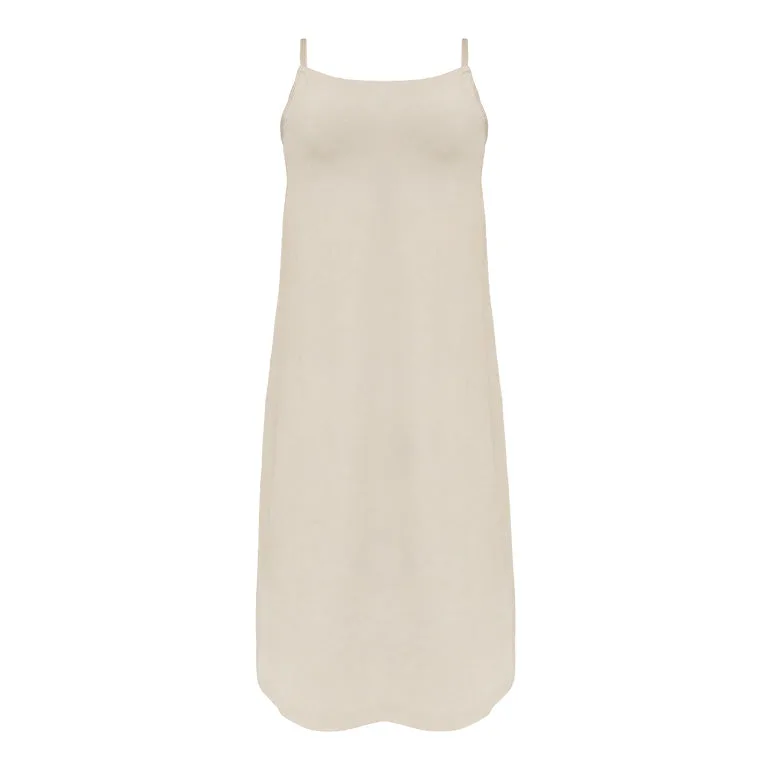
Sometimes the simplest answer isn't a bra at all. A shaping bra dress combines coverage and smoothing in one layer, so there's no band to hide and no straps to convert. The Light Comfort Wireless Dress is an A-line shaping dress with a Cool Touch Function for a silky-smooth feel, a gently fitting U-shape neckline, and molded cups at the top edges. It can also be worn as a slip dress beneath sheer clothing.
This approach works best when your outer garment is a dress or a top that covers the shoulders. It won't help under a backless top, but for low-cut dresses and sheer layers, it removes the bra-hiding problem entirely. The tradeoff is less lift than a wired plunge bra, so choose based on whether you want shaping or a pushed-up shape.
- Practical tip: if you go this route, check that the dress's neckline sits below your outer garment's neckline, not above it.
Step 5: Test the full outfit in motion
Put on the complete look—bra, top, and anything underneath—and move the way you actually will: sit, reach overhead, hug someone, twist. Look for the bra edge appearing at the back, cups gaping at the top, or the band sliding down. Five minutes of movement catches most problems before you leave the house.
If something shifts, adjust one variable at a time. Tighten the band before you change the cup. If the back still shows, switch to a lower-back solution rather than pulling the band down. If the front gaps, the cup is likely too large or the wrong shape for your neckline.
- Checkpoint: if you have to adjust the bra more than once in five minutes, it's the wrong style for that garment.
Your backless and low-cut bra checklist
- Measure the back dip: Stand in the garment and note how far below your bra band the back opening falls. More than two inches means you need a low-back or adhesive solution. If the back crosses your band, skip standard bras entirely.
- Match the cup to the neckline: Choose a plunge or low-front bra for deep V necks instead of tugging a full-coverage bra down. Look for front shallow wires to keep the cups anchored. A cup that follows the neckline stays hidden; one you pull down will ride up in back.
- Pick your support type: Strapless for bare shoulders with a covered back, low-back converter for moderate dips, adhesive for a fully open back. Each has tradeoffs in lift and security. Adhesive is the only option for fully open backs, but it offers the least lift.
- Consider a one-piece shaping dress: For low-cut dresses and sheer layers, a shaping bra dress like the Light Comfort Wireless Dress removes the need to hide a band or straps. Best when your outer garment covers the shoulders and you want smoothing over lift.
- Test in motion: Sit, reach, twist, and hug while wearing the full outfit. Adjust the band before changing the cup, and switch styles if the bra needs constant fixing. If you adjust more than once in five minutes, the style is wrong for that garment.
Products that solve specific backless and low-cut problems
- Naomi Push-Up Plunge Bra 24S2: Designed with Step 2 shaping, front shallow wires, and a push-up effect toward the center, crafted from stretch Russell lace with arch-shaped scallops and a herringbone pattern inspired by the Palace of Versailles. The low center and shallow wires let it sit under a plunging neckline without the cup edge showing, while the push-up shape adds lift—useful when you want a low-cut bra option that still flatters.
- Light Comfort Wireless Dress: A shaping bra dress with an A-line silhouette, Cool Touch Function, a gently fitting U-shape neckline, and molded cups at the top edges; it can also be styled as a slip dress beneath sheer clothing. It replaces a separate bra and slip in one layer, so there's no band or strap to hide under low-cut dresses and sheer tops—though it offers a softer, wireless shape rather than a pushed-up one.
This single measurement tells you which category to shop: a low-back converter for moderate dips, a strapless bra for open shoulders but a covered back, or adhesive cups for a fully open back. Skipping this step is the most common reason people buy a bra that still peeks out.