Schnelle Antwort
Natriumhyaluronat-Augentropfen sind eine Art von Hyaluronsäure-Augentropfen, die Wasser länger auf der Augenoberfläche halten als viele herkömmliche Gleitmittel und sich daher für häufige oder anhaltende Trockenheit eignen. Herkömmliche Tropfen verwenden oft einfachere Gleitmittel und können bei gelegentlichem Sandkorngefühl ausreichen. Wenn Sie Tropfen mehr als viermal täglich verwenden oder Kontaktlinsen tragen, wählen Sie eine konservierungsmittelfreie Natriumhyaluronat-Formel wie OptiChoice oder Hylo-Fresh.
Was die beiden tatsächlich unterscheidet
Herkömmliche Benetzungstropfen basieren typischerweise auf Cellulosederivaten, Polyvinylalkohol oder ähnlichen Substanzen, die die Augenoberfläche benetzen. Natriumhyaluronat ist ein größeres Molekül, das ein Vielfaches seines Gewichts an Wasser bindet, sodass es eine hydratisierte Schicht bildet, die länger angenehm bleiben kann. Der Nachteil ist die Textur: Natriumhyaluronat-Tropfen können sich beim ersten Blinzeln etwas dickflüssiger anfühlen, während herkömmliche Tropfen oft leichter wirken, aber häufiger nachgetropft werden müssen.
Die Konzentration ist die Variable, die die meisten übersehen. Ein Tropfen mit 0.1% Natriumhyaluronat ist leichter und setzt sich schneller, während ein Tropfen mit 0.2% mehr Polsterung bietet. Keines ist universell besser; die richtige Wahl hängt davon ab, wie oft Ihre Augen trocken sind und ob Sie Linderung bei Bildschirmarbeit oder über Nacht benötigen.
Konservierungsstoffe: die wichtigere Entscheidung als der Wirkstoff
Viele Standardtropfen enthalten Konservierungsstoffe wie Benzalkoniumchlorid, die die Augen reizen können, wenn sie mehr als vier- bis sechsmal täglich verwendet werden. Konservierungsmittelfreie Augentropfen gibt es in Einzeldosis-Ampullen oder in Mehrdosenflaschen mit einem Einwegventil, das die Lösung ohne Konservierungsstoffe steril hält. Wenn Sie Tropfen häufig anwenden, ist das Konservierungsmittel wichtiger als die Frage, ob der Gleitstoff Natriumhyaluronat oder ein Standardwirkstoff ist.
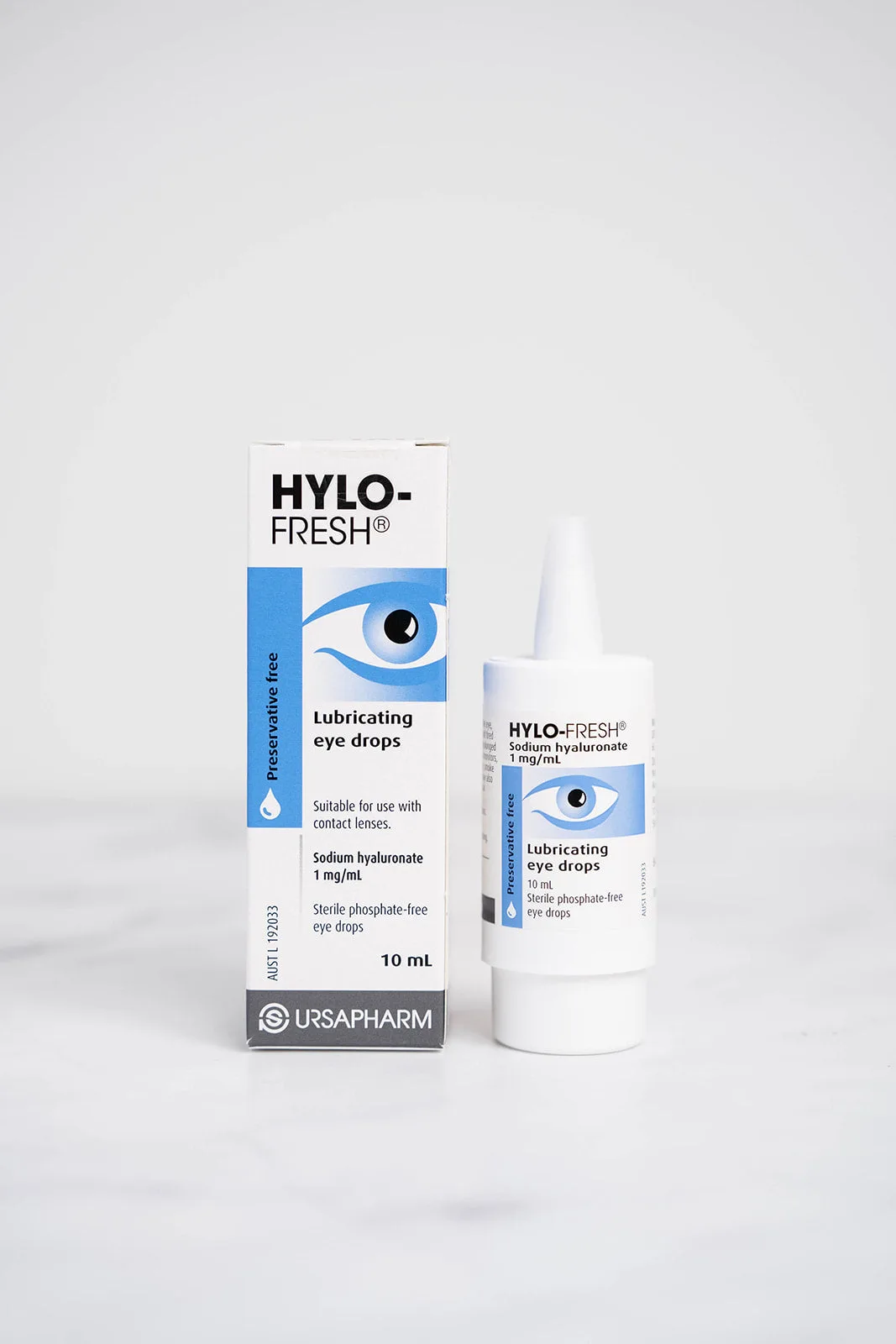
Für Kontaktlinsenträger: Achten Sie auf die Angaben phosphatfrei und konservierungsmittelfrei. Hylo-Fresh ist ohne Konservierungsstoffe und Phosphate formuliert, was es mit Linsen kompatibel und für empfindliche Augen schonender macht.
So lesen Sie ein Natriumhyaluronat-Etikett
Achten Sie auf den Prozentwert nach dem Inhaltsstoffnamen. Eine Formel mit 0.1% ist ein guter Ausgangspunkt für leichte Trockenheit oder tagsüber, während 0.2% bei stärkerer oder anhaltender Trockenheit passt. Prüfen Sie auch das Volumen: Eine 10ml-Flasche ist praktisch für Tasche oder Schreibtisch, aber wenn Sie mehr als viermal täglich Tropfen benötigen, reduzieren Einzeldosisbehältnisse oder Mehrdosenflaschen ohne Konservierungsstoffe die Konservierungsstoffbelastung.
Ignore marketing words like premium or advanced. The useful facts are concentration, preservative status, phosphate status, and whether the bottle is designed for multi-dose preservative-free use.
Warm compresses work alongside drops, not instead of them
If your dryness comes with blepharitis, styes, or meibomian gland blockage, drops alone may not be enough. A warm compress helps loosen oil in the eyelid glands so your natural tear film works better. The Eye Doctor Antibacterial Stye Relief Compress is reusable and uses Sterileyes antibacterial protection, which is useful when you need repeated warm compresses for a stye or chalazion. Aelo Self-Heating Eye Masks warm to about 40°C for around 20–30 minutes and need no microwave, which makes them easier for travel or a hands-off evening routine.
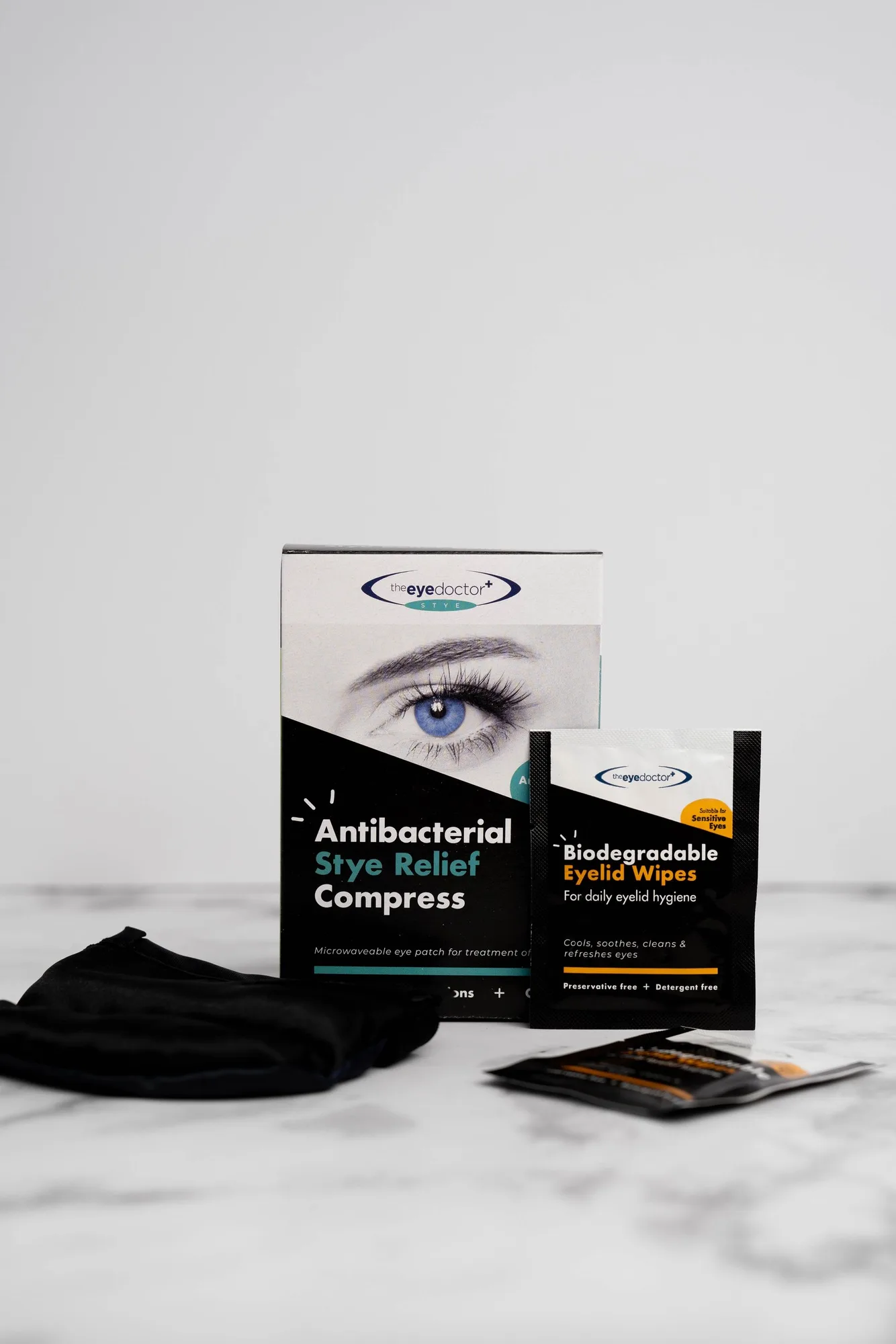
The Eye Doctor Antibacterial Stye Relief Compress
Decision rules for choosing between them
- Use fewer than four drops a day: A standard lubricating drop with preservatives is usually fine and costs less. Switch to preservative-free only if you notice stinging or your eyes feel worse after each dose. Start simple; upgrade only if frequency or comfort demands it.
- Use drops four or more times a day: Choose a preservative-free sodium hyaluronate drop. Frequent dosing with preserved drops raises the risk of surface irritation, and sodium hyaluronate holds moisture longer so you may need fewer applications. Preservative-free is the priority; concentration is secondary.
- Wear contact lenses: Pick a preservative-free and phosphate-free formula such as Hylo-Fresh 0.1%. Apply before inserting lenses or as directed, and avoid preserved drops unless the label states lens compatibility. Check both preservative and phosphate status before buying.
- Have gritty, sore eyes with eyelid crusting or a stye: Add a warm compress to your routine. Use an antibacterial reusable compress for styes or a self-heating mask for general eyelid hygiene, and keep using preservative-free drops during the day. Drops and compresses solve different parts of the problem.
Products that match these differences
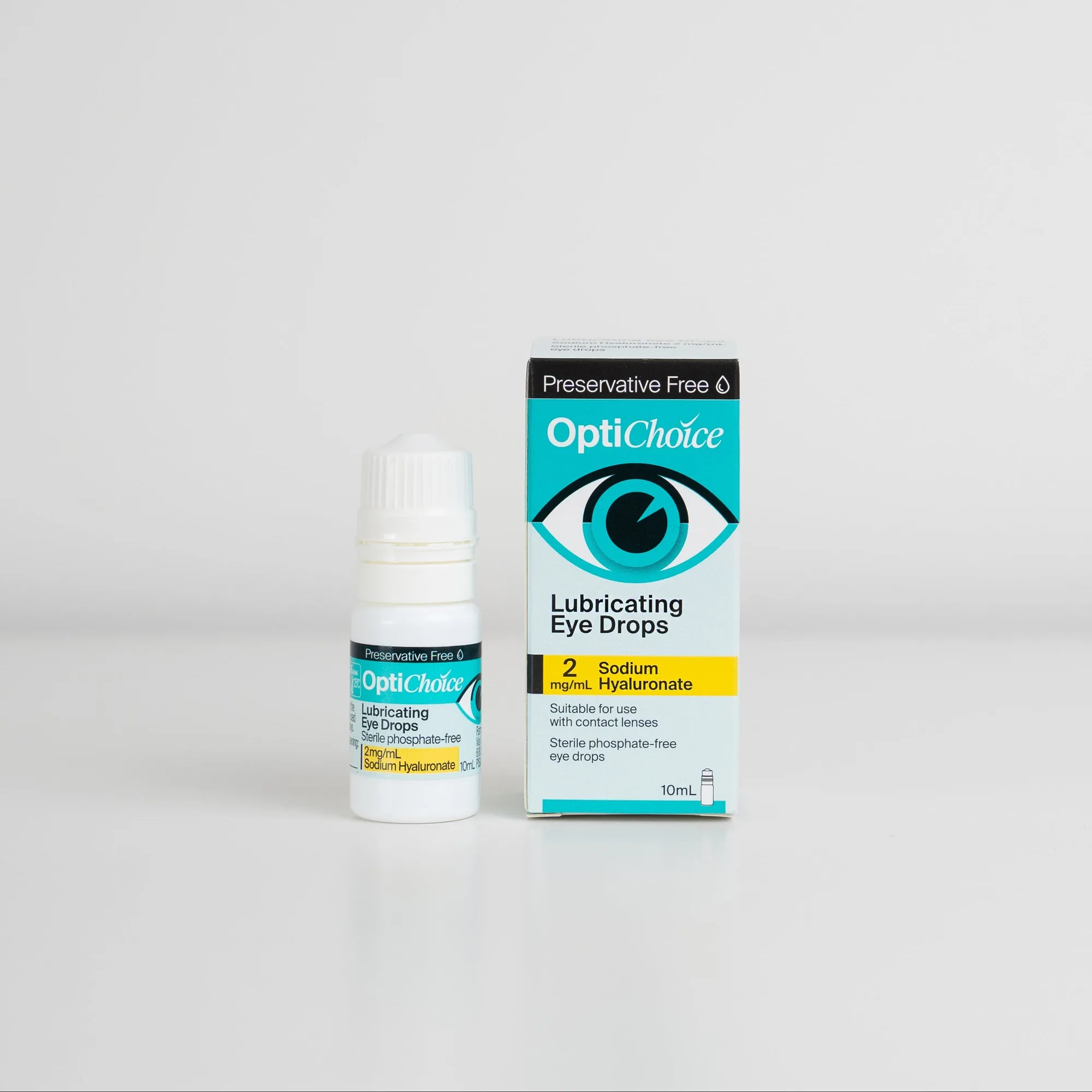
- OptiChoice Sodium Hyaluronate 0.2% Preservative Free Eye Drops - 10ml: OptiChoice Sodium Hyaluronate 0.2% Preservative Free Eye Drops is a preservative-free lubricating drop with 0.2% sodium hyaluronate, a molecule known for water retention and surface lubrication. The 0.2% concentration gives more cushioning for persistent dryness, and the preservative-free formula suits frequent daily use without adding preservative irritation.
- Hylo-Fresh Lubricating Eye Drops 10ml: Hylo-Fresh Lubricating Eye Drops 10ml contain 0.1% sodium hyaluronate and are preservative-free and phosphate-free, formulated for dryness from screen use, air conditioning, and pollution. The lighter 0.1% concentration and phosphate-free formula make it a practical choice for contact lens wearers and for daytime dryness linked to screens or dry indoor air.
Who should choose which
Best for
- People with persistent or frequent dryness who need drops more than four times a day
- Contact lens wearers who want a preservative-free and phosphate-free option
- Anyone whose dryness is linked to screen use, air conditioning, or pollution
- People who want a lighter daytime drop rather than a thick gel
Not for
- Occasional mild grittiness where a standard preserved drop is sufficient and cheaper
- Anyone who needs a gel or ointment for overnight dryness, since sodium hyaluronate drops are not the thickest option
- People with eyelid crusting or styes who need a warm compress as the primary treatment