Respuesta rápida
Usa una estantería baja y abierta como único hogar para los juguetes actuales, mantén solo unos pocos artículos a la vista a la vez y guarda el resto fuera de la vista en contenedores etiquetados. En una casa pequeña, el objetivo no es más almacenamiento sino menos opciones visibles, para que tu hijo pueda alcanzar lo que necesita y puedas ordenar la habitación en minutos.
Una casa pequeña y un espacio de juego Montessori pueden funcionar juntos, pero solo si el almacenamiento hace el trabajo silencioso. El problema habitual no es la falta de contenedores. Es que todos los juguetes están visibles a la vez, así que nada se usa bien y la limpieza se convierte en una batalla diaria.
Montessori
Este plan recorre siete pasos, desde elegir una estantería hasta rotar lo que queda a la vista. Cada paso incluye un punto de control para que puedas comprobar si la configuración funciona realmente para tu hijo y para tus metros cuadrados.
Empieza con una estantería baja y abierta
Elige una única estantería baja que tu hijo pueda alcanzar sin trepar. En una habitación pequeña, una estantería de dos niveles contra la pared suele ser mejor que una caja de juguetes profunda, porque muestra algunos artículos con claridad y deja espacio libre en el suelo. Colócala lejos de pasillos y rejillas de calefacción, y anclala a la pared si es lo suficientemente alta como para volcarse.
La estantería es el límite del área de juego, no una vitrina. Si todo cabe en la estantería, ya has resuelto la mayor parte de tu problema de almacenamiento. Si no cabe, los artículos extra pertenecen al almacenamiento, no apilados encima.
- Punto de control: tu hijo puede coger un artículo y devolverlo sin ayuda.
Limita lo visible a cinco o seis artículos
Una estantería abarrotada invita a vaciar, no a elegir. Mantén cinco o seis actividades a la vista, con una o dos en cada nivel de la estantería. Este es el núcleo de la organización de juguetes Montessori: menos opciones, claramente separadas, para que cada artículo tenga un propósito.
Agrupa por actividad, no por color o marca. Un juego de piezas que combinan se mantiene junto, y las piezas sueltas viven en una cesta o bandeja pequeña que viaja con la actividad. Así tu hijo puede llevar un trabajo completo al suelo y devolverlo.
- Error común: llenar cada hueco de la estantería porque parece vacía. El espacio vacío es parte del diseño.
Elige contenedores que se adapten al juguete
Las cestas abiertas y las bandejas poco profundas funcionan mejor en espacios pequeños porque permiten que tu hijo vea y alcance sin tapas. Usa una bandeja para juegos de cartas y piezas pequeñas, una cesta para objetos de madera voluminosos, y una bolsa con cremallera o caja solo para cosas que deban mantenerse contenidas.
Ajusta el contenedor al tamaño de las piezas, no al tamaño de tu armario de almacenaje. Un contenedor demasiado grande fomenta mezclar, y uno demasiado pequeño hace que la limpieza sea frustrante para un niño pequeño.
- Checkpoint: your child can carry the container with two hands and see what is inside.
Use vertical and hidden storage for the rest
Small space toy storage depends on using height and closed storage for anything not currently in play. A closet shelf, a lidded bench, or a stack of labeled bins keeps rotation items out of sight without taking over the room.
Label bins by category, such as puzzles, building, or quiet books, rather than by product name. When you rotate, you can pull one bin and put another away without reorganizing the whole room.
- Common mistake: storing rotation toys in clear bins on open shelves. If your child can see them, they are not really stored.
Set up a simple rotation schedule
Rotate every one to three weeks, or when you notice your child ignoring what is out. Keep the process short: remove two or three items, bring out two or three from storage, and leave the shelf layout the same.
A rotation is also a natural time to check for damage and missing pieces. Wipe wooden items with a damp cloth and mild soap, then dry them immediately, and spot clean felt or fabric items according to their care instructions.
- Checkpoint: rotation takes under ten minutes and does not require buying anything new.
Make cleanup part of the routine
Tidy-up works when the storage system is obvious. A short cleanup before lunch or before leaving the room, with you working alongside your child, teaches the habit faster than a long session at the end of the day.
Keep a small basket for items that need repair or a missing piece. When the basket is full, deal with it once rather than chasing loose parts every evening.
- Common mistake: cleaning up for your child. Do it together so the shelf stays their space.
Adapt the system as your child grows
A setup that works at age two will not work at age four. As your child's reach and interests change, raise the shelf height, add a small table, or move from baskets to trays. Recheck the shelf every few months rather than rebuilding it.
If your space is genuinely tight, choose one shelf and one storage bin and rotate between them. A small, consistent system beats a large one you cannot maintain.
- Checkpoint: your child can independently choose, use, and return an activity.
Your seven-step storage reset
- Choose one low shelf: Place a reachable, anchored shelf against a wall away from walkways. Checkpoint: your child can reach every item without help.
- Put out five or six activities: Keep one or two items per shelf level and leave visible empty space. Common mistake: filling gaps to make the shelf look full.
- Match containers to pieces: Use open trays and baskets so contents are visible and easy to return. Checkpoint: your child can carry the container with two hands.
- Move the rest out of sight: Store rotation items in labeled bins in a closet, bench, or high shelf. Common mistake: clear bins on open shelves, which are still visible choices.
- Rotate every one to three weeks: Swap two or three items, keep the shelf layout, and check for damage. Checkpoint: rotation takes under ten minutes.
- Tidy up together daily: Do a short cleanup before lunch or before leaving the room, working alongside your child. Common mistake: cleaning up for your child instead of with them.
- Recheck as your child grows: Adjust shelf height and container types every few months as skills change. Checkpoint: your child can choose, use, and return an activity independently.
What to look for in toys that store well
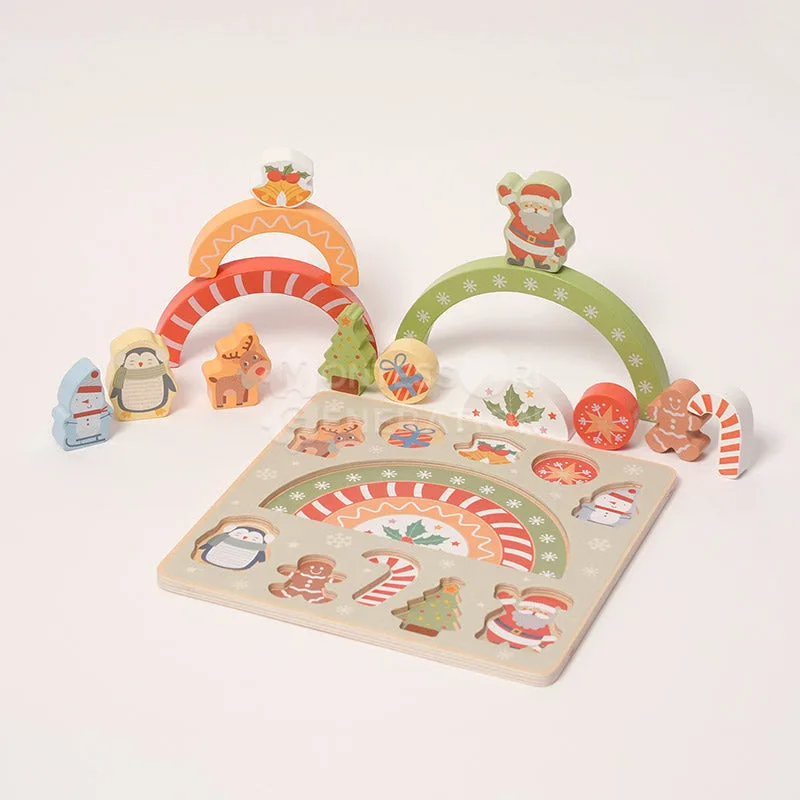
- Montessori Christmas Joy Set: Contains one wooden board and 14 wooden shapes, sized 8.5" x 8.5" x 0.7" and weighing 14.5oz, for ages 2+. A flat board with a defined set of pieces stores easily on a shelf or in a shallow tray, and the pieces are large enough for a toddler to handle during cleanup.
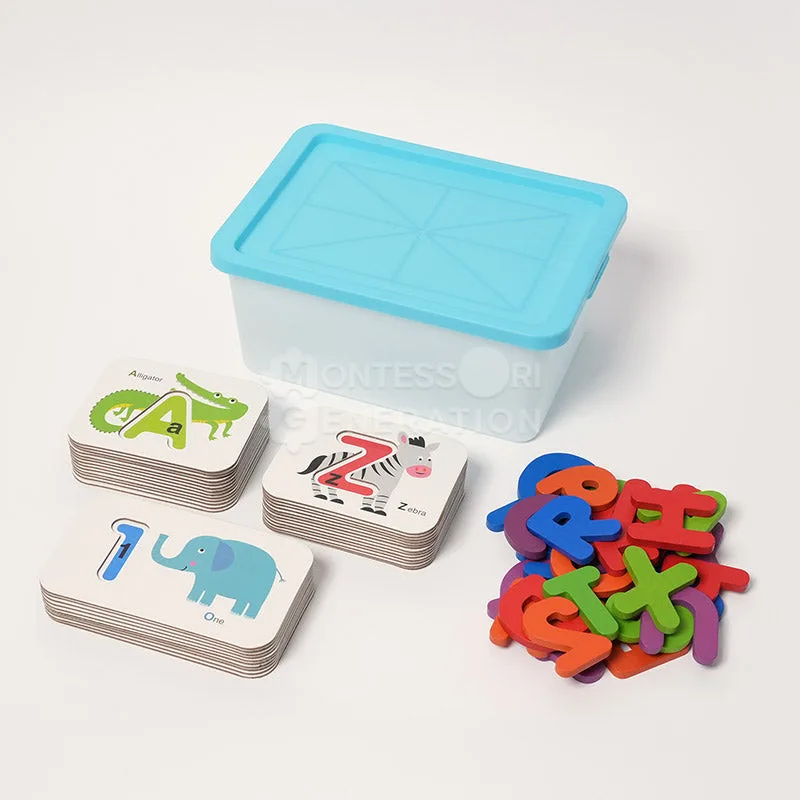
- Montessori ABC Matching Cards: Contains 36 cards, 37 wooden letters and numbers, and a storage box, sized 6.5" x 9.1" x 3.9" and weighing 26.5oz, for ages 3+. The included storage box keeps small pieces contained, so the set can live on a shelf without scattering and is simple to rotate in and out.
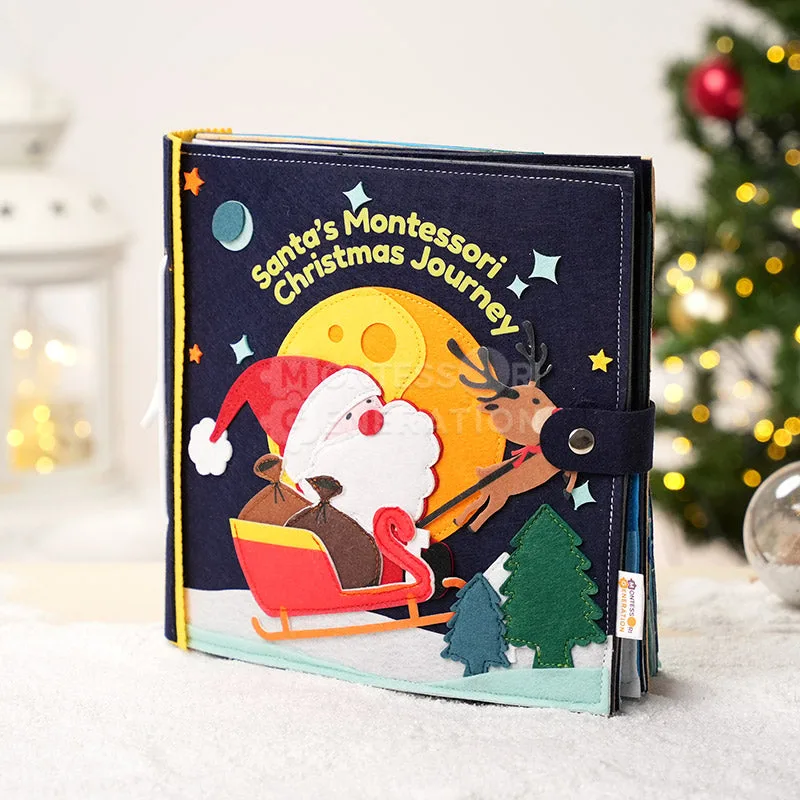
- Montessori Xmas Journey Book: A quiet felt book sized 3.5" x 10.4" x 10.2" and weighing 20.1oz, for ages 3+, with spot-clean care only. A single self-contained book takes up little shelf space and needs no loose-part storage, which suits a small home and a simple rotation.
A small home does not need more storage. It needs one clear shelf, a handful of visible choices, and a rotation you can actually keep up with. Set it up once, check it every few weeks, and the room stays calm while your child stays independent.