Snel antwoord
Een handige kousencollectie begint met één week alledaagse sokken, twee tot drie paar opaques (panty's), één paar sheer panty's en een paar comfort-first basics zoals katoenrijke slips of boxers. Koop de stoffen die je echt draagt, kies de maat die past bij je grootste maat, en vervang items wanneer het elastiek of de tenen verslijten.
De meeste mensen hebben geen lade vol kousen nodig. Ze hebben een kleine set items nodig die passen bij hun echte routine: werkdagen, weekends, koude ochtenden en af en toe een chiquere avond. De truc is om sokken, panty's en dagelijkse basics als één systeem te behandelen in plaats van ze één paniekaankoop tegelijk te kopen.
Deze gids behandelt de bonneterie-basics die de moeite waard zijn om te bezitten, hoeveel van elk, en de pasvorm- en stofafwegingen die bepalen of een item gedragen wordt of opgevouwen blijft. Het wijst ook op een paar DIM-producten die laten zien waar je in de praktijk op moet letten.
Begin met je echte week, niet met een ideale garderobe
Tel hoeveel dagen je in een normale week sokken, panty's of een specifieke ondergoedstijl draagt. Als je vijf dagen sokken draagt, heb je minstens vijf paar plus een reserve nodig, omdat wascycli en droogtijd echte beperkingen zijn. Als je in de koudere maanden twee keer per week panty's draagt, zijn twee of drie paar meestal genoeg om te wisselen zonder constant te wassen.
Dezelfde logica geldt voor dagelijkse basics. Een pak van drie paar dat goed past en bij je routine past, is nuttiger dan zes losse paar in kleuren waar je nooit naar grijpt. Bouw eerst rond je standaardweek en voeg dan één of twee stukken toe voor gelegenheden die je echt bijwoont.
- Tel de draagdagen per week en voeg één reserve toe per categorie.
- Houd één netter paar panty's of sokken voor evenementen.
- Vervang in plaats van hamsteren: versleten elastiek en dunne hielen zijn de eerste tekenen dat een stuk op is.
De kern van kousen en sokken die je echt nodig hebt
Een praktische collectie sokken en panty's dekt vier taken: dagelijkse warmte, werk of nette outfits, sport of lange wandeldagen, en lounging. Voor dagelijkse warmte dekken ondoorzichtige panty's in een neutrale tint de meeste koude-weer outfits. Voor nette gelegenheden is één paar sheer of fijne panty's in een tint dicht bij je huidskleur veelzijdiger dan meerdere fashion colours.
Voor sokken dekken gewone katoenrijke enkelsokken of crew socks de dagelijkse slijtage, terwijl één paar met patroon of textuur wat interesse toevoegt zonder veel kosten. Voor lounging voelen zachte katoenmengsels beter tegen de huid dan gladde synthetische stoffen. Als je vaak shorts of rokken draagt, wordt een comfortabele katoenen slip of shorty onderdeel van hetzelfde dagelijkse systeem.
- Opaque panty's: twee tot drie paar in een neutrale tint.
- Sheer panty's: één paar voor dressier outfits.
- Dagelijkse sokken: vijf tot zeven paar in katoenrijke blends.
- Comfort basics: genoeg katoenen slips of boxers voor één week.
Stofkeuzes die comfort en levensduur bepalen
Katoen en katoen-elastaan mengsels ademen goed en voelen zacht aan op de huid, daarom domineren ze dagelijkse sokken en ondergoed. Het elastaan-gehalte is belangrijk: het helpt het kledingstuk zijn vorm te behouden na het wassen in plaats van uit te rekken bij de taille of boord. Microvezel is lichter en gladder, wat geschikt is voor onzichtbare stijlen en nauwsluitende kleding, maar het kan minder ademend aanvoelen bij warm weer.
For tights, look at the denier and the finish rather than assuming a higher number is always better. A mid-weight opaque tight is warmer and more durable than a very fine sheer, but it will not work under a close-fitting formal outfit. Match the fabric to the job instead of buying one pair for everything.
- Cotton or cotton-elastane for daily socks and briefs.
- Microfibre for invisible or smooth-finish styles.
- Reinforced toes and heels extend sock life noticeably.
Fit rules that prevent wasted purchases
Fit is where most hosiery collections go wrong. Socks that are too small pinch at the cuff and slide down; socks that are too large bunch inside shoes. Tights that are too small roll at the waist and strain at the seams, while tights that are too large sag at the crotch. When you are between two sizes, the upper size is usually the safer choice for comfort.
For underwear, the waistband and leg openings should sit flat without digging in. If a brief or shorty leaves marks after an hour, the size or the cut is wrong, not your body. Check the size chart for each product and prioritise the measurement that matches your largest point.
- Between two sizes, choose the larger for comfort.
- Waistbands should lie flat, not roll or dig.
- Wash new pieces before judging fit, since some fabrics relax slightly.
How many is enough, and when to replace
A workable target is one week of everyday socks, one week of everyday briefs or boxers, two to three pairs of opaque tights and one pair of sheer tights. That covers normal life without overflowing a drawer. If you exercise often, add two or three dedicated sports socks so your everyday pairs are not always in the wash.
Replace items when the elastic stops recovering, when toes or heels thin out, or when a waistband starts rolling. Socks and tights are consumables, not heirlooms. Keeping a small reserve of new pairs means you are never forced into a rushed replacement in the wrong size or colour.
- One week of daily socks and briefs is the baseline.
- Add sports-specific socks if you train regularly.
- Retire any piece with dead elastic or thin heels.
Decision rules for building your hosiery drawer
- Everyday vs occasional: Buy multiples of anything you wear at least twice a week. Buy singles for dressier or seasonal pieces. If you hesitate between a pack and a single, the pack wins for daily items.
- Cotton vs microfibre: Choose cotton or cotton-elastane for breathable daily wear and microfibre for invisible, smooth-finish styles under close clothing. Match the fabric to the outfit, not to a single favourite.
- Size when between two options: Take the larger size for socks, tights and underwear to avoid pinching, rolling and seam strain. Comfort comes from the right size, not from sizing down.
- Reinforcement check: Prioritise socks with reinforced toes and heels, and tights with a reinforced gusset or toe if you walk a lot. Reinforcement is the cheapest way to make hosiery last longer.
- Replace on schedule: Retire any piece with dead elastic, thinning heels or a rolling waistband instead of keeping it in rotation. A small, current collection outperforms a large, worn-out one.
DIM products that show the principles in practice
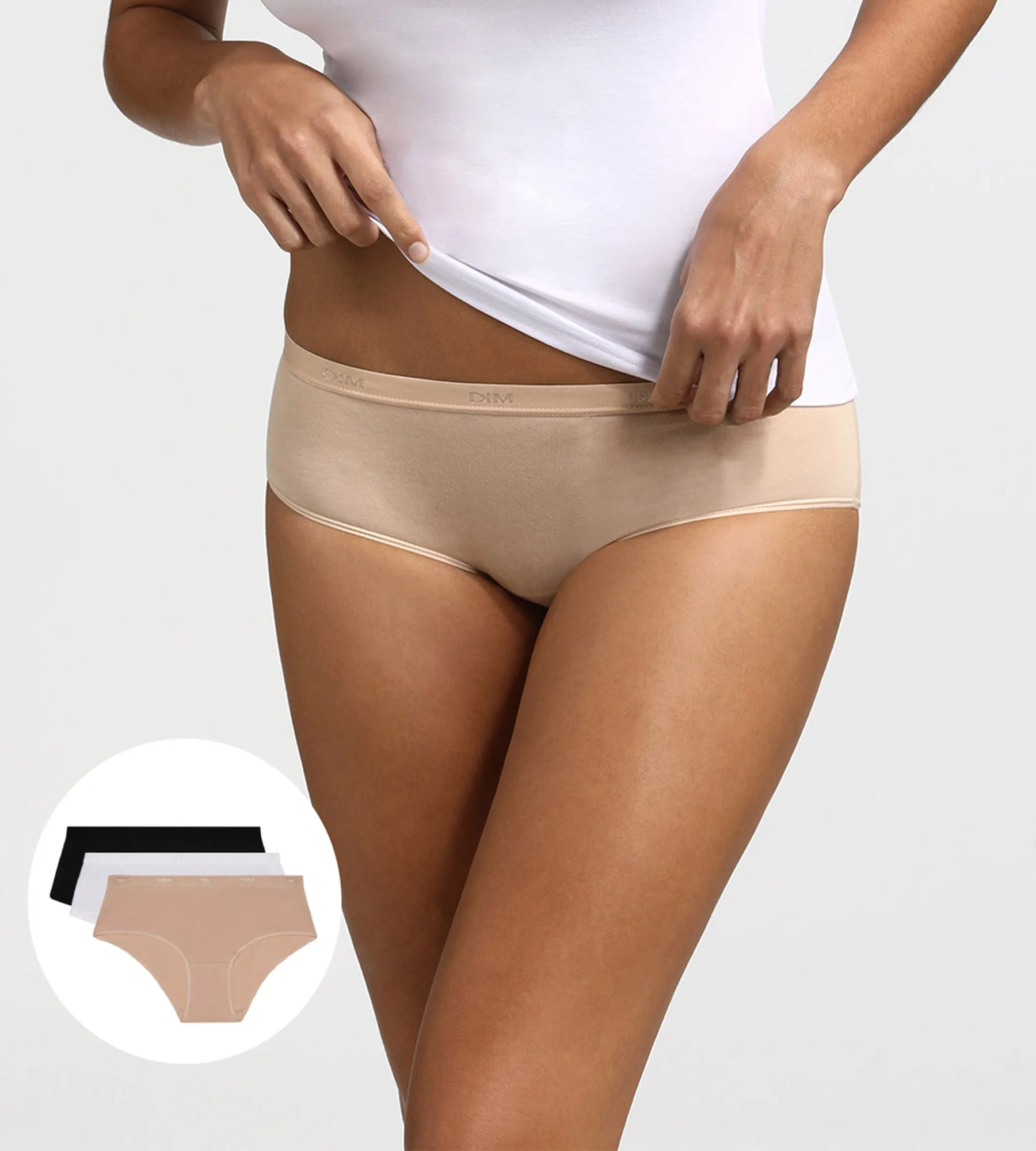
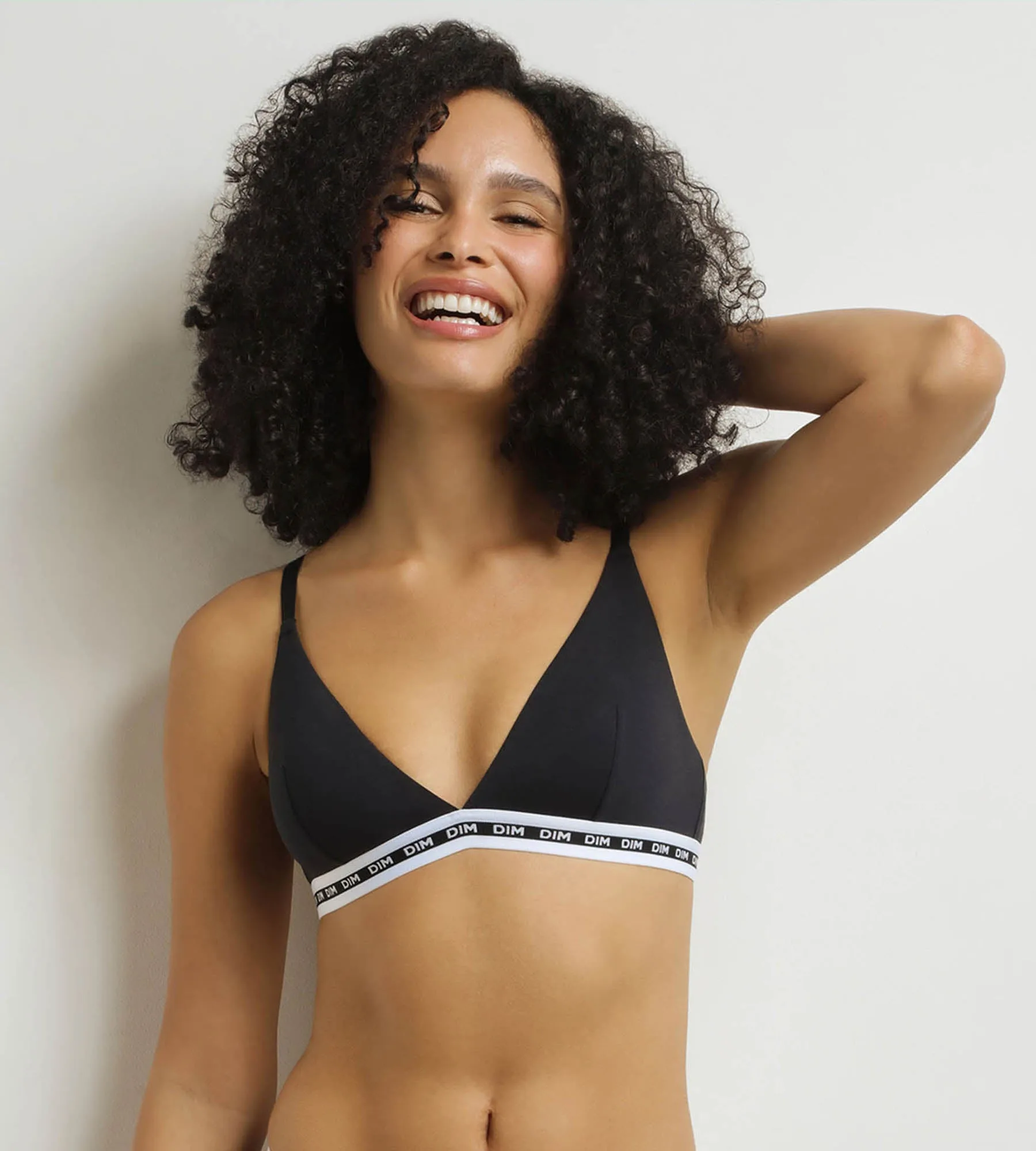
- Lot de 3 Boxers blanc/peau/noir Les Pockets Coton: Cotton-elastane fabric with an extra-flat waistband and comfortable cut in basic colours; the brand advises choosing the larger size if you are between two sizes. A three-pack in neutral colours covers daily wear, and the between-sizes guidance removes the guesswork that causes uncomfortable fit.
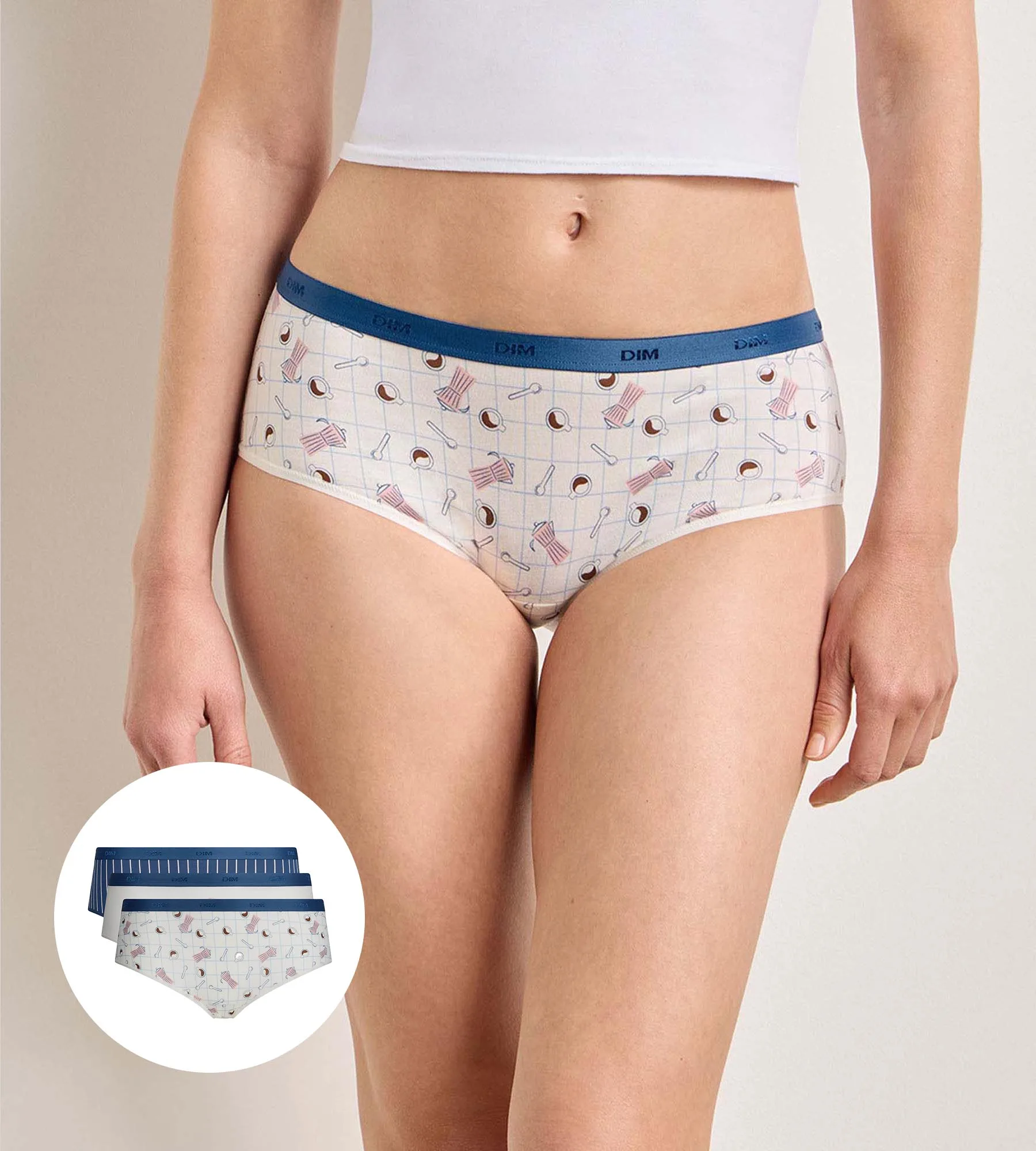
- Lot de 3 shortys matin doux Les Pockets Coton: Breathable cotton-stretch knit in a shorty cut that follows movement without marking, in a soft morning-tone colourway, sold as a pack of three. The cotton-rich fabric and pack format make this a practical everyday basic for warm or active days.
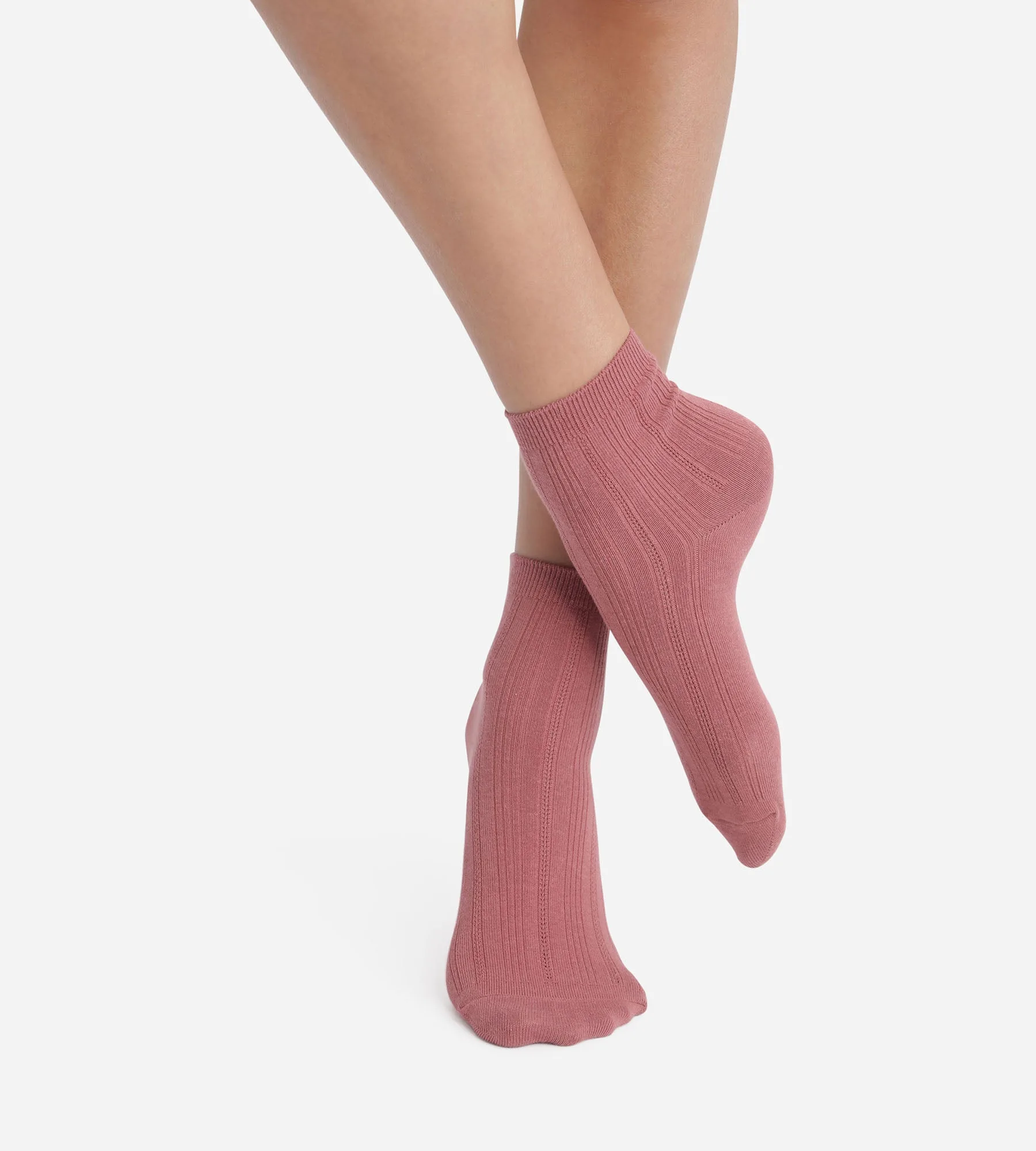
- Chaussettes femme en coton pointelle Vieux Rose La Mode de Dim: Soft ribbed cotton with pointelle openwork, a warm matte old-rose shade, an extensible ribbed edge and reinforced toe and heel. The reinforced toe and heel extend lifespan, while the pointelle texture adds character without changing the everyday cotton comfort.
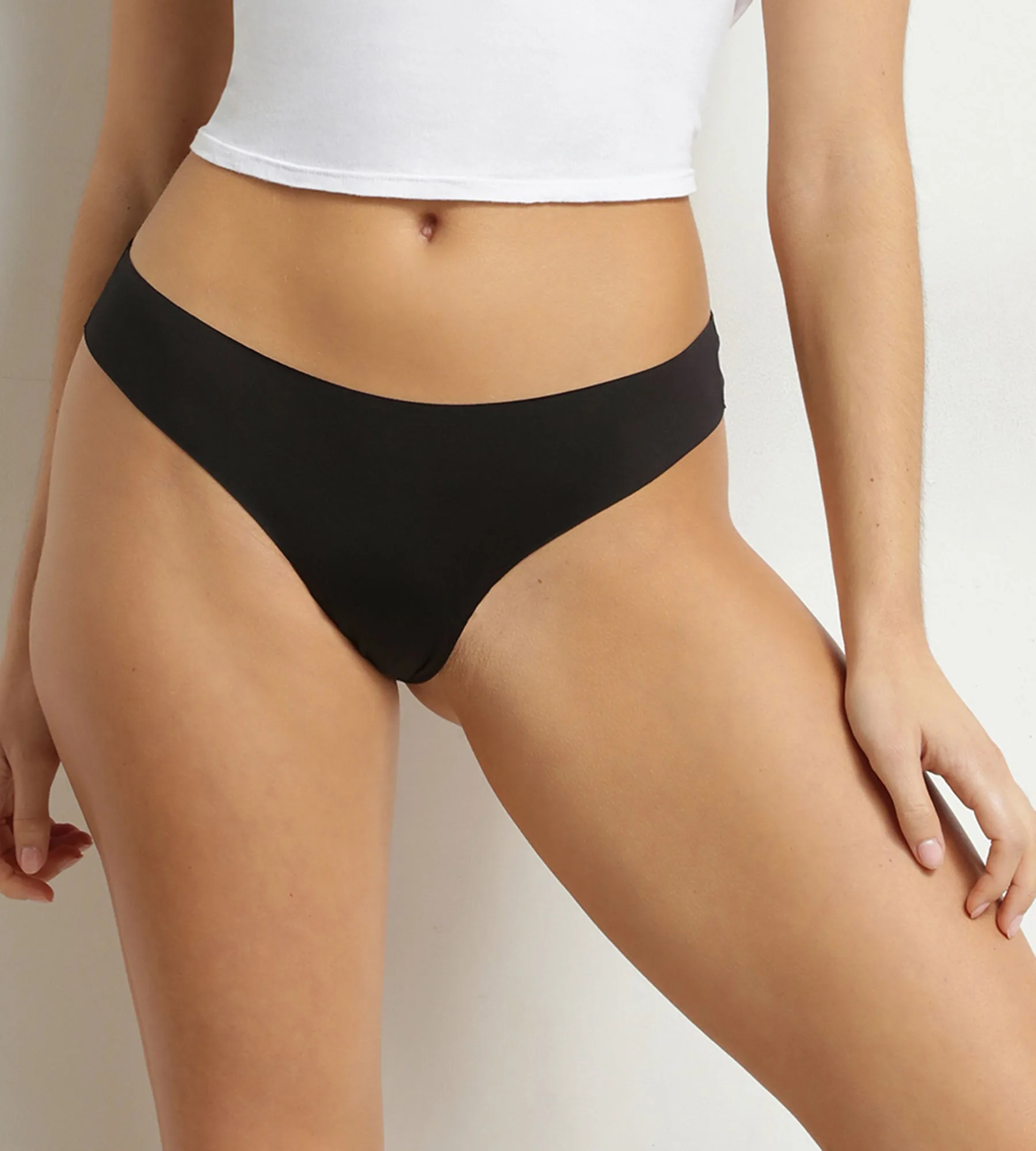
- Slip brésilien femme invisible en microfibre Noir Dim: Lightweight microfibre with a Brazilian cut, deep black colour and flexible hold that follows movement without tightening or marking. A good example of when microfibre beats cotton: smooth, discreet and suited to close-fitting outfits.
Voor panty's, kijk naar de denier en de afwerking in plaats van aan te nemen dat een hoger getal altijd beter is. Een medium-dichte opake panty is warmer en duurzamer dan een zeer fijne sheer, maar werkt niet onder een nauwsluitende formele outfit. Match the fabric to the job instead of buying one pair for everything.
Cotton or cotton-elastane for daily socks and briefs.
- Microfibre for invisible or smooth-finish styles.
- Reinforced toes and heels extend sock life noticeably.
- Fit rules that prevent wasted purchases
Fit is where most hosiery collections go wrong. Socks that are too small pinch at the cuff and slide down; socks that are too large bunch inside shoes. Tights that are too small roll at the waist and strain at the seams, while tights that are too large sag at the crotch. When you are between two sizes, the upper size is usually the safer choice for comfort.
- For underwear, the waistband and leg openings should sit flat without digging in. If a brief or shorty leaves marks after an hour, the size or the cut is wrong, not your body. Check the size chart for each product and prioritise the measurement that matches your largest point.
- Between two sizes, choose the larger for comfort.
- Waistbands should lie flat, not roll or dig.
Wash new pieces before judging fit, since some fabrics relax slightly.