Resposta rápida
O tecido de bambu é uma escolha sustentável e inteligente para roupa interior se quiser uma camada macia e respirável que seja suave para a pele e feita a partir de uma planta de crescimento rápido. Mas nem todas as peças de bambu são iguais. Procure uma mistura com elevado teor de bambu e uma marca que explique o processamento da fibra, e depois escolha o ajuste que combina com o seu dia: um sutiã de bambu sem aros para o conforto diário, ou um sutiã de mistura de bambu com fecho frontal se a mobilidade for importante. Se precisar de algodão puro, escolha algodão.
O tecido de bambu tornou-se habitual nos rótulos de roupa interior, e por boas razões: é macio, respirável e feito de uma planta que volta a crescer rapidamente. Mas a palavra 'bambu' numa etiqueta diz muito pouco sobre como o tecido foi feito ou como se vai comportar após dez lavagens. Este guia explica as verdadeiras compensações para que possa decidir se o bambu merece um lugar na sua gaveta.
Vamos comparar o bambu com o algodão em termos de sustentabilidade e desempenho diário, e depois aplicar isso a peças B Free específicas de bambu. Também vai obter regras claras de decisão para ajuste, cuidados e quando escolher algodão em vez de bambu.
O que torna o tecido de bambu sustentável
O bambu é uma erva, não uma árvore, e volta a crescer rapidamente após o corte, por isso é frequentemente descrito como um recurso renovável. Essa é a afirmação de sustentabilidade mais forte que se pode fazer sobre a planta em estado bruto. A etapa de processamento é igualmente importante: o bambu pode ser transformado em tecido através de um método de circuito fechado que recupera produtos químicos, ou através de um método mais intensivo que não o faz. Se uma marca não explica o seu processo, trate a alegação ecológica como incompleta, e não como falsa.
For underwear, the practical benefit of a bamboo blend is comfort. Bamboo fibre is smooth and breathable, so it sits lightly against skin and works well for all-day wear. It also takes dye well, which means deeper colours without a heavy feel. What bamboo does not guarantee is durability on its own, so blends with a small amount of elastane are common to help the garment keep its shape.
- Check the fibre percentage first: a high bamboo content with a small amount of stretch is the most comfortable combination.
- Look for a brand that names its processing method or certifies its supply chain.
- Treat 'bamboo' alone as a starting point, not proof of sustainability.
Bamboo vs cotton sustainability: how to choose
Cotton is the familiar option and it has its own sustainability story. B Free's cotton pieces use BCI cotton, which refers to the Better Cotton Initiative, a programme focused on more responsible cotton growing. Cotton is breathable, durable and easy to wash at higher temperatures, which makes it a strong choice for everyday underwear and for anyone who wants a fibre they already know.
Bamboo usually wins on softness and drape. It feels cooler and smoother than standard cotton, which is why it appears in wirefree bras and sensitive-skin styles. Cotton usually wins on longevity and straightforward care. If your priority is a low-effort, long-lasting basic, cotton is the safer pick. If your priority is a soft, breathable layer that feels light, bamboo is worth the switch.
- Choose bamboo when comfort and breathability matter most.
- Choose cotton when durability and simple washing matter most.
- You do not have to pick one: many drawers work best with both.
How to read a bamboo underwear label
Start with the fibre list. A useful bamboo bra or brief will usually list bamboo viscose or bamboo blend first, followed by a small percentage of elastane for stretch. If bamboo appears near the bottom of the list, the garment is mostly something else and you are paying for the name rather than the feel. Also check the care label before you buy, because bamboo blends generally prefer cool or warm washing and air drying to hold their shape.
Then check the construction. Seams should be flat or softly finished, because the point of bamboo is a smooth feel against skin. For bras, look at whether the band is wide enough to stay put without digging in. For briefs, look at whether the waistband is covered or folded, since exposed elastic can undo the softness of the fabric.
- Fibre percentage first, care label second, construction third.
- Flat seams and a covered waistband protect the soft feel.
- If the label does not name the fibre content, ask before buying.
Bamboo for maternity, postpartum and sensitive skin
Bamboo blends are a natural fit for bodies that change shape. During pregnancy and postpartum, skin can feel more sensitive and temperature regulation can shift, so a breathable, soft fabric is easier to live in. A wirefree bamboo blend bra with a front closure is especially practical because it removes the need to reach behind your back, which helps when mobility is limited or when you are feeding frequently.
For maternity bottoms, the same logic applies: look for a soft fabric with enough stretch to accommodate a changing body without pressure. Cotton remains an excellent option here too, particularly for full-coverage briefs. A practical approach is to use bamboo for the pieces that sit against sensitive skin and cotton for the high-wear basics you wash most often.
- Front-closure bamboo blends suit limited mobility and frequent feeding.
- Choose soft, stretchy waistbands over firm compression during pregnancy.
- Keep at least a few cotton basics for heavy rotation.
Decision rules for buying bamboo underwear
- If comfort against sensitive skin is the priority: Choose a bamboo blend for bras and bottoms that sit directly on skin, and check that the fibre list puts bamboo first with only a small amount of stretch added. Bamboo wins on softness; verify the blend before you commit.
- If durability and easy washing are the priority: Choose cotton, especially BCI cotton, for the pieces you wear and wash most often. Cotton handles frequent washing and holds its shape with less fuss. Cotton wins on longevity; keep it for heavy rotation.
- If you need to dress one-handed or have limited mobility: Choose a front-closure bamboo blend bra rather than a back-closure style. The closure system matters more than the fibre here. Function first, then fabric.
- If you are pregnant or postpartum: Choose soft, stretchy waistbands and breathable fabrics, and avoid firm compression unless a clinician has recommended it. A mix of bamboo and cotton covers both sensitivity and heavy washing. Comfort and breathability over compression.
- If a brand will not explain its bamboo processing: Treat the sustainability claim as incomplete. You can still buy the garment for comfort, but do not pay a premium for an eco claim that is not backed up. Pay for what is documented, not for the word bamboo.
B Free bamboo and cotton pieces that fit this decision
- Padded Front Closure Bra for Seniors: Made from a high quality bamboo blend that is soft, breathable and gentle on the skin, with a front closure hook system and light to medium wirefree support. This is the clearest example of bamboo doing a practical job: the front closure removes the need to fasten behind your back, which helps anyone with mobility limitations, while the bamboo blend keeps the fabric comfortable against sensitive skin.
- Travel-Ready Comfort: Wireless Cotton Rich Bra: Crafted from over 70% breathable cotton, this soft and flexible wirefree bra is designed for comfort in hot locations and long days of sightseeing or lounging. If you want the cotton side of the bamboo vs cotton decision, this is the comparison point: a high-cotton, breathable wirefree bra for travel and warm weather, where cotton's durability and easy care are the priority.
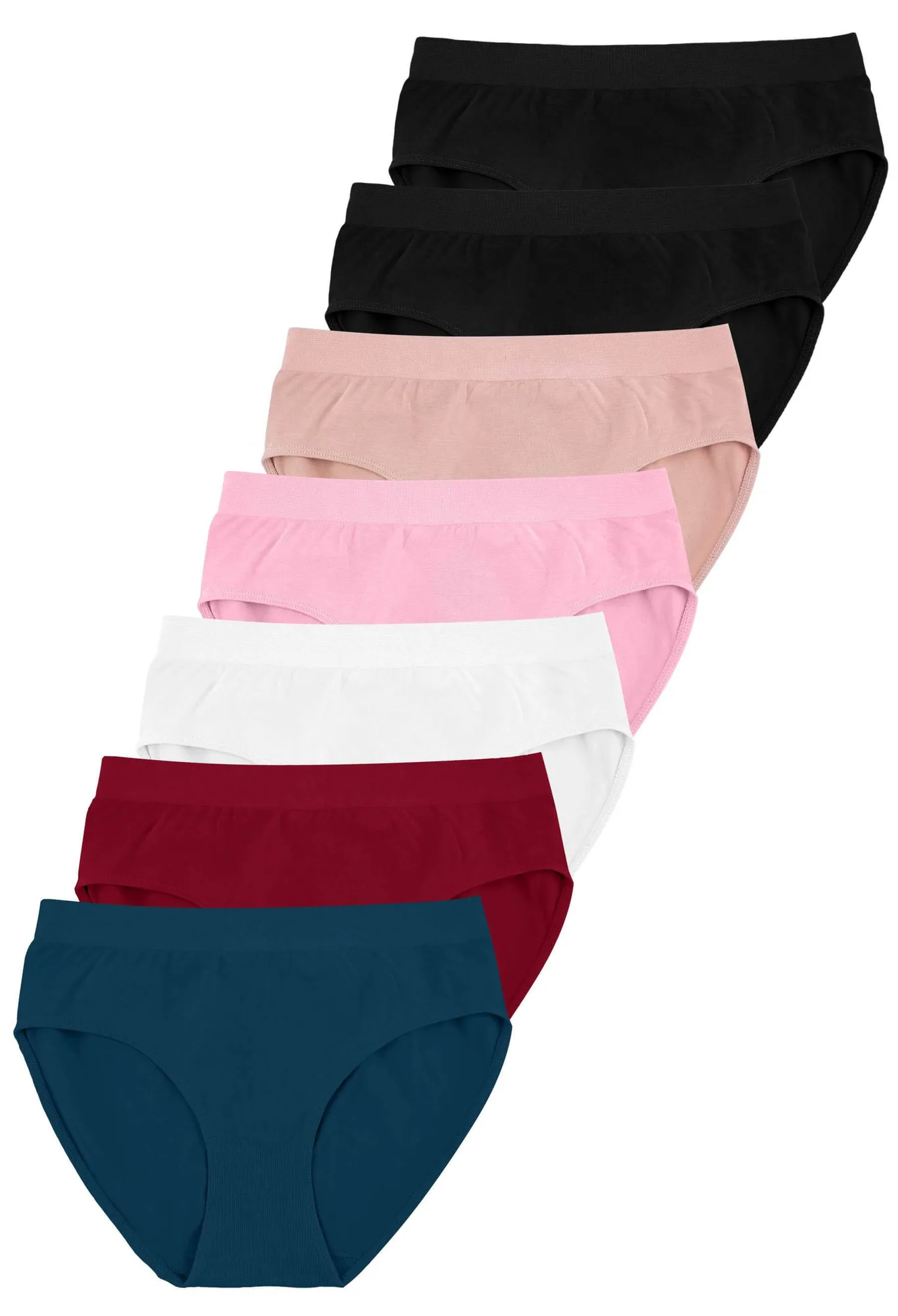
- Superfine 100% Cotton Full Brief - 7 Pack: Made from 100% premium BCI cotton fabric with plenty of hip and bottom coverage, sold as a seven-pack of full briefs. This shows what a straightforward cotton basic looks like: full coverage, a known fibre and enough pairs to rotate. Use it as the everyday base layer alongside softer bamboo pieces rather than replacing them.
Fit guidance for bamboo underwear
Best for
- For underwear, the practical benefit of a bamboo blend is comfort. Bamboo fibre is smooth and breathable, so it sits lightly against skin and works well for all-day wear. It also takes dye well, which means deeper colours without a heavy feel. What bamboo does not guarantee is durability on its own, so blends with a small amount of elastane are common to help the garment keep its shape.
- Check the fibre percentage first: a high bamboo content with a small amount of stretch is the most comfortable combination.
- Look for a brand that names its processing method or certifies its supply chain.
Treat 'bamboo' alone as a starting point, not proof of sustainability.
- Bamboo vs cotton sustainability: how to choose
- Cotton is the familiar option and it has its own sustainability story. B Free's cotton pieces use BCI cotton, which refers to the Better Cotton Initiative, a programme focused on more responsible cotton growing. Cotton is breathable, durable and easy to wash at higher temperatures, which makes it a strong choice for everyday underwear and for anyone who wants a fibre they already know.
Bamboo usually wins on softness and drape. It feels cooler and smoother than standard cotton, which is why it appears in wirefree bras and sensitive-skin styles. Cotton usually wins on longevity and straightforward care. If your priority is a low-effort, long-lasting basic, cotton is the safer pick. If your priority is a soft, breathable layer that feels light, bamboo is worth the switch.