The room temperature decides before the label does
A 0.5 TOG sleep bag and a 1.0 TOG sleep bag are not better or worse than each other — they cover different rooms. The 0.5 TOG rating is built for nursery temperatures between 75 and 81°F, while the 1.0 TOG rating is the year-round weight for a 69–75°F nursery. If your thermometer sits in one of those bands, the choice is already made. If it swings between them, you may eventually want both.
This comparison sticks to the two Loulou Lollipop bags that make the difference clearest: the Baby Muslin Sleep Bag 0.5 TOG in Tanboocel® Viscose from Bamboo – Alphabet Smiles and the Baby Sleep Bag 1.0 TOG in TENCELTM Lyocell – Sun Kissed Shoal. Both are sleeveless, both have a two-way zipper, and both are sized by weight. What separates them is fabric, warmth, and the rooms they are rated for.
0.5 TOG muslin vs 1.0 TOG TENCEL at a glance
Use this side-by-side to see where the two bags diverge before you read the detail below.
- Rated room temperature: 0.5 TOG: 75–81°F. 1.0 TOG: 69–75°F, described as the most common nursery temperature in the US.
- Fabric and construction: 0.5 TOG: Tanboocel® bamboo viscose blended with cotton and woven into open-weave muslin. 1.0 TOG: a TENCELTM Lyocell shell over a light layer of DuPontTM Sorona insulation, a plant-based fill.
- Best for: 0.5 TOG: summer nights, top-floor bedrooms, and homes that don't run central air. 1.0 TOG: the everyday bag for a typical nursery, used about nine months of the year.
- Sizes listed: 0.5 TOG: 0–6M (8–18 lb), 6–18M (18–28 lb), 18–36M (28–38 lb). 1.0 TOG: 0–6M (8–18 lb) and 18–36M (28–38 lb); the 6–18M size is not listed in the supplied information for this bag.
- Care: Both: machine wash cold and tumble dry low. The 0.5 TOG bag should not be bleached; iron on low only if needed. The 1.0 TOG bag should not be bleached and the printed areas should not be ironed.
What the 0.5 TOG muslin bag is built for
-
Baby Muslin Sleep Bag 0.5 TOG in Tanboocel® Viscose from Bamboo - Alphabet Smiles: Rated for nursery temperatures between 75 and 81°F, and described as the lightest sleep bag Loulou Lollipop makes. This is the bag to reach for when a 1.0 TOG starts to feel like too much — summer nights, top-floor bedrooms, or homes without central air.
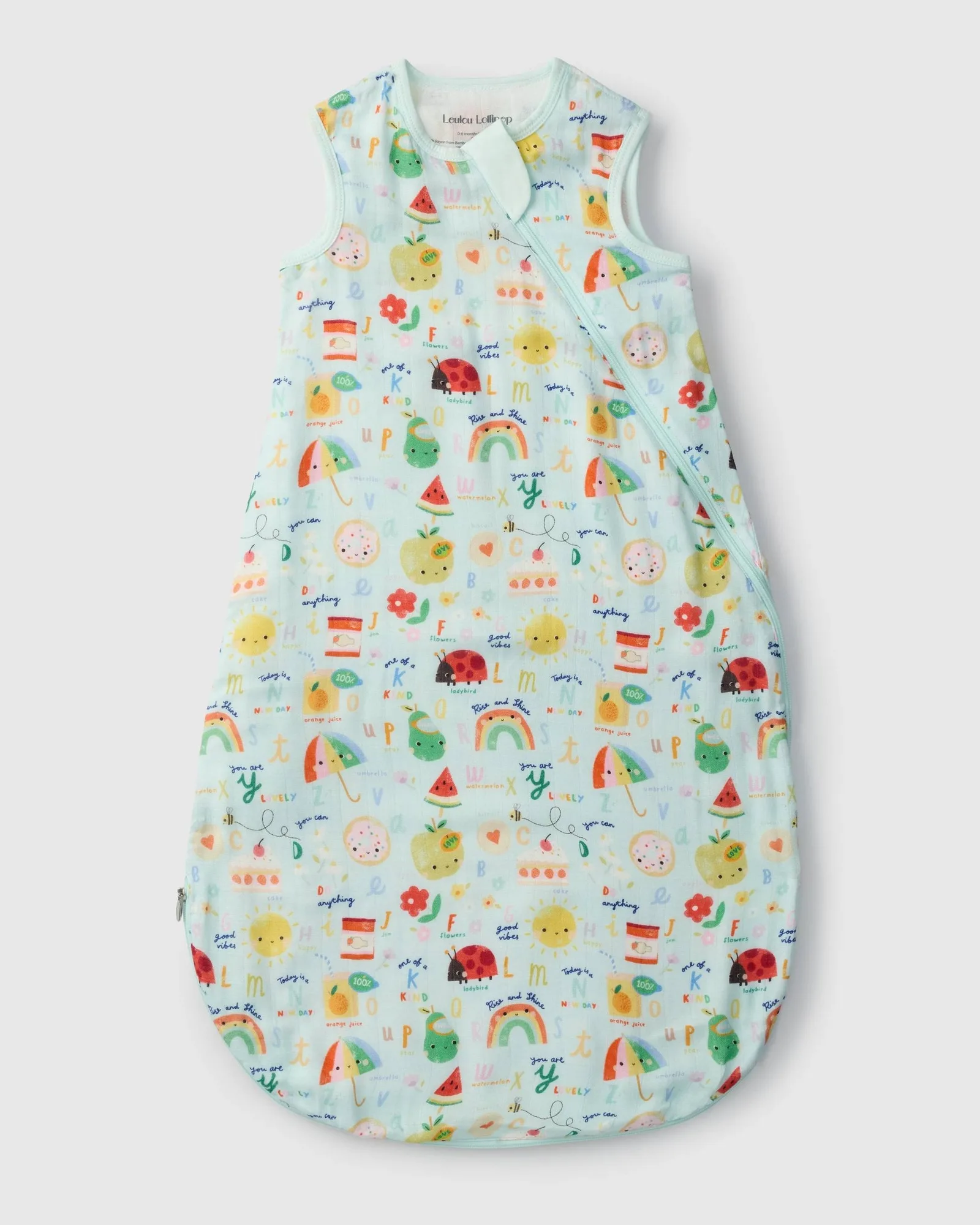
Baby Muslin Sleep Bag 0.5 TOG in Tanboocel® Viscose from Bamboo - Alphabet Smiles
-
Baby Muslin Sleep Bag 0.5 TOG in Tanboocel® Viscose from Bamboo - Alphabet Smiles: Tanboocel® bamboo viscose blended with cotton and woven into open-weave muslin; sleeveless on purpose so your baby sheds heat instead of trapping it. Muslin breathes, which is the point of a lightweight baby sleep bag in a warm room. The open weave moves humidity off the skin rather than holding heat close.
-
Baby Muslin Sleep Bag 0.5 TOG in Tanboocel® Viscose from Bamboo - Alphabet Smiles: The neck and arm openings are bound in soft fabric and cut snug; size to current weight, not age. A snug neck opening matters for safe sleep because a neck opening that is too wide can ride up over your baby's face. Weight-based sizing keeps that fit honest.
What the 1.0 TOG TENCEL bag is built for
-
Baby Sleep Bag 1.0 TOG in TENCEL™ Lyocell - Sun Kissed Shoal: The year-round weight, used about nine months of the year in a 69–75°F nursery; warm enough for a typical night, light enough that the baby never wakes up overheated. If your nursery sits in the most common US temperature band, this is the bag that earns its keep most nights.
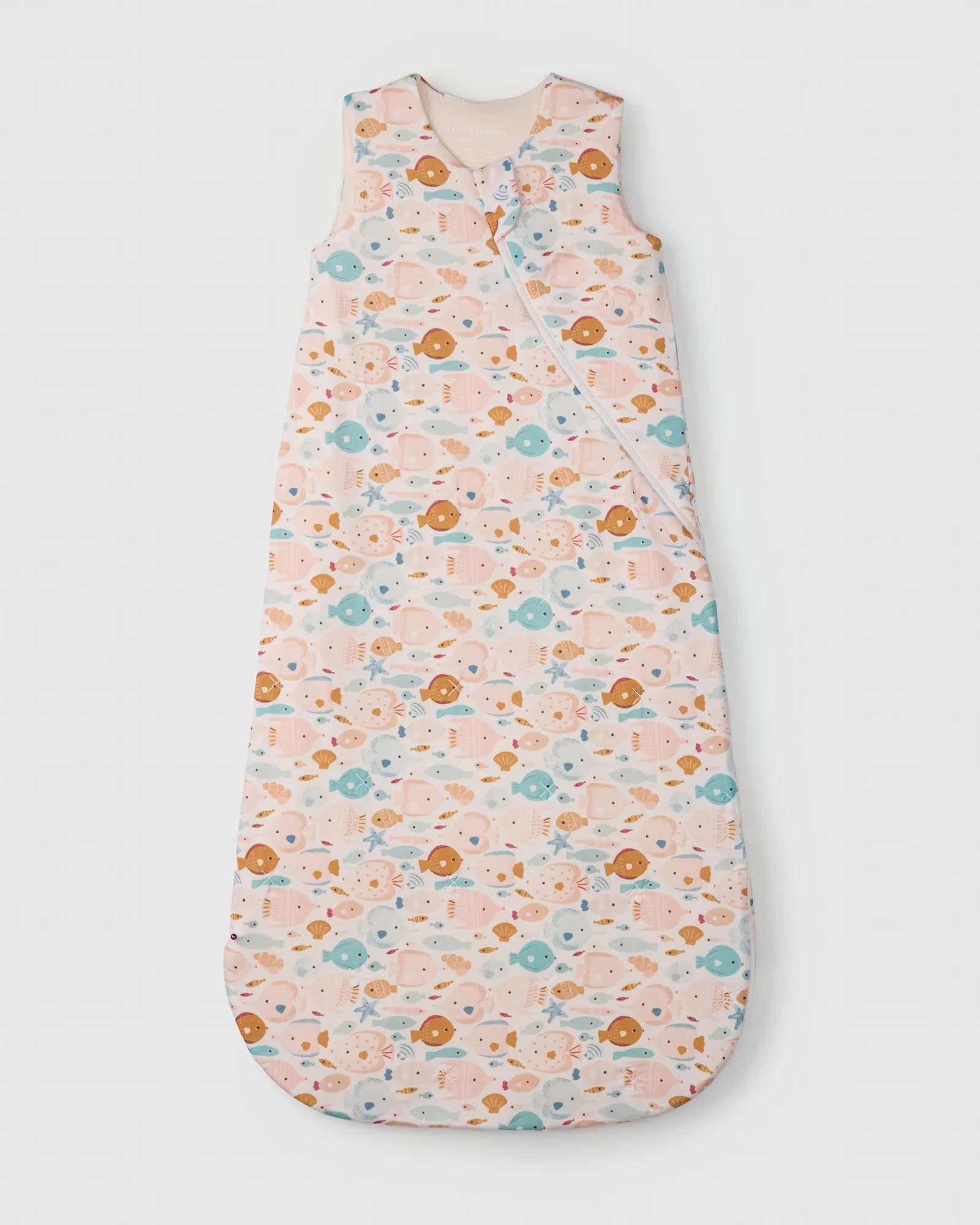
Baby Sleep Bag 1.0 TOG in TENCEL™ Lyocell - Sun Kissed Shoal
-
Baby Sleep Bag 1.0 TOG in TENCEL™ Lyocell - Sun Kissed Shoal: A TENCELTM Lyocell shell over a light layer of DuPontTM Sorona insulation, a plant-based fill that holds warmth without bulk. This is a different warmth strategy from the muslin bag: a smooth, breathable shell with a light fill rather than an open weave. TENCELTM Lyocell stays smooth through heavy laundering, which suits a bag washed twice a week.
-
Baby Sleep Bag 1.0 TOG in TENCEL™ Lyocell - Sun Kissed Shoal: Sizes listed are 0–6M (8–18 lb) and 18–36M (28–38 lb); size to current weight. The supplied information does not list a 6–18M size for this bag, so check the size chart before buying if your baby is in that weight range.
How to dress baby under each weight
The TOG rating gives you the main warmth; what your baby wears underneath lets you fine-tune from there. The 1.0 TOG bag has supplied layering guidance; the 0.5 TOG bag's supplied guidance is simpler.
- Under the 1.0 TOG bag: A short-sleeve bodysuit at the top end of the range (74–75°F), a long-sleeve bodysuit in the middle (70–73°F), or a sleeper at the cool end (69–70°F).
- Under the 0.5 TOG bag: Pair with a short-sleeve bodysuit underneath, per the supplied guidance.
- When the room runs warm: The 0.5 TOG muslin bag covers 75–81°F summer nurseries. When a 1.0 TOG starts to feel like too much, this is the one you reach for.
- When the room runs cold: Neither of these bags is the cold-weather answer. The 2.5 TOG winter weight picks up below 68°F, and the 2.5 TOG TENCELTM bag picks up at 61–68°F.
Sizing and fit matter as much as the TOG
Both bags are sized by weight, not age: 0–6M fits 8–18 lb, 6–18M fits 18–28 lb, and 18–36M fits 28–38 lb. The 0.5 TOG muslin bag lists all three sizes. The 1.0 TOG bag lists 0–6M and 18–36M in the supplied information, so a baby between 18 and 28 lb may need a different size or product from the line — check the size chart rather than guessing.
Fit at the shoulders and neck is the part that matters most for safe sleep. Both bags are cut snug at the neck and arm openings and bound in soft fabric rather than scratchy serged edges. Choose a size that fits at the shoulders so the bag can't slip over the face.
The 1.0 TOG bag's supplied notes add a practical sizing observation: the 0–6M usually carries a baby through to the 4-month sleep regression, and the 6–18M is usually the size a baby wears the longest. That 6–18M note applies to the line generally; confirm the size is available for the specific bag you are buying.
Fabric tradeoffs that show up after the fifth wash
The 0.5 TOG bag's Tanboocel® bamboo viscose is described as getting softer after the fifth wash than on day one, the opposite of how cotton ages. Tanboocel® is a branded bamboo viscose made through a closed-loop process, third-party verified, with a lower water and chemical footprint than the generic bamboo rayon most brands quietly label "bamboo." It also takes the dryer better than bamboo rayon, with less pilling and shrinkage over time.
The 1.0 TOG bag's TENCELTM Lyocell is a wood-pulp fiber spun in a closed-loop process. It pulls moisture off the skin quickly and stays soft through repeated washing, which is why it is used in the year-round 1.0 and 2.5 TOG bags that get washed most. For the lightest warm-weather layers, the brand points to Tanboocel® bamboo viscose instead.
Both materials are certified to OEKO-TEX Standard 100, and Loulou Lollipop is a Certified B Corporation. Both bags are described as AAP safe-sleep compliant and tested to CPSC, CPSIA, and ASTM standards. Neither bag is confirmed by the supplied information as suitable for newborns still in the swaddle phase; the supplied guidance says sleep sacks are safe once the baby is out of the swaddle phase and can roll.
A quick decision path for tonight
Read the nursery thermometer, then match it to the bag rather than to the season on the calendar.
- 75–81°F: Choose the 0.5 TOG muslin bag in Alphabet Smiles, with a short-sleeve bodysuit underneath.
- 69–75°F: Choose the 1.0 TOG TENCEL bag in Sun Kissed Shoal, then fine-tune with a short-sleeve bodysuit, long-sleeve bodysuit, or sleeper depending on where in the range you land.
- Below 69°F: Neither bag is rated for this. The 2.5 TOG winter weight picks up below 68°F, and the 2.5 TOG TENCELTM bag picks up at 61–68°F.
- Room swings between bands: Two bags in the same print can cover the year: the 0.5 TOG muslin bag for warm months and the 1.0 TOG TENCEL bag for the rest. The matching 1.0 TOG TENCELTM Sleep Bag in Alphabet Smiles covers the everyday 69–75°F nursery for the muslin print, and the 0.5 TOG Muslin Sleep Bag in Sun Kissed Shoal covers 75–81°F for the TENCEL print.