What These 1/2x18 Air File Belts Can Handle
Red Label Abrasives 1/2x18 aluminum oxide air file sanding belts are built for both metalworking and woodworking. Their closed coat construction and load-reducing top coat make them versatile across hardwood, stainless steel, carbon steel, ferrous and non-ferrous metals (including aluminum, copper, titanium, and nickel), as well as solid surface materials.
This guide compares how the same belt performs on metal versus wood, helping you choose the right grit and use it effectively on each material.
Belt Construction That Suits Both Materials
-
1/2 X 18 Inch Aluminum Oxide Air File Sanding Belts, 20 Pack: Heavy duty X-weight polyester/cotton blend backing with a load and heat reducing top coat. The X-weight backing provides durability for aggressive metalwork, while the top coat helps prevent clogging when sanding resinous woods.
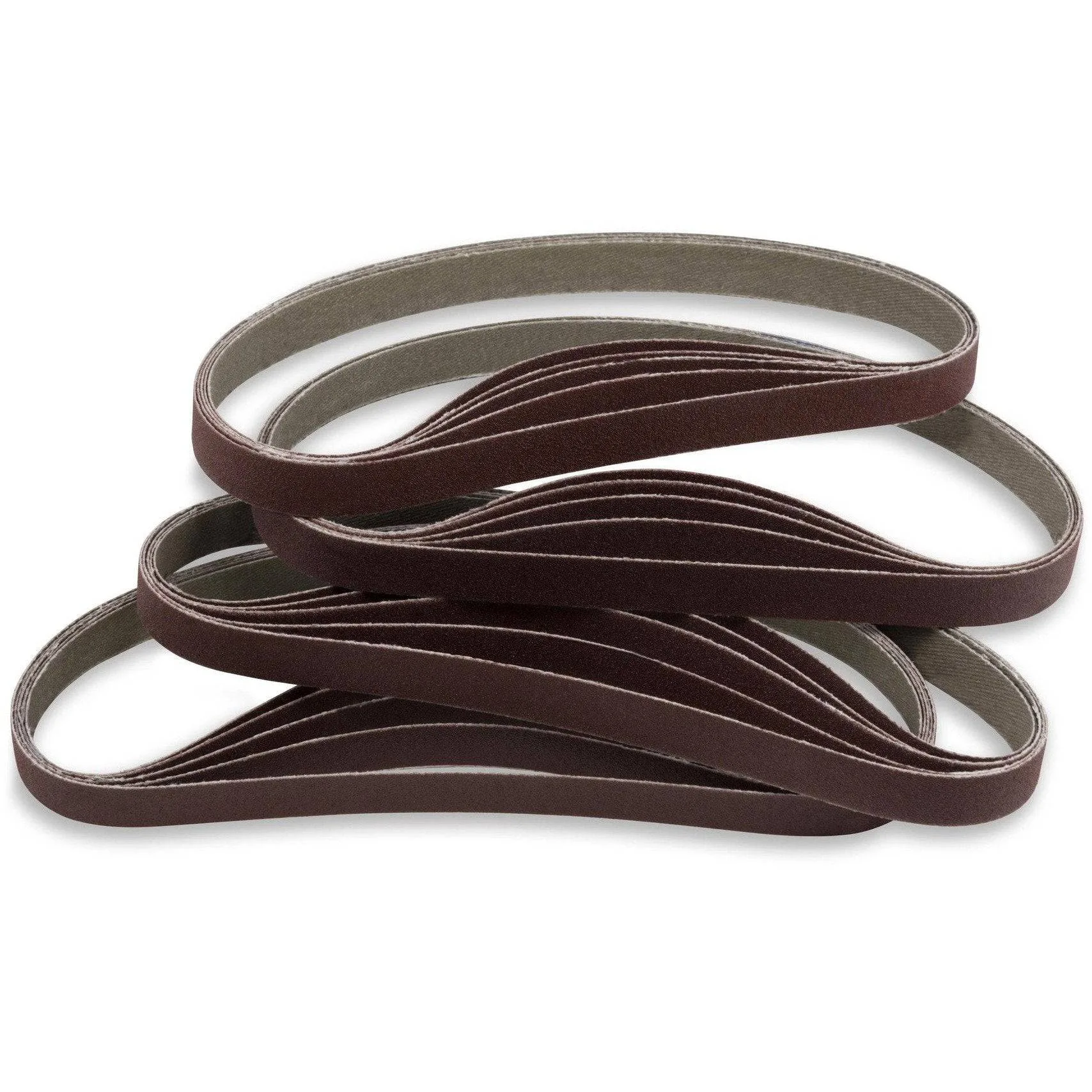
1/2 X 18 Inch Aluminum Oxide Air File Sanding Belts, 20 Pack
-
1/2 X 18 Inch Aluminum Oxide Air File Sanding Belts, 20 Pack: Closed coat aluminum oxide abrasive with resin-over-resin bonding and a bi-directional tape joint. Closed coat delivers a finer finish on metal and consistent cut on wood. The bi-directional joint lets you run the belt in either direction—useful when switching between materials.
Metal vs Wood: Key Differences in Use
The same 1/2x18 belt works on both metal and wood, but grit selection and wear patterns differ.
- Metal applications: Use coarser grits (36–80) for stock removal on stainless steel, carbon steel, and non-ferrous metals. Finer grits (120–220) handle deburring and surface blending. The heat-reducing top coat helps manage frictional heat during prolonged contact.
- Wood applications: Coarse grits (36–60) shape hardwood quickly; medium grits (80–120) smooth surfaces before finishing. The load-reducing top coat is especially helpful when sanding softwoods or resinous species that tend to clog belts.
How to Select Your Grit for Each Material
Available grits for these 1/2x18 belts: 36, 60, 80, 100, 120, 150, 180, 220.
- For metal: start coarse, finish fine: Use 36 or 60 grit for heavy weld removal or shaping stainless and carbon steel. Move to 80–120 for blending and 150–220 for surface prep before coating.
- For wood: match grit to task: 36–60 grit for rapid shaping of hardwood. 80–100 grit for smoothing. 120–180 grit for final sanding before finish application. Avoid skipping grits to prevent visible scratches.
Dry-Use Only: What the Record Confirms
The heavy-duty X-weight backing can handle occasional spritzing but is not fully waterproof. For both metal and wood, plan to use these belts dry. If you need to reduce heat or dust, a light spritz is acceptable, but do not submerge or run wet. The product record does not specify maximum operating speed or pressure—follow your air file sander's instructions for those settings.
What You Get in a 20-Pack
- 1/2 X 18 Inch Aluminum Oxide Air File Sanding Belts, 20 Pack: Pack Quantity: 20 belts, each 1/2 x 18 inches. The 20-pack is a practical quantity for multi-material shops. You can dedicate different grits to metal and wood without frequent reordering.
- 1/2 X 18 Inch Aluminum Oxide Air File Sanding Belts, 20 Pack: Hand built in the USA. Consistent quality from a domestic manufacturer, which matters for repeatable results across metal and wood jobs.