Quick answer
For barn cleanup, composting, and moving bulky material, a 10 tine manure fork with a fiberglass long handle is the better choice. A standard pitchfork, with fewer, wider tines, suits hay and straw but struggles with finer, wetter material.
Tine count and spacing: what changes the job
The most obvious difference between a manure fork and a standard pitchfork is the tines. A 10 tine manure fork has more tines packed closer together, which means it can scoop and hold finer material like soil, compost, and manure without letting it fall through. A standard pitchfork typically has 3 to 4 widely spaced tines, designed for lifting loose hay or straw in large clumps.
If your task involves moving fine, dense, or slightly wet material, the closer tine spacing of a 10 tine fork is a practical advantage. For fluffing hay or moving straw bales, the wider spacing of a pitchfork works better because it reduces the weight you lift and lets air pass through.
Handle length and material: reach and durability trade-off
Handle length changes your leverage and reach. A long handle lets you keep your back straighter when working from a standing position, which is helpful for repetitive barn chores. However, a longer handle can feel unwieldy in tight stalls or when you need precise control.
Handle material also matters. Fiberglass handles are known for strength and resilience, especially under heavy loads. Wood handles can absorb shock but may be more prone to splintering or breaking over time. A fiberglass option is often the better long-term investment for frequent use.
Trade-offs at a glance
- Fine material (compost, soil, manure): Choose a 10 tine manure fork. The closer tine spacing keeps fine material contained, reducing waste and extra trips. Check tine spacing: if material slips through, you need more tines.
- Hay and straw moving: A standard pitchfork with wider tines is lighter per load and lets you toss material with less effort. For hay, fewer tines mean less weight and easier flinging.
- Heavy-duty, frequent use: A fiberglass long handle offers strength and resilience, reducing fatigue and the risk of handle breakage compared to wood. If you work daily, fiberglass is a durable investment.
Product facts
-
10 Tine Manure Fork Fiberglass Long Handle: The 10 Tine Manure Fork features a fiberglass long handle and a 230mm Dual Layer PVC grip, with a steel head. The fiberglass handle offers strength and resilience for heavy tasks, while the PVC grip provides comfort during extended use, and the steel head ensures durability.
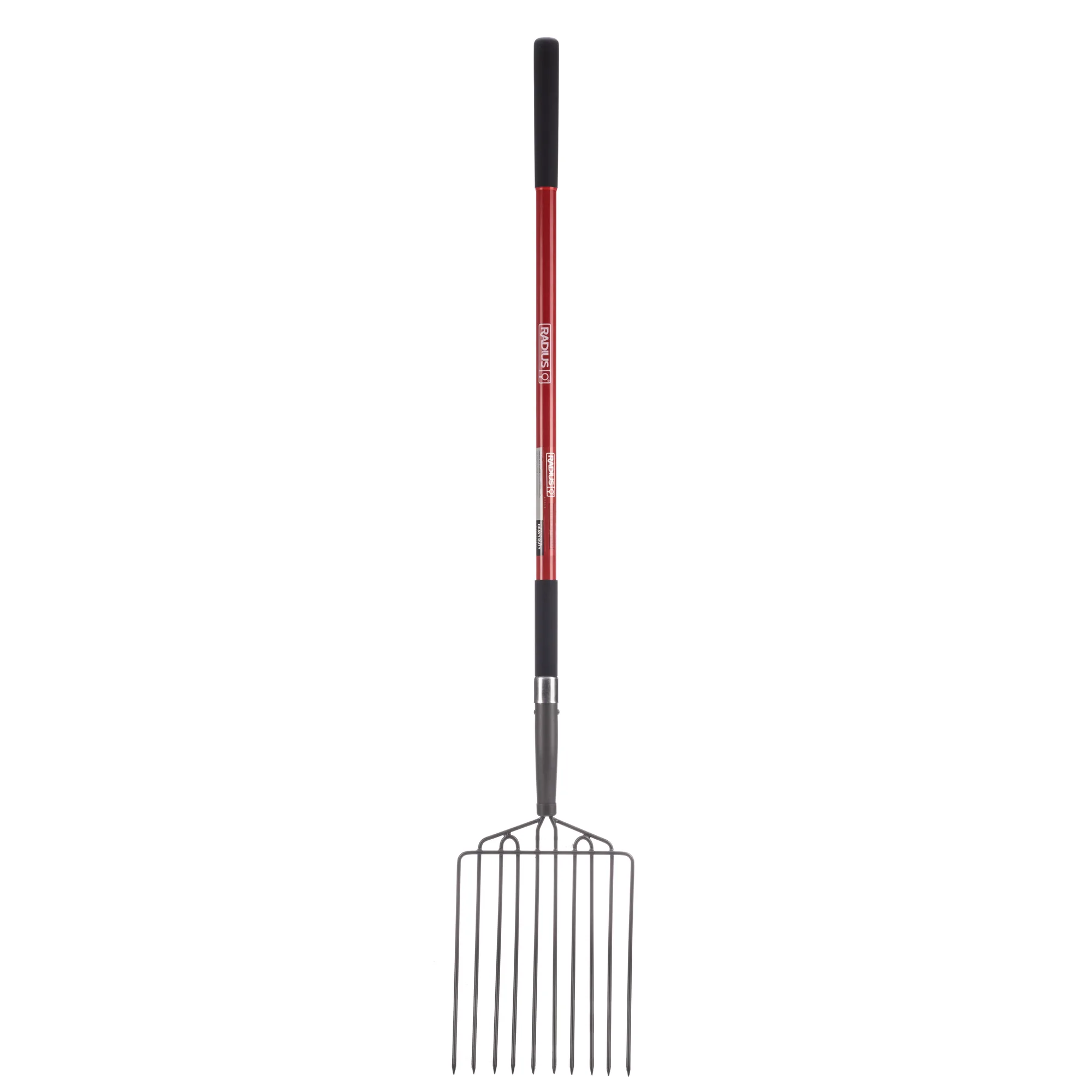
10 Tine Manure Fork Fiberglass Long Handle
Which fork fits you?
Best for
- Barn cleanup and mucking out stalls where fine, wet material is common
- Compost turning and moving soil or mulch in garden beds
Not for
- Lifting large, loose hay bales where a standard pitchfork's wide tines are more efficient
- Precision work in tight spaces where a shorter handle offers better control