Quick answer
Treat your Coastal Waves 1000 piece puzzle like a set of delicate prints: control dust before your first sort, handle pieces by the edges, and store the finished puzzle flat and covered. A five-minute routine at setup and teardown prevents most wear.
Why dark wave sections need extra handling
Coastal Waves includes dark purple and black tones in the crashing surf, and those low-contrast areas show fingerprints, dust, and bent corners more readily than the pale sky. Wipe your hands before working the dark sections and keep a clean microfiber cloth nearby for spot cleaning.
The same contrast that makes the image dramatic also makes piece maintenance visible. A light dusting after each session keeps the dark areas from looking muddy.
Cleaning products to avoid
Skip wet wipes, spray cleaners, and abrasive cloths on puzzle pieces. Most puzzle board and print surfaces are not designed for liquid cleaners, and moisture can swell edges or lift the image. A dry microfiber cloth and a soft brush are enough for routine puzzle dust and cleaning.
Your step-by-step Coastal Waves care routine
- Unbox and separate puzzle dust: Open the bag over a tray or sheet of newspaper and gently shake the pieces to release loose paper dust. Sort pieces into shallow bowls by edge and color family, keeping the dark wave pieces in their own pile. Do this before you start building; dust that settles on the table later is harder to remove.
- Set up a clean, dry work surface: Use a smooth mat or felt puzzle board and wipe it down with a dry microfiber cloth. Avoid textured tablecloths or surfaces that trap grit under the pieces. A clean surface at the start prevents scratches on the puzzle image.
- Handle pieces by the edges: Lift and place pieces by their sides, not the printed face. Keep a dry cloth nearby and wipe your hands after snacks or lotion. Oils from fingers are the main cause of dull spots on dark puzzle sections.
- Dust the puzzle between sessions: Before covering the puzzle, run a soft brush or dry microfiber cloth lightly over the assembled surface. Work from the center outward so dust does not collect in the dark wave crevices. A quick dusting each session keeps the image crisp and reduces the need for deeper cleaning later.
- Store a work in progress flat and covered: If you need to pause, slide the puzzle board under a bed or onto a shelf, or cover it with a clean cotton sheet or puzzle mat. Keep it flat and away from damp basements and direct sun. Sunlight fades printed colors, especially the blue sky, so choose a shaded storage spot.
- Preserve the finished puzzle: Decide whether to frame it, glue it, or return it to the box. For framing, use a dry mounting method or puzzle glue applied in a thin, even coat according to the product instructions. For storage, slide the finished puzzle onto a rigid board and cover it. If you plan to rebuild the puzzle, skip glue and store it in a sealed bag with a desiccant packet.
- Return pieces to the box correctly: Count or bag pieces by section, place them in a zip-top bag, and store the box upright in a dry closet. Avoid stacking heavy items on top of the box. A missing piece is often a storage problem, not a manufacturing one, so keep the box sealed between builds.
Product facts
-
Coastal Waves | 1000 Piece: Coastal Waves is a 1000 piece puzzle by Dale Hitchcox showing a rocky cliff, rushing waves, clear blue skies, and birds in flight, with dark purple and black tones in the surf. The dark wave areas are the most likely to show dust and handling marks, so plan your cleaning routine around those sections first.
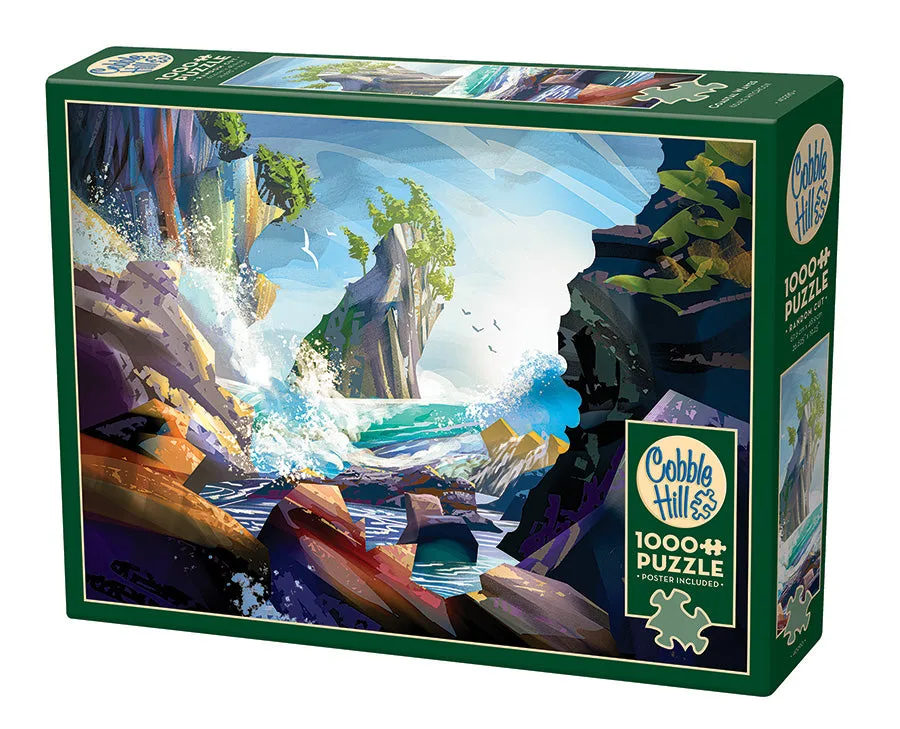
Coastal Waves | 1000 Piece