Quick answer
Choose a 1000-piece Christmas puzzle when you want a longer solo or group session and have a generous table; choose a 500-piece round puzzle when you want a quicker, lower-pressure build or a smaller footprint.
Time and attention: what each piece count asks of you
Piece count is the clearest signal of how long a puzzle will hold your attention. A 1000-piece puzzle typically spreads across several sittings, while a 500-piece puzzle is more likely to fit into a single evening. That difference matters most when you are choosing for a specific occasion: a 1000-piece build rewards a dedicated table you can leave out, whereas a 500-piece round puzzle suits a one-off Christmas Eve activity or a quiet afternoon.
Table space and shape: round vs rectangular footprints
A round 500-piece puzzle has a different footprint from a standard rectangular 1000-piece puzzle. The round format can fit on a smaller, more central table area, but its curved edge pieces can be harder to sort at first. A rectangular 1000-piece puzzle needs more uninterrupted surface, yet its straight edges give you a familiar starting framework. Measure your available space before you commit, especially if you plan to leave the puzzle out between sessions.
Group vs solo: matching the piece count to the number of puzzlers
A 1000-piece puzzle gives two or more people enough separate zones to work on at once, which can make it a better shared activity. A 500-piece puzzle can feel crowded with too many hands, but it is ideal for one person who wants a satisfying finish without a long commitment. If you are buying for a household with mixed ages or attention spans, the smaller count is usually the safer choice.
Gift appeal and keepsake value
Both piece counts can work as gifts, but the 1000-piece format often feels more substantial to unwrap, and limited-edition designs add a sense of occasion. A 500-piece round puzzle is a lighter gift that suits a hostess present or a stocking filler. Consider whether the recipient has space and time for a longer build; a beautiful puzzle that stays in the box is a waste of a good illustration.
Trade-offs to weigh before you buy
- Session length: A 1000-piece puzzle usually takes multiple sittings; a 500-piece puzzle is more likely to be completed in one evening. Decide whether you want a project or a single activity.
- Table footprint: The 1000-piece rectangular puzzle needs a larger uninterrupted surface, while the 500-piece round puzzle fits a smaller central area but can be trickier to sort at the curved edges. Measure your table before choosing; leaving a puzzle out between sessions is only practical if the space is protected.
- Group size: A 1000-piece puzzle gives two or more people room to work in separate zones; a 500-piece puzzle is best for one or two puzzlers to avoid crowding.
- Gift occasion: The 1000-piece limited edition feels more substantial for a main gift, while the 500-piece round puzzle suits a lighter present or a hostess gift. Check whether the recipient has the time and space for a longer build before choosing the larger count.
Product facts
-
Jolly Santa 1000pc Christmas Puzzle: Limited edition 1000-piece puzzle with illustrations by Meghann Rader and gold foil details. The limited-edition design and gold foil make it a more collectible gift, while the 1000-piece count signals a longer, more involved build.
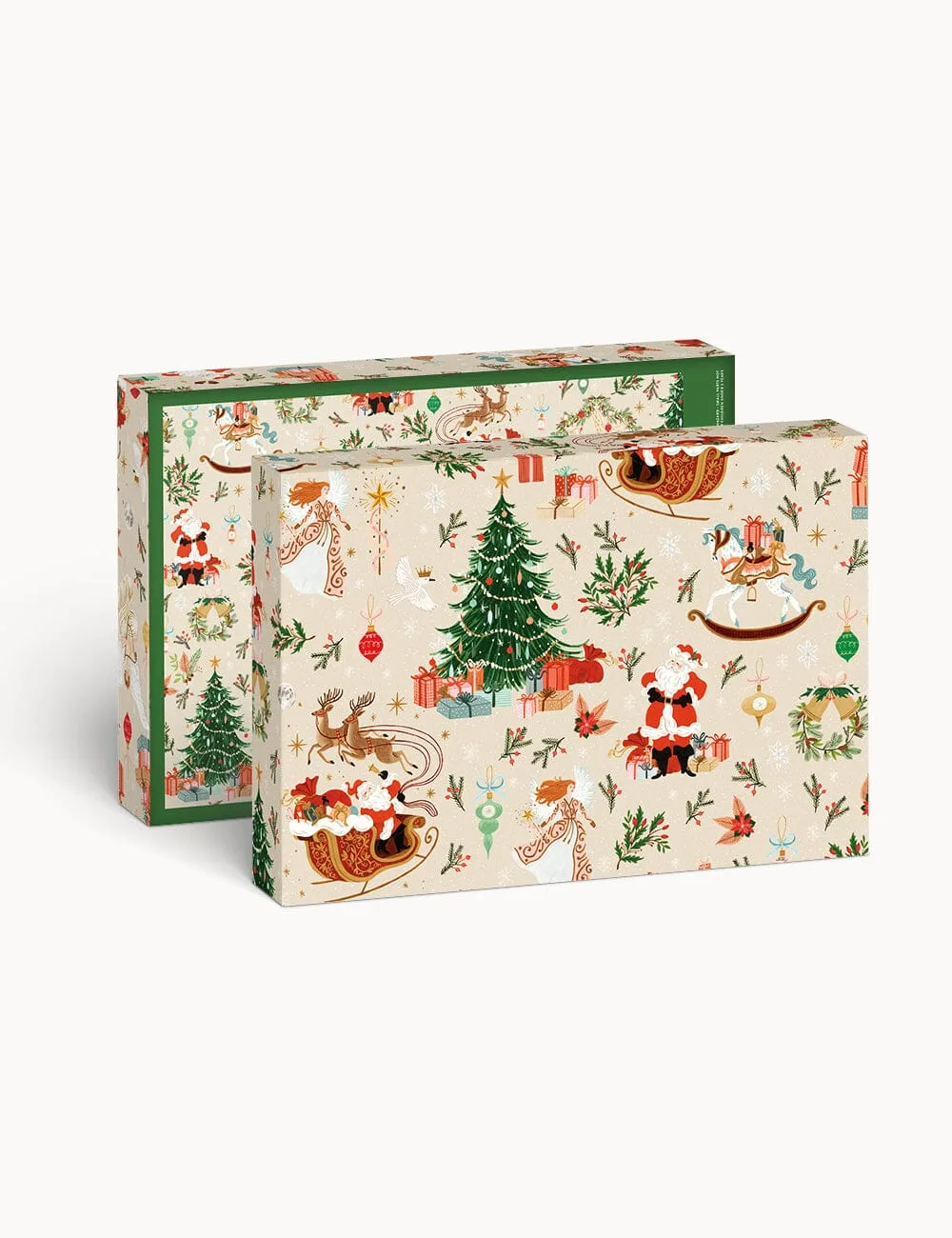
Jolly Santa 1000pc Christmas Puzzle
-
Three Vases with Lemon - Round 500pc Puzzle: Round 500-piece puzzle featuring a still-life illustration of three vases with lemon. The round shape and smaller piece count suit a quicker session and a smaller table, and the still-life image offers a calmer, less festive theme if you want a puzzle that works beyond Christmas.

Three Vases with Lemon - Round 500pc Puzzle
Which piece count fits your plans?
Best for
- Puzzlers who want a multi-evening project with a collectible limited-edition design
- Households with a dedicated puzzle table and two or more people working together
Not for
- Anyone with limited table space or a short attention window
- Shoppers looking for a quick, single-sitting activity or a small gift