
Quick answer
Pick the 17-inch Viking baking sheet if your oven's interior is wide enough for a full-size pan and you regularly bake in larger batches. Choose the 13-inch version if you cook for one or two people, work in a compact oven, or want a pan that is easier to handle and store.
The real difference is usable baking area, not just an inch count
Both sheets share the same construction: heavy-duty aluminized steel with a nonstick coating, oven safe to 475°F. The 17-inch model gives you noticeably more surface for spreading cookies, roasting vegetables in a single layer, or fitting multiple pieces of chicken without crowding. The 13-inch model trades that capacity for maneuverability.
Crowding is the practical dividing line. On the smaller pan, a big batch of cookies or vegetables steams instead of browning because pieces touch. The larger pan solves that, but only if your oven can accommodate it without blocking heat circulation.
Measure your oven before you commit to the 17-inch pan
A 17-inch sheet needs interior width and depth that leave clearance on all sides. Measure the flat usable area of your main rack, not the exterior oven dimensions, and subtract at least an inch on each side for airflow. If the pan touches the oven walls or door, heat distribution suffers and the pan can warp.
The 13-inch sheet fits more comfortably in smaller ovens, including many countertop models and older apartment-sized ranges. Viking does not list exterior dimensions in the supplied catalog facts, so confirm the exact footprint against your own oven before ordering if clearance is tight.
Batch size and cleanup trade-offs
The 17-inch pan is the better choice for meal prep, family dinners, and sheet-pan recipes that assume a full-size pan. It also gives you more room to rotate food and keep pieces separated.
The 13-inch pan is easier to wash by hand, fits in smaller sinks, and takes up less cabinet space. It is also lighter when loaded, which matters if you are lifting a hot pan of roasted vegetables out of the oven. Both feature nonstick coating, so neither requires heavy scrubbing if you avoid metal utensils and let the pan cool before washing.
Trade-offs at a glance
- Batch capacity: The 17-inch sheet holds more cookies, vegetables, or protein in a single layer, so you can cook for a family or meal-prep in fewer rounds. The 13-inch sheet is better suited to small batches and risks crowding if you overload it. If you routinely cook for four or more, the larger pan saves time.
- Oven fit: The 17-inch pan needs a wide, deep oven interior with clearance on all sides. The 13-inch pan fits more compact ovens and leaves more room for air circulation. Measure your rack before choosing the larger size. A pan that touches the oven walls will brown unevenly, no matter how good the steel is.
- Handling and storage: The 13-inch pan is lighter when full and easier to wash in a standard sink. The 17-inch pan takes up more cabinet space and is heavier to lift with a full load. If you have limited storage or wrist strength, the smaller pan is the more practical daily choice.
Product facts
-
Viking 13-Inch Aluminized Nonstick Baking Sheet: Heavy-duty aluminized steel with nonstick coating, oven safe to 475°F. The 13-inch size is easier to handle and store while still giving you even heat for smaller batches.
Viking 13-Inch Aluminized Nonstick Baking Sheet
Viking 13-Inch Aluminized Nonstick Baking Sheet
-
Viking 17-Inch Aluminized Nonstick Baking Sheet: Heavy-duty aluminized steel with nonstick coating, oven safe to 475°F. The 17-inch size provides more usable surface for larger batches, but only if your oven has the clearance for it.
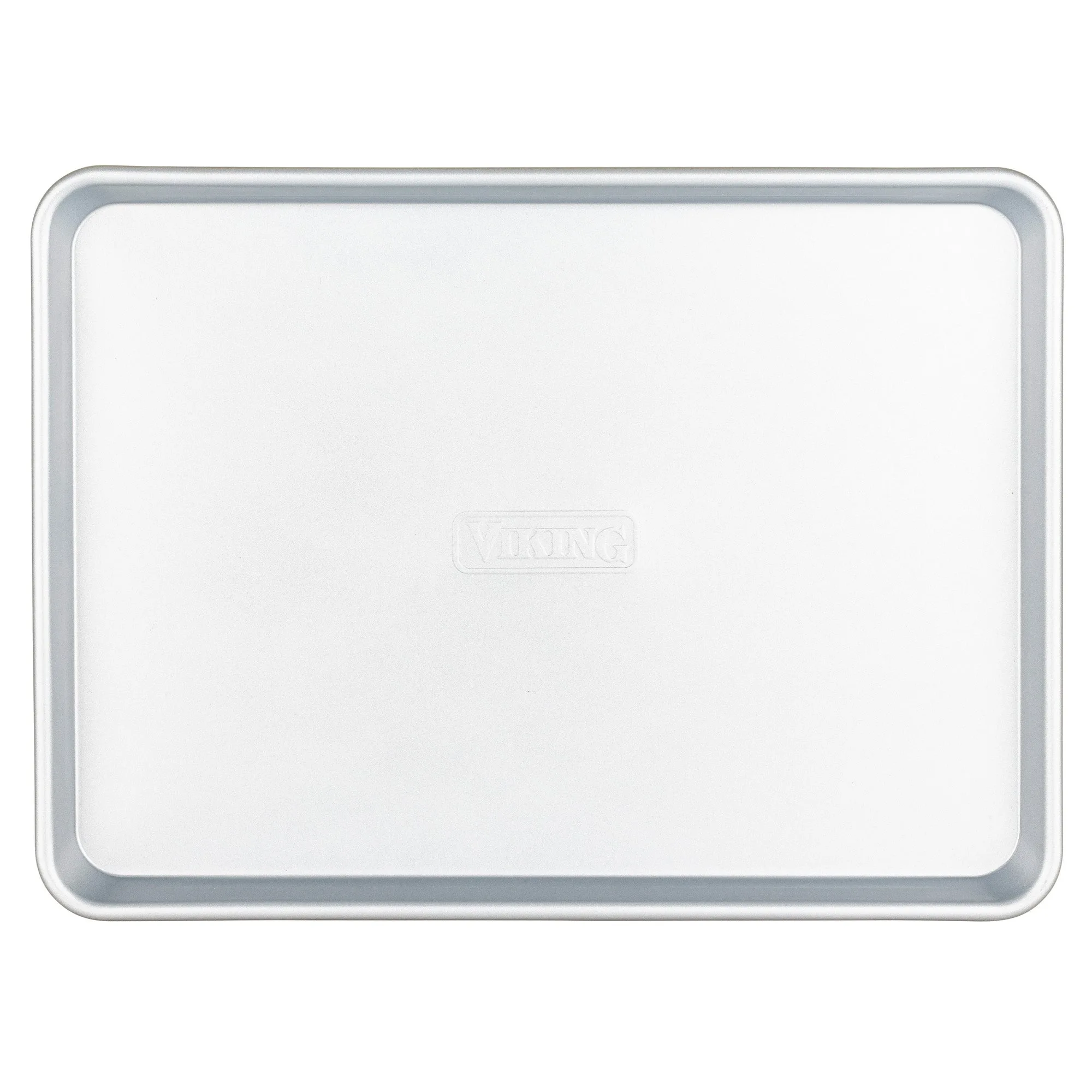
Viking 17-Inch Aluminized Nonstick Baking Sheet
Which size should you buy?
Best for
- Families or meal-preppers who bake full batches of cookies, roast vegetables, or cook sheet-pan dinners
- Cooks with a standard-width oven and enough cabinet space for a full-size pan
- Anyone who wants fewer rounds of baking and more even browning from spacing
Not for
- Small kitchens or compact ovens where a 17-inch pan would touch the walls
- Single cooks who mostly bake small batches and want easy cleanup
- Anyone who struggles with heavy pans when lifting hot food