Quick answer
Use the 13 Questions to Level-Up Your Family Dinner Conversations PDF to turn everyday meals into engaging discussions about big ideas with your children.
Why family dinner conversations matter
Intellectual disengagement is a real challenge for kids ages 5 to 15. When you introduce complex ideas at the dinner table, children often respond with surprising enthusiasm. The right questions can turn a routine meal into a moment of genuine connection and curiosity.
What makes this PDF different
This e-book is designed specifically to help parents start talking about big ideas with their children. It contains 13 carefully crafted questions that encourage critical thinking and open dialogue. Unlike generic conversation cards, these questions are tailored to spark meaningful discussions that go beyond surface-level chitchat.
How to use the 13 Questions PDF at dinner
- Choose one question before the meal: Pick a single question from the PDF that fits your child's age or current interests. Read it silently while you set the table so you're ready to bring it up naturally. Don't try to use all 13 questions in one sitting—focusing on one keeps the conversation manageable and meaningful.
- Ask the question casually after everyone sits down: Instead of announcing 'time for a discussion,' weave the question into the meal. For example, say, 'I was thinking about something interesting today...' and then pose the question. Avoid making it feel like a quiz or a lesson—the goal is natural curiosity, not a formal Q&A.
- Let your child lead the response: After asking the question, pause and give your child space to think. If they struggle, offer a simple example or ask a follow-up like 'What do you think about that?' Resist the urge to jump in with your own answer too quickly—the magic happens when kids work through the idea themselves.
- Keep the tone playful and open-ended: Encourage silly or unexpected answers. The PDF questions are designed to spark big ideas, so there's no single 'right' answer. Laugh together and explore tangents. If the conversation drifts off-topic, that's okay—the real goal is engagement, not sticking to a script.
- End with a positive wrap-up: After a few minutes, thank your child for sharing their thoughts. You can say something like, 'That was really interesting—I never thought of it that way.' Then transition back to the meal naturally. Don't force a conclusion or a moral—just let the discussion be a pleasant part of dinner.
Product facts
-
13 Questions to Level-Up Your Family Dinner Conversations (PDF): This e-book has 13 questions that will help you level up your family dinner conversations and start talking about big ideas with your children. You get a ready-to-use set of discussion starters that require no prep, making it easy to dive into meaningful talks right away.
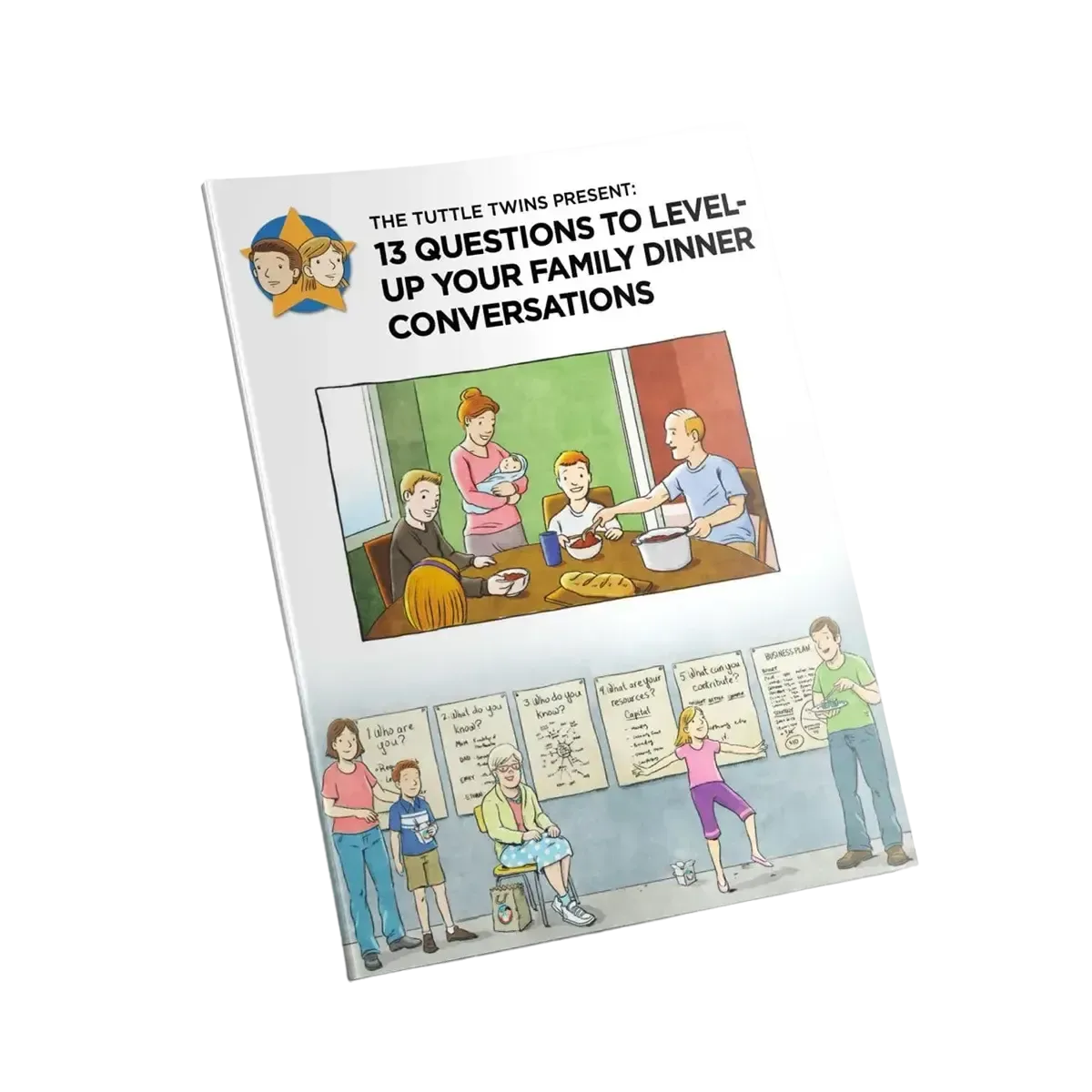
13 Questions to Level-Up Your Family Dinner Conversations (PDF)