Start with what a single-color bag can do
The 150 pc Bag - Ocean is one color in bulk, not a mixed set. That changes how you plan: you are not matching a pattern across many hues, you are shaping a single color into a form. With 150 pieces, small flat designs and compact 3D builds are realistic; large scenes are not.
Treat the bag as a color module. Build one piece you are happy with, then use the remaining pieces to extend it or start a second small build. The Ocean color works best when you let shape and shadow do the work rather than color contrast.
A practical first build: flat wave or fish
- Sort a working pile: Tip a portion of the 150 pieces onto a tray. Keep the rest in the bag so you are not searching through the full pile for each piece.
- Lay a flat base line: Start with a row of pieces on their sides to form a base edge. A flat start makes it easy to see the silhouette before you commit to height.
- Build the outline first: Use the .75 x .5 in (20mm x 12mm) pieces to trace a simple wave or fish outline. Outline-first keeps a single-color build readable.
- Fill inward, not outward: Fill the interior of the outline rather than adding pieces around the outside. This keeps the build compact and leaves pieces for a second project.
- Decide whether to go 3D: If pieces remain, stack a second layer on part of the flat build to create a raised section. A partial second layer adds depth without using the whole bag.
What the Ocean bag gives you for these builds
-
150 pc Bag - Ocean: 150 pieces in a single Ocean color A single-color count sets the realistic project size: small flat designs and compact 3D builds, not large multi-color scenes.
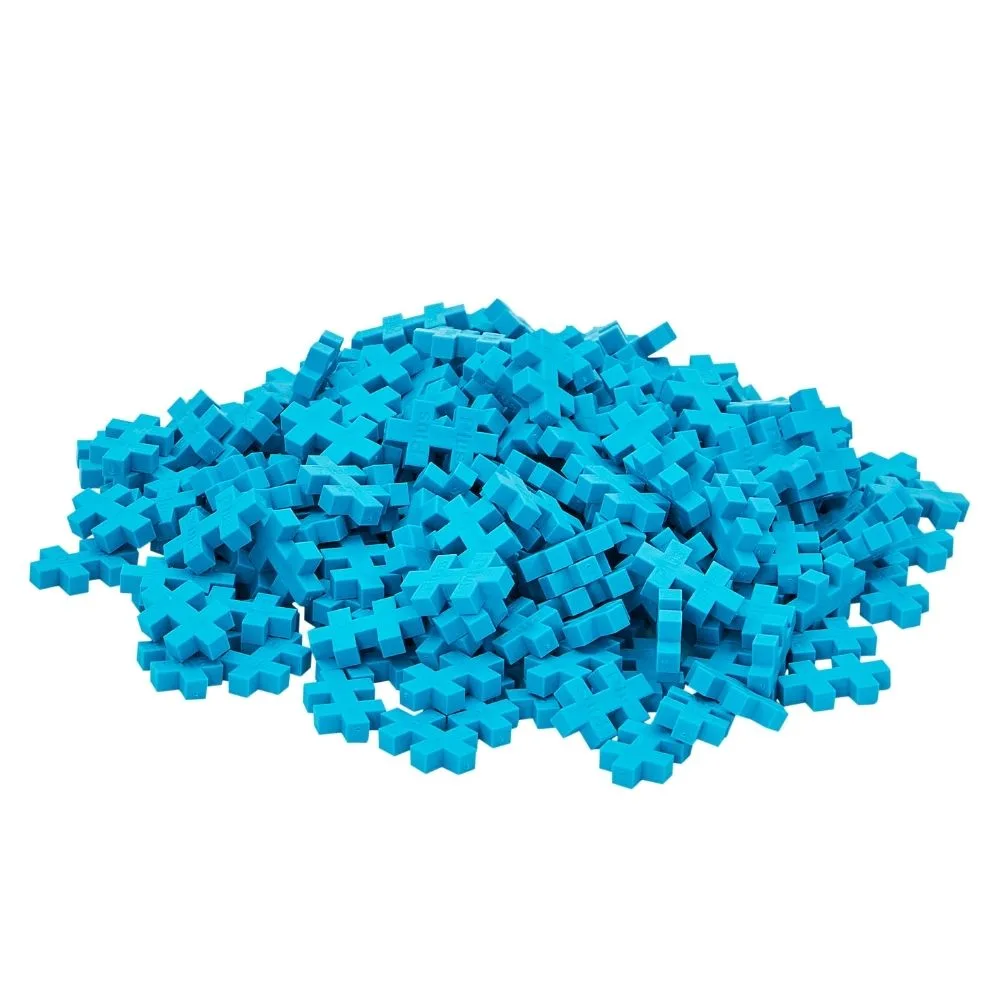
150 pc Bag - Ocean
-
150 pc Bag - Ocean: Each piece measures .75 x .5 in (20mm x 12mm) Knowing the piece size helps you judge how much surface a 150-piece build will cover before you start laying pieces out.
-
150 pc Bag - Ocean: Suggested for ages 5+ Age guidance matters when the bag is shared with younger builders or stored where children can reach it.
-
150 pc Bag - Ocean: Made with recyclable polyethylene plastic, BPA-free and phthalate-free Material details are useful when you are deciding where the bag lives and how you want to handle cleanup.
Build ideas that suit one color
These ideas stay within what 150 pieces can reasonably support. Each one can be built flat first and then raised if pieces remain.
- Wave strip: A long, low flat band with a rolling top edge. Good for testing how far 150 pieces stretch in a linear shape.
- Single fish: A compact flat fish with a tail and fin. Uses fewer pieces than a scene and leaves room for a second build.
- Small coral cluster: Several short upright stacks joined at a base. A partial 3D build that reads well in one color.
- Ocean tile: A square flat panel with a simple wave pattern pressed into the surface. A display-friendly shape for a shelf.
Storing the bag between builds
The bag itself is the first storage container. Keep unused pieces in it and close it after each session so pieces do not migrate across the floor. For a build in progress, keep the flat build on a tray or board rather than on a tablecloth, so it can be lifted without disturbing the layout.
Because the bag is a single color, sorting is simpler than with a mixed set: there is no color separation to do. The useful sort is by status — pieces in the bag, pieces in the current build, and pieces set aside for the next idea. A small tray or bowl for each keeps the routine quick.
If you download the free Plus-Plus app for more ideas, treat those ideas as starting points and scale them down to what 150 pieces can support. The supplied information does not confirm specific storage containers or cleaning methods, so keep storage simple and dry.
When the Ocean bag is the right buy
Choose the 150 pc Bag - Ocean when you need more of one color to finish or extend a build, or when you want a focused single-color project. It is also a practical way to add bulk pieces without committing to a large mixed set.
If your goal is a multi-color scene, a single-color bag will not get you there on its own. In that case, treat the Ocean bag as one module in a larger collection rather than a standalone kit.