Quick answer
To shape wire with the Pepetools 160mm All Wire Shapes mill, start with clean, annealed wire no thicker than the groove you plan to use, feed it squarely into the correct groove, and pass it through in multiple light reductions rather than one heavy pass.
Why light passes beat heavy reductions
The 4:1 reduction gearbox on this mill multiplies torque, so it feels easy to force a heavy pass. Resist that temptation. Wire that is reduced too much in one pass can become misshapen, develop fins, or work-harden unevenly. Two or three lighter passes per groove give you cleaner profiles and less stress on the mill.
Because the gearbox requires only four turns of the handle to produce up to 8 inches of wire, you can move through passes quickly. Use that speed to your advantage by planning a sequence of gradually smaller grooves rather than trying to jump to the final size.
Matching wire to groove shape
Each shape—triangle, round, bezel, and half round—has its own groove sequence in the roll. The mill can work gold, silver, copper, and similar materials, but the wire must start close to the groove's intended cross-section. For example, a triangle groove needs a roughly triangular or square starting wire, while a half round groove works best from a round or square wire of appropriate size.
If you are unsure which groove to start with, begin with the largest groove for your chosen shape and test with a short scrap piece. The mill's ability to create unique shapes depends on progressive forming, not on forcing a round wire into a finished triangle in one step.
Step-by-step wire shaping process
- Prepare and anneal your wire: Cut a straight length of wire and anneal it to a soft state according to the metal's usual practice. Remove any burrs or kinks. Check that the wire diameter fits comfortably inside the largest groove for your intended shape. Common mistake: starting with work-hardened wire, which can crack or overload the mill. If the wire does not sit fully in the groove, choose a smaller starting wire or a larger groove.
- Set the roll gap and align the groove: Open the rolls enough that the wire enters the groove without forcing. Align the wire squarely with the groove and keep it centered as you begin to close the gap. Common mistake: misaligning the wire so it rides on the groove's edge, which produces fins or a distorted profile. Feed the wire by hand for the first inch to confirm it tracks straight before committing to a full pass.
- Make the first light pass: Turn the handle at a steady speed and guide the wire straight through the groove. Do not pull the wire from the far side; let the mill draw it. Common mistake: rushing or pulling, which can twist the wire or leave marks. If the handle becomes hard to turn, stop and reduce the gap change—do not force it.
- Inspect and anneal between passes: After each pass, check the wire for straightness, surface finish, and shape. Anneal again if the wire feels stiff or shows signs of cracking. Common mistake: skipping annealing and continuing to roll work-hardened wire, which leads to breakage or poor shape. Keep a scrap piece of the same wire to test annealing intervals without risking your good stock.
- Progress through the groove sequence: Move to the next smaller groove for your chosen shape and repeat the light-pass process. For triangle, round, bezel, and half round, follow the groove order marked on the mill or in the manufacturer's guide. Common mistake: jumping multiple groove sizes at once, which can cause the wire to skew or the rolls to deflect. If the wire starts to skew, back up one groove size and re-anneal before continuing.
- Finish and clean the wire: Once the wire reaches the desired profile, remove it and clean any rolling residue with a soft cloth. Store the mill with the rolls slightly open to protect the grooves. Common mistake: leaving the rolls tightly closed, which can flat-spot the grooves over time. Label or note the groove sequence you used so you can repeat the same profile consistently.
Product facts
-
160MM All Wire Shapes (Triangle, Round, Bezel, Half Round): The mill uses a 4:1 reduction gearbox that requires only 4 turns of the handle to create up to 8 inches of wire. That means you can make multiple light passes quickly without tiring, which is key to clean wire shaping.
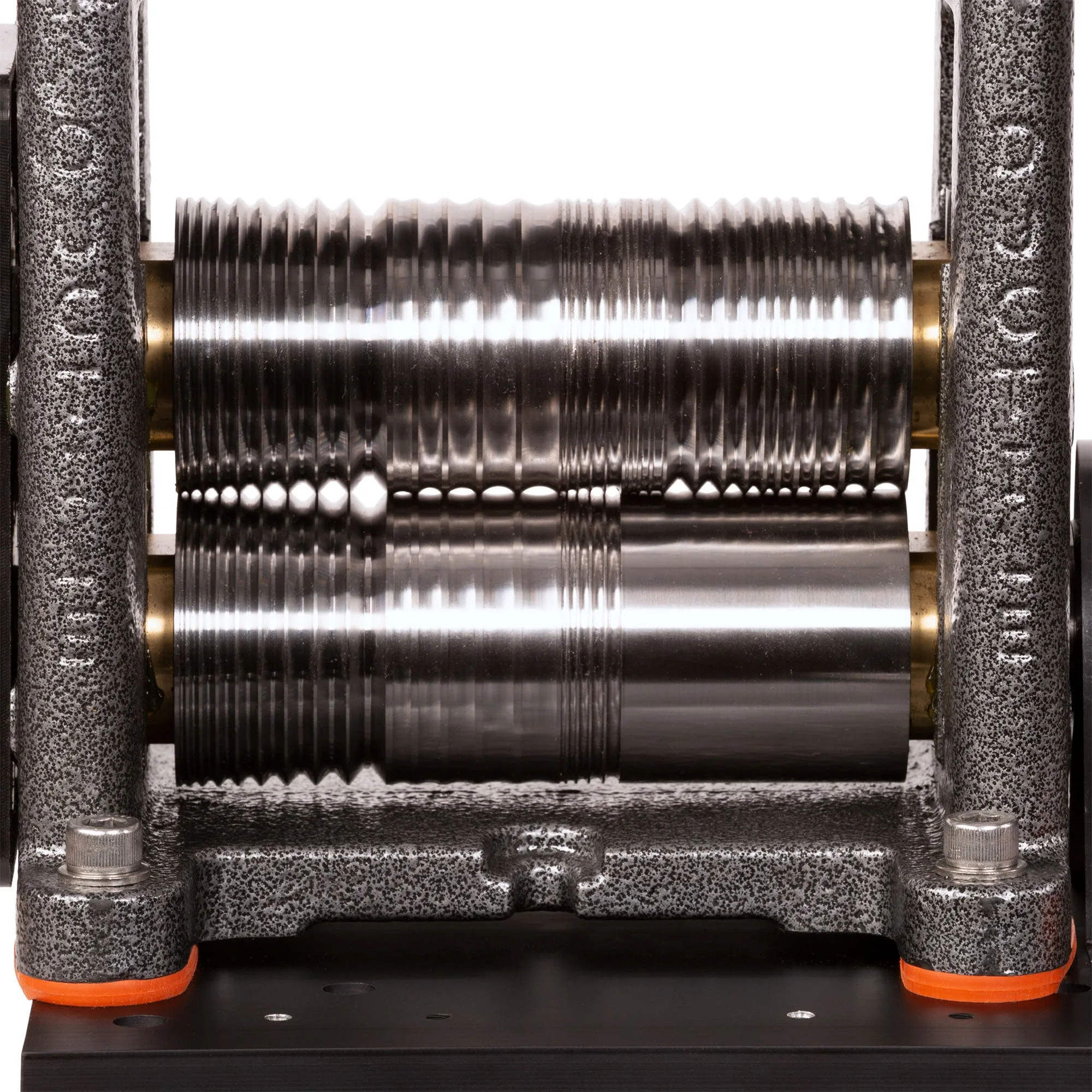
160MM All Wire Shapes (Triangle, Round, Bezel, Half Round)