Quick answer
Choose a 1980s music trivia game when you want a lightweight, nostalgia-driven quiz that works for mixed-age groups and doubles as a singalong. Skip it if your group expects deep artist biography questions or a solo challenge.
Why 80s music trivia works for parties and family nights
The 1980s produced a wide range of memorable hits, from synth-pop to hair metal, so most players will recognize at least a few songs. That broad familiarity makes an 80s music quiz game a safe pick for parties where guests have different music knowledge. It also gives younger players a chance to learn the decade’s chart-toppers without feeling lost.
A retro music trivia for parties often leans on team play and singalong moments. That format keeps energy high and reduces pressure on any one person. If your group enjoys laughing at wrong answers and belting choruses, the game becomes more about shared fun than competition.
Trade-offs: depth vs. accessibility
A lightweight 80s trivia game for adults usually favors recognition over deep knowledge. You might get questions about song titles, artists, or next lines rather than obscure B-sides or release dates. That is a feature for casual crowds but a drawback for music nerds who want a serious challenge.
Also consider the number of players. Many music trivia games are designed for teams, so they work best with four or more people. If you often host two-person game nights, check whether the format supports small groups or offers a two-player variant. Without that flexibility, you may need to adapt the rules or choose a different quiz.
When to choose a different music trivia game
If your group knows the 90s or 2000s better, a decade-specific game from those eras will land more reliably. Similarly, if you want a game that covers multiple decades, a general music trivia title may be a better fit. For a focused 80s night, though, a dedicated eighties music quiz keeps the theme tight and the references consistent.
Decision rules for buying an 80s music trivia game
- Match the game to your group size: If you regularly host four or more players, choose a team-based music trivia game. For smaller groups, look for a game that works with two players or offers flexible rules. Team formats boost energy but can leave pairs without a fair match.
- Decide between quiz and singalong: Pick a game that offers both trivia questions and next-line singing if you want variety. If your group is strictly competitive, a pure quiz format may be better. Singalong modes lower the barrier for casual players.
- Check the age range and music knowledge: An 80s music quiz game suits adults who grew up with the decade, but also works for mixed ages if the hits are widely known. Avoid it if your group prefers current chart music. Nostalgia is the main draw—confirm your guests share it.
- Set a budget and compare formats: Music trivia games vary in price and components. A compact card game is often more affordable and portable than a board game with electronic features. Portability matters if you plan to bring the game to parties.
Product facts to know
-
1980s Music Trivia Game: Offers two ways to play: trivia questions or next-line singing. Lets you match the game to your group’s energy—quiz-focused or singalong-ready.
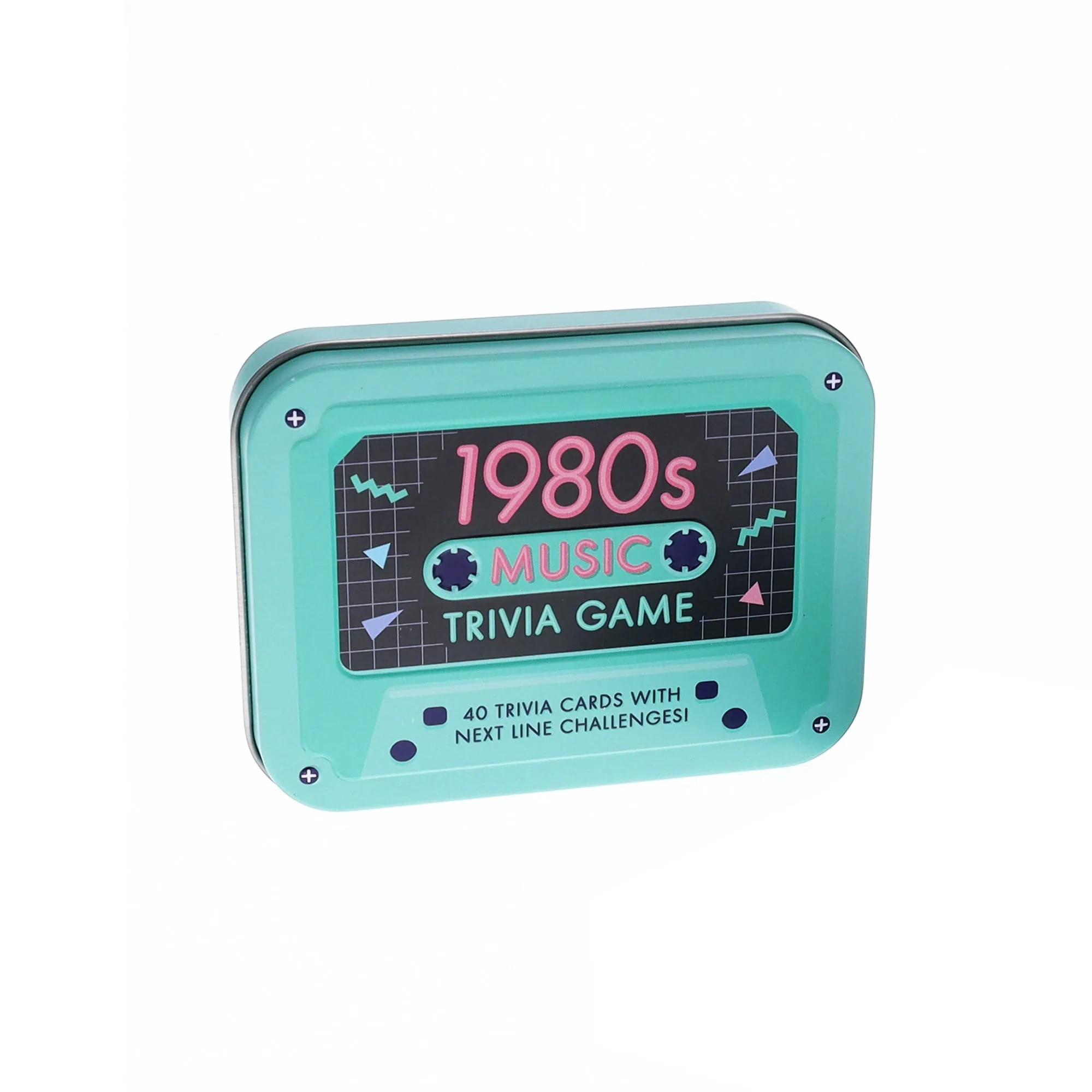
1980s Music Trivia Game
Is this 80s music trivia game right for you?
Best for
- Hosts planning a retro music trivia night for adults
- Families with teens who want a nostalgic, singalong-friendly quiz
- Casual party groups that prefer recognition over deep music knowledge
Not for
- Solo players looking for a challenging music quiz
- Groups that prefer 90s or 2000s music
- Serious music buffs who want obscure facts and artist deep-dives