Quick answer
Choose the 7.5in 26 Tooth Curved Double Time Blenders for softer, shape-following blends on curved areas like legs and faces. Choose the 7in 23 Tooth Straight Double Time Blenders for more direct, controlled work on flat coat and body lines.
What tooth count changes in a blender
Tooth count is the main lever for how much coat a blender takes off. The 26 tooth curved blender spreads the cut across more teeth, so each pass removes a smaller share of hair. The 23 tooth straight blender has fewer teeth, so each tooth carries more of the cut and the result reads slightly more direct.
In practice, the 26 tooth version suits finicky areas where you want to sneak up on a blend. The 23 tooth version suits spots where you already know how much you want gone and want fewer passes to get there.
Curved vs straight blade shape
The curved blade follows rounded contours such as hocks, elbows, and the curve of a head. It lets you blend around a shape without constantly repositioning the shear. The straight blade is easier to keep level on flat planes like the back, ribcage, and tail set, where a curved edge can drift off the line you intended.
Length and handle trade-off
The 7.5in curved blender gives you a little more reach and leverage around larger curved areas, but the extra length is less forgiving in tight, detailed work. The 7in straight blender is the more compact option for controlled work close to the skin and around joints.
Both models share the same even handle with a twist for a more ergonomic design and can be used in both directions. That twist is a grip feature, not a left-handed conversion: neither shear is ambidextrous, so left-handed groomers should not expect these handles to mirror the fit of a dedicated left-handed shear.
Trade-offs to weigh before you buy
- Softer blend vs faster result: The 26 tooth curved blender removes less per pass, which gives you more room to correct but takes more passes. The 23 tooth straight blender removes more per pass, which is faster but leaves less margin for error. If you are still learning to blend, start with the 26 tooth and add the 23 tooth once your hands are steady.
- Rounded contours vs flat planes: Pick the curved blade when most of your blending happens on legs, faces, and other rounded shapes. Pick the straight blade when most of your work is on backs, sides, and other flat surfaces.
- Reach vs control: The 7.5in curved model gives more reach around large curved areas but is less precise in tight detail. The 7in straight model is shorter and easier to control close to the skin.
- Handle direction: Both have an even handle with a twist and can be used in both directions, but neither is ambidextrous. Left-handed groomers should treat these as right-handed tools and look for a dedicated left-handed option instead.
Product facts at a glance
-
7.5in 26 Tooth Curved *Double Time* Blenders: 7.5in, 26 tooth curved blenders in 440C steel with a ball bearing pivot system. The higher tooth count and curved edge favor softer, shape-following blends on rounded areas.
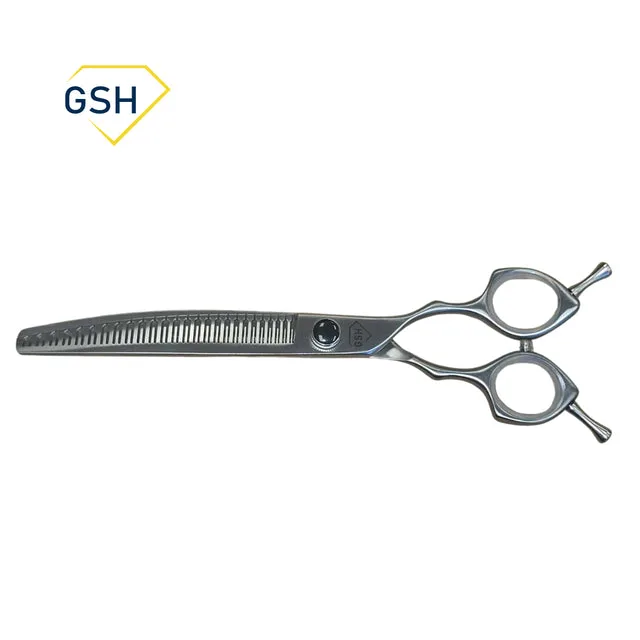
7.5in 26 Tooth Curved *Double Time* Blenders
-
7in 23 Tooth Straight *Double Time* Blenders: 7in, 23 tooth straight blenders in 440C steel with a ball bearing pivot system. The lower tooth count and straight edge favor more direct, level work on flat coat.
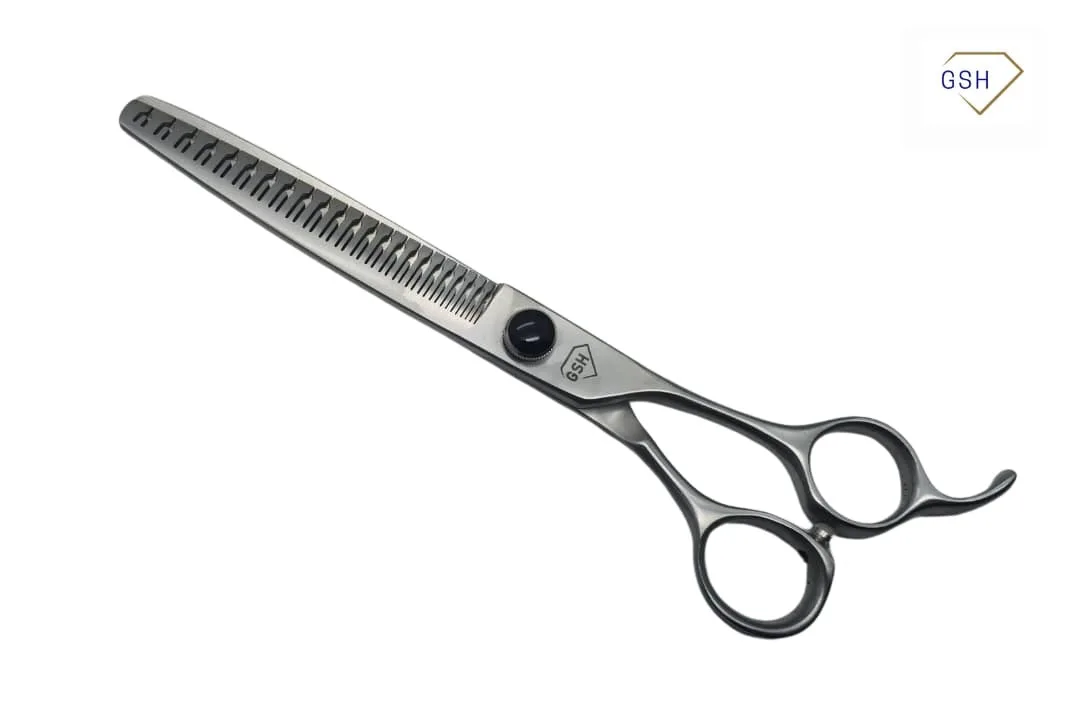
7in 23 Tooth Straight *Double Time* Blenders
Which blender fits your grooming
Best for
- Groomers who blend rounded areas like legs, faces, and hocks and want a softer, more forgiving cut
- Groomers who prefer a longer shear for reach around larger curved shapes
- Groomers who want a higher tooth count for gradual blending on tricky coats
Not for
- Groomers who mostly blend flat body coat and want a direct, level cut (choose the 23 tooth straight)
- Groomers who need a compact shear for tight detail work (choose the 7in straight)
- Left-handed groomers who need a true ambidextrous or left-handed shear