Quick answer
Use a 2oz baby bottles 2 pack as a flexible pair: one for small newborn feeds and one for short-term pumped milk storage. Keep the feed bottle matched to your baby's current appetite and treat the storage bottle as a single-serving container.
Why a 2oz pair works well in the newborn stage
Newborn appetites are small and change quickly, so a 2oz bottle often matches early feeding amounts better than a larger bottle. Having two means you can keep one clean and ready while the other is in use or drying. The Baby Bottles 2oz (2 pack) also gives you a spare for pumped milk without committing to a full set of larger bottles.
The trade-off is capacity: as your baby's intake grows, you will likely need larger bottles. The 2oz pair remains useful for small pumped milk portions, supplement feeds, or travel, but it is not a long-term sole bottle.
When to use the 2oz bottle for feeding versus storage
Reserve one bottle for direct feeding and the other for pumped milk storage to avoid confusion. If you use both for feeding, establish a simple rotation so each bottle is washed and air-dried before its next use. For storage, label the bottle with the date and time, and keep it in the coldest part of the fridge rather than the door.
A common mistake is treating a 2oz storage bottle like a larger freezer container. Small bottles are best for single servings you plan to use within a short window; if you need longer storage, use a dedicated storage bag or container.
Step-by-step: using your 2oz bottles for feeding and storage
- Match the feed amount to your baby's cues: Start with a small amount in the 2oz bottle and offer more only if your baby still seems hungry after a pause. Common mistake: filling the bottle to the top because it is small, which can encourage overfeeding or waste. Checkpoint: watch for slow sucking and turning away as signs to stop. Let your baby's cues, not the bottle size, set the amount.
- Choose the right nipple flow for the feed: Select the nipple flow option that suits your baby's current feeding pace. If milk drips steadily when the bottle is tipped without sucking, the flow may be too fast. Common mistake: sizing up too early because the feed seems slow. Checkpoint: a comfortable feed should take roughly 10–20 minutes without frantic gulping. A too-fast flow can cause gulping and gas even in a small bottle.
- Portion pumped milk into single servings: Fill the storage bottle with the amount you expect your baby to take in one feed, leaving a little headroom for expansion. Common mistake: combining milk from different pumping sessions into one small bottle without cooling each portion first. Checkpoint: label with date and time and use the oldest portion first. Small bottles are best for single servings, not combined top-ups.
- Store and reheat safely: Keep filled bottles in the refrigerator and use them within the recommended window for your milk type. Reheat by placing the bottle in warm water, not in the microwave. Common mistake: reheating a bottle more than once. Checkpoint: swirl gently and test a drop on your wrist before feeding. Never refreeze thawed milk or reheat a bottle twice.
- Clean both bottles after every use: Wash bottles, nipples, and vents in hot soapy water, then rinse and air-dry fully before reassembling. Common mistake: forgetting to clean inside the vent, which can trap milk residue. Checkpoint: hold the nipple up to the light to confirm the vent is clear. A clear vent supports the anti-colic design; a blocked one defeats it.
Product facts
-
Baby Bottles 2oz (2 pack): The NaturalWave nipple has a wide base and gradual slope designed to help baby latch naturally and comfortably. A familiar latch shape can make the transition between breast and bottle easier for small feeds.
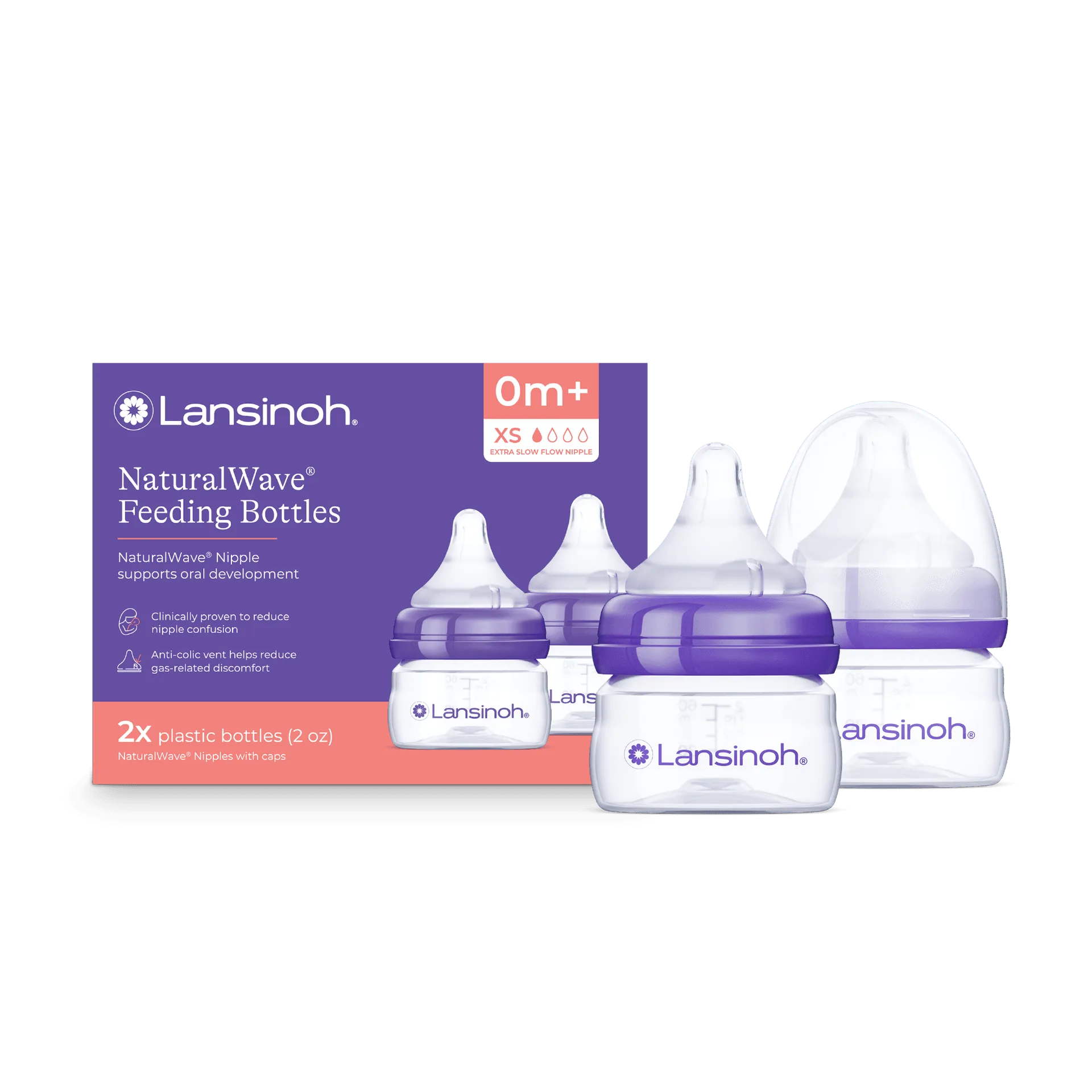
Baby Bottles 2oz (2 pack)
-
Baby Bottles 2oz (2 pack): The Air Ventilation System is clinically proven to reduce causes of colic, and the nipple is vented to help prevent gas, fussiness, and spit up. Venting matters most in the newborn stage, when frequent small feeds can otherwise trap air.