Two 3" Bullet Tweeters, Two Different Priorities
When you're shopping for a 3" bullet tweeter, the two main options from DS18 take different approaches. The GTX2 uses a neodymium magnet and titanium voice coil for light weight and high sensitivity. The PRO-TSQ3IN1 uses an aluminum voice coil and a modular mounting system for installation flexibility. The right choice depends on your system's power, placement, and crossover capabilities.
Key Specifications at a Glance
-
3” Super Bullet Tweeter with 1” Titanium Voice Coil and Neodymium Magnet | 120W RMS 4-Ohm: Rated at 60W AES, 120W program, and 240W peak. Sensitivity 100dB. Frequency range 650Hz–20kHz. Recommended high-pass crossover: 2kHz. The GTX2 needs a 2kHz crossover to protect its titanium voice coil, but its wide bandwidth lets it handle mid-high content if you have the right filter.
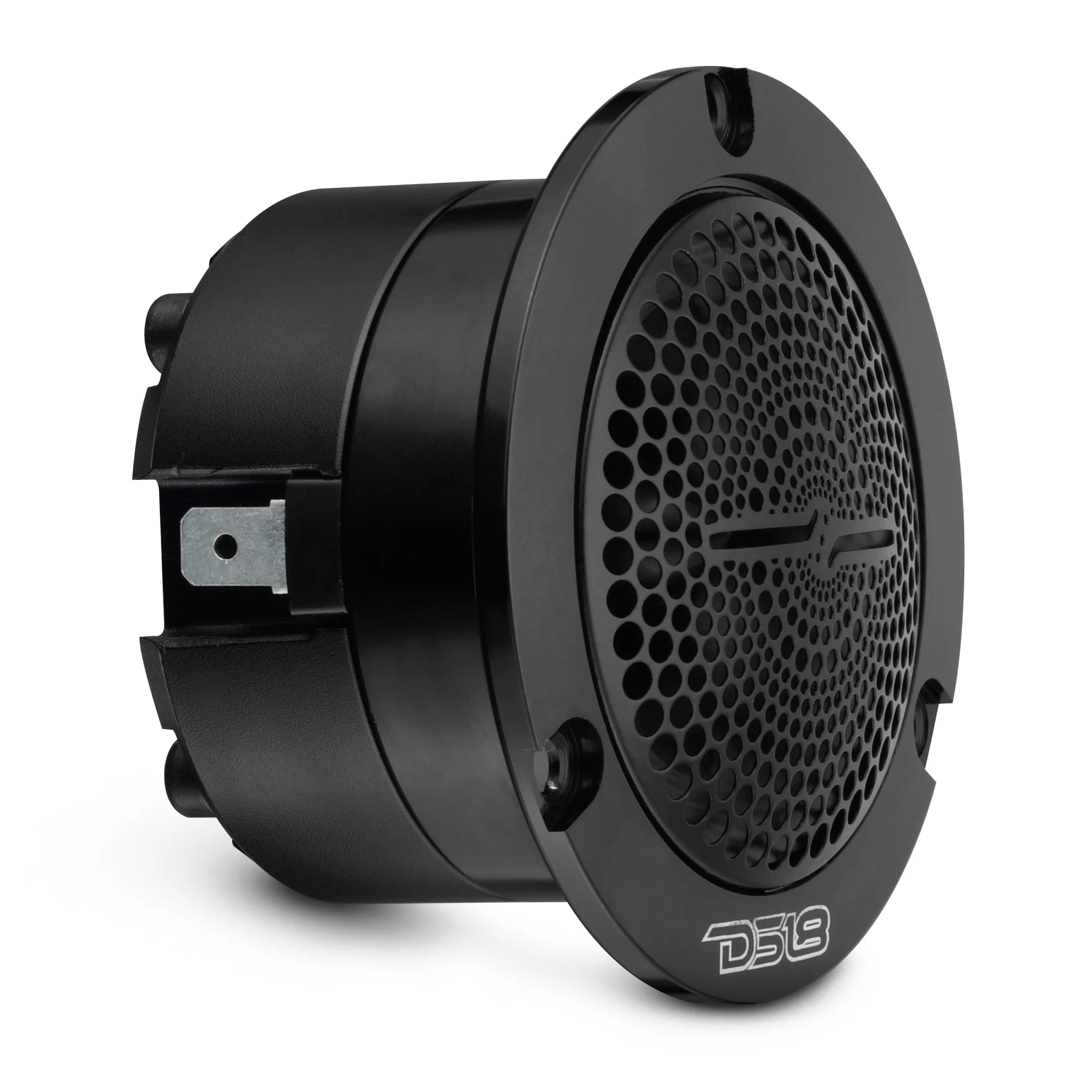
3” Super Bullet Tweeter with 1” Titanium Voice Coil and Neodymium Magnet | 120W RMS 4-Ohm
-
3" Surface/Flush/Angle High Compression Neodymium Super Bullet Tweeter 100 Watts 1" Aluminum 4-Ohm Vc: Rated at 50W AES, 100W program, and 200W peak. Sensitivity 102dB. Frequency range 3kHz–20kHz. Recommended high-pass crossover: 2kHz. The PRO-TSQ3IN1 is slightly more sensitive and has a narrower bandwidth, so it's best used strictly as a super-tweeter above 3kHz.
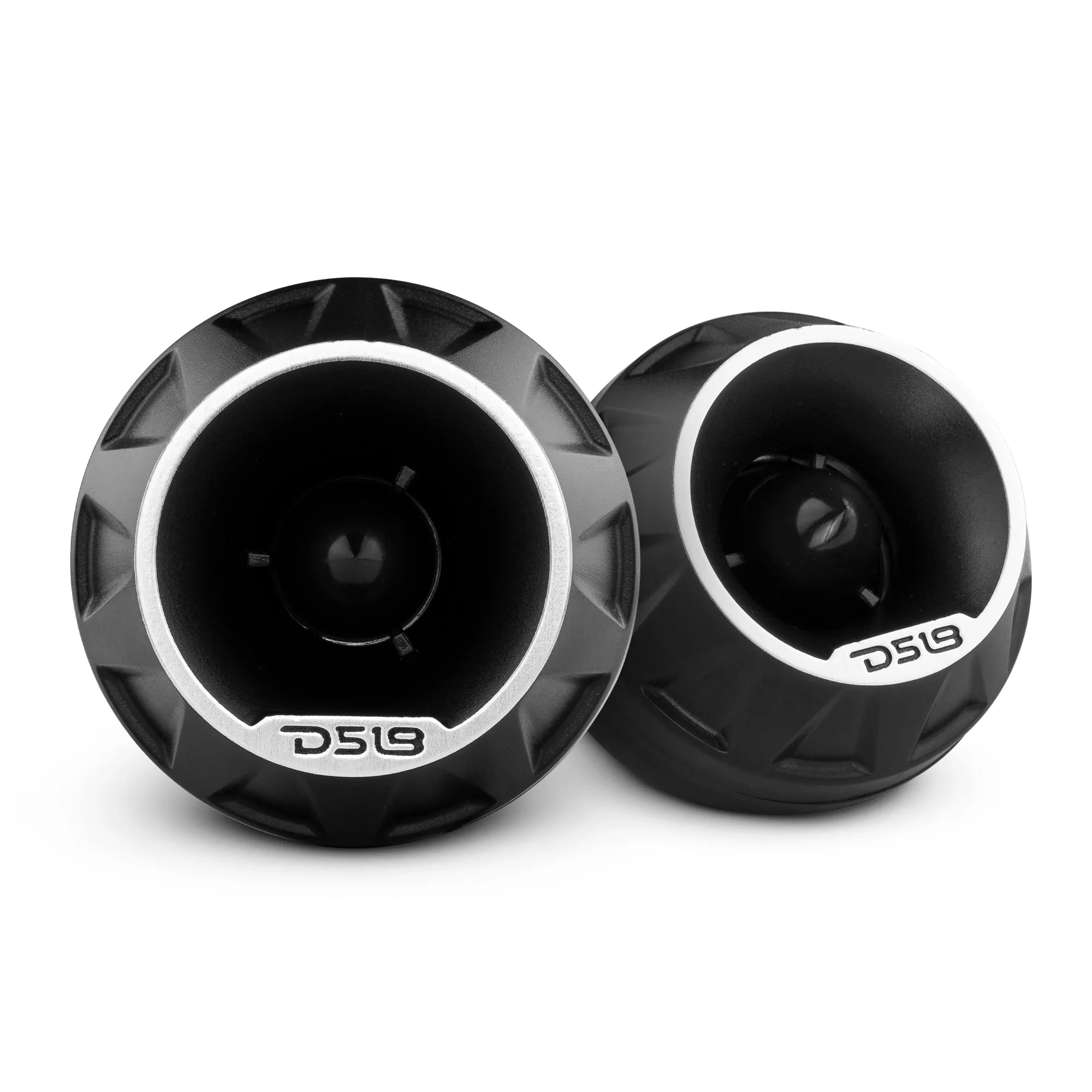
3" Surface/Flush/Angle High Compression Neodymium Super Bullet Tweeter 100 Watts 1" Aluminum 4-Ohm Vc
Neodymium Magnet (GTX2) vs Aluminum Voice Coil (PRO-TSQ3IN1)
The magnet and voice coil materials affect weight, heat handling, and sound character. Here's how they compare in real builds.
- Weight and mounting depth: The GTX2's neodymium magnet (38x14mm) keeps it light and compact, with a mounting depth of just 1.46". The PRO-TSQ3IN1 uses a neodymium magnet too, but its overall depth varies by mounting mode (1.39" flush, 2.3" angle). If space is tight, the GTX2 is easier to fit in dash pods or A-pillars.
- Power handling and voice coil: The GTX2's 1" titanium voice coil handles 60W AES / 120W program. The PRO-TSQ3IN1's 1" aluminum (CCA) voice coil is rated at 50W AES / 100W program. Both are 4-ohm, but the GTX2 has a slight edge in sustained power handling.
- Sensitivity and efficiency: The PRO-TSQ3IN1 is 2dB more sensitive (102dB vs 100dB), meaning it will play louder with the same wattage. However, its narrower bandwidth (3kHz–20kHz) means it's only adding extreme highs, while the GTX2 covers down to 650Hz.
- Mounting flexibility: The PRO-TSQ3IN1 includes modular pieces for flush, angle, and flat surface mounting. The GTX2 is a fixed bullet design. If you need to aim the tweeter or fit unusual enclosures, the PRO-TSQ3IN1 gives you more options.
Crossover Considerations
Both tweeters require a high-pass crossover at 2kHz for protection. The GTX2 can play down to 650Hz, so it can handle mid-high frequencies if your crossover is set lower, but DS18 still recommends 2kHz for maximum performance. The PRO-TSQ3IN1's response starts at 3kHz, so it will only reproduce the highest frequencies. Make sure your amplifier or DSP has a suitable high-pass filter before installing either tweeter.
Which One Fits Your Build?
Choose the GTX2 if you want a lightweight, compact tweeter that can handle more power and play lower frequencies. Its titanium voice coil and neodymium magnet make it a strong choice for SPL builds where every ounce matters. Choose the PRO-TSQ3IN1 if you need mounting flexibility (flush, angle, or surface) and want the highest possible sensitivity for ear-piercing highs above 3kHz. Both are 4-ohm, 3" bullet tweeters, but their strengths suit different system goals.