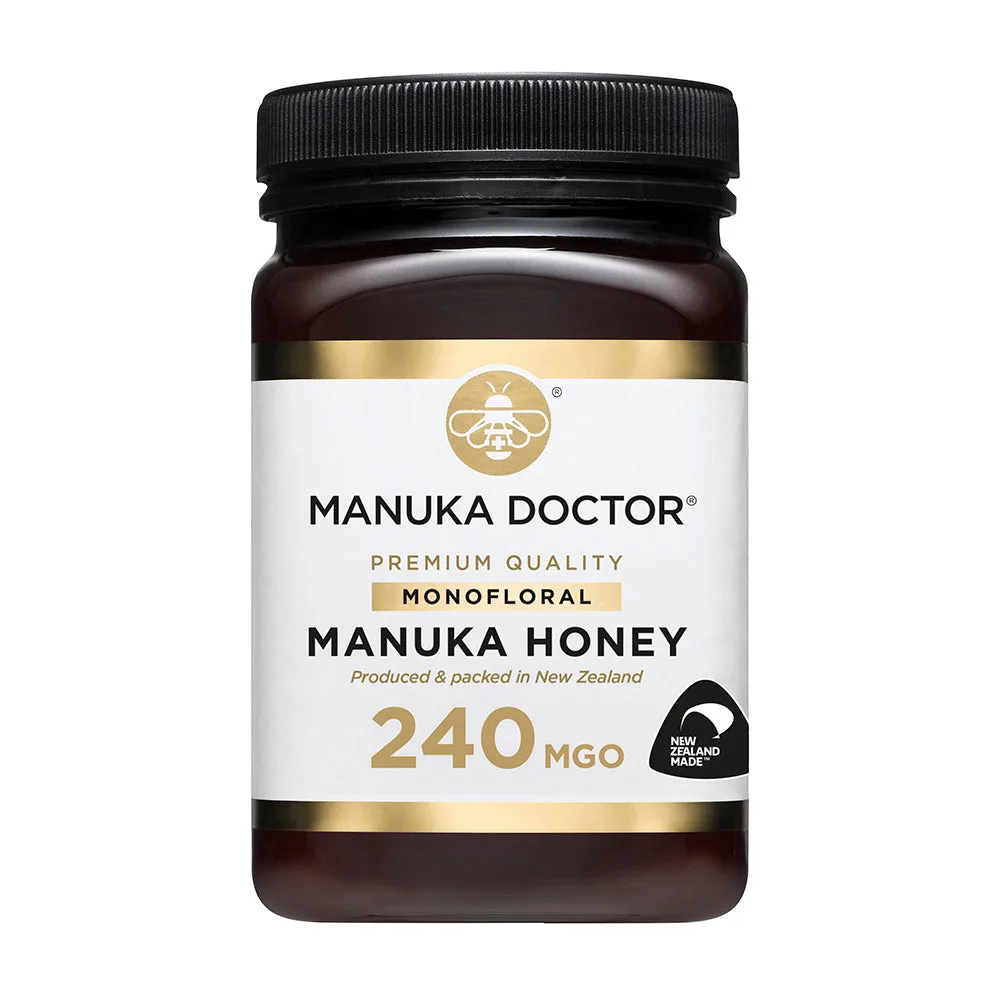
What You Get with 340 MGO Manuka Honey
If you are looking for a Manuka honey that balances noticeable potency with everyday practicality, the 340 MGO Manuka Honey 500g jar is worth a close look. The MGO number—340 mg of methylglyoxal per kilogram—indicates a mid-range strength that is higher than entry-level honeys but not as intense as the strongest offerings. This makes it a versatile choice for daily wellness routines where you want genuine Manuka activity without the intensity of ultra-high MGO grades.
The 500g jar is the larger format from Manuka Doctor, which means fewer reorders and a better value per gram than the 250g size. For someone who uses Manuka honey daily—whether by the spoon, stirred into warm drinks, or spread on toast—this jar size aligns with consistent use. The honey itself is monofloral, meaning it comes predominantly from the Manuka bush, and each batch is tested and traceable back to the hive.
Product Evidence: 340 MGO Manuka Honey 500g
-
340 MGO Manuka Honey 500g - Monofloral: This 340 MGO Manuka Honey is monofloral and contains at least 340 mg/kg of methylglyoxal, the key natural compound responsible for its antibacterial properties. The MGO number gives you a measurable, third-party verified indicator of the honey's activity. 340 MGO is a sweet spot for daily use—strong enough to be effective, yet mild enough for regular enjoyment.
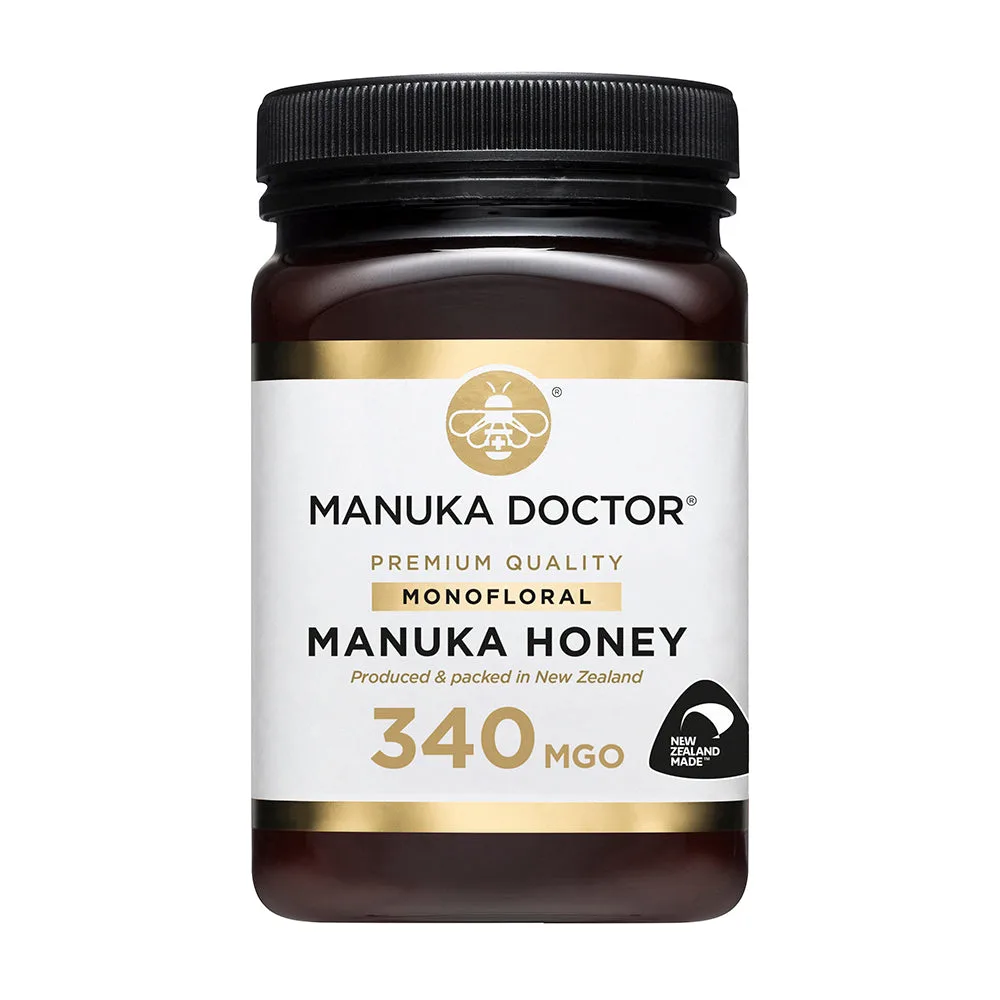
340 MGO Manuka Honey 500g - Monofloral
-
340 MGO Manuka Honey 500g - Monofloral: The 500g jar is packaged in 100% recycled, NZ-made rPET plastic pots, chosen because they are lighter and have a better environmental balance than glass for shipping from New Zealand. If you are buying a larger jar for daily use, the packaging choice matters for sustainability and practicality. The rPET pot is BPA-free and reduces shipping emissions compared to glass.
-
340 MGO Manuka Honey 500g - Monofloral: Each batch is traceable via an online checker using the unique batch code on the jar, with test certificates confirming the MGO level and compliance with New Zealand MPI standards. Traceability gives you confidence that the honey you are using daily meets the stated potency. You can verify the batch yourself, which is especially important when relying on a product for wellness.
How 340 MGO Fits into a Daily Routine
Customer surveys from Manuka Doctor indicate that 74% of their Manuka honey customers take it every day, and 49% of those using the max strength enjoy it straight off the spoon. For a 340 MGO honey, the flavor profile is described as well-balanced—first sweet, then woody, with a slight bitterness at the end. It is less sweet than mass-produced honeys, which some people find more palatable for daily use compared to very high MGO honeys that can have a stronger aftertaste.
Because the MGO number is a concentration, not a serving size, a daily serving of 340 MGO honey delivers a consistent amount of active compounds. The 500g jar provides roughly 100 servings if you take a teaspoon (about 5g) per day, making it a practical choice for someone who wants to stock up without worrying about running out quickly.
340 MGO vs. Other Strengths: What You Gain and Give Up
- vs. 100–240 MGO (lower strength): A 340 MGO jar gives you a higher concentration of methylglyoxal, meaning more antibacterial activity per spoonful. You gain potency without jumping to the highest tier, which can be useful if you want a noticeable effect but find very high MGO honeys too intense in flavor or cost.
- vs. 540–1000+ MGO (higher strength): Higher MGO numbers offer even stronger activity, but they come with a higher price per gram and a more pronounced bitter aftertaste. For everyday wellness—like adding to tea, yogurt, or eating by the spoon—340 MGO is often sufficient and more economical. You give up the maximum potency, but you gain a more versatile, budget-friendly daily option.
Honest Trade-Offs of the 500g Jar
The 500g jar is a good value, but it is a commitment in terms of both space and usage. If you are new to Manuka honey or only use it occasionally, a 250g jar might be a better starting point to see how you like the taste and texture before buying a larger size. Also, because the honey is transported by sea from New Zealand, the rPET pot is lighter than glass—but once opened, you will need to store it in a cool, dry place and use it within a reasonable time. The best-before date on jars purchased directly from Manuka Doctor will have at least 6 months remaining, but a 500g jar could last many months if you use it daily.
Another consideration: Manuka honey should not be given to infants under 12 months old. This is a safety note that applies to all honey, not just Manuka, but it is worth remembering if you are buying for a household with young children.
Practical Checks Before You Buy
Before choosing the 340 MGO 500g jar, think about your usage pattern. If you plan to take it daily—by the spoon, in warm drinks, or as a spread—the larger jar is cost-effective and reduces packaging waste. If you are unsure about the strength, consider that 340 MGO is a mid-range potency that many people find comfortable for regular use. The honey is monofloral and batch-traceable, so you can verify exactly what you are getting. Finally, the packaging is BPA-free and made from recycled materials, which aligns with sustainable choices for everyday products.