What 40 MGO actually means in everyday terms
What does the 40 in 40 MGO tell me?
MGO stands for methylglyoxal, the compound that sets Manuka honey apart from other honeys. The number on the front of the pot is expressed as milligrams per kilogram, so a 40 MGO honey contains at least 40 mg of methylglyoxal per kg. Higher numbers mean a greater concentration of the compound.
Is 40 MGO a mild Manuka honey?
Yes, in relative terms. Manuka Doctor's own guidance says the higher the MGO number, the stronger the honey's activity, and that the more severe your health concern, the higher the MGO you should go. At 40 MGO, this sits at the lower end of the range, which makes it a gentle introduction and an easy everyday jar rather than a high-strength pick.
How does it taste compared with regular honey?
Manuka Doctor notes that Manuka honey is not as sweet as most mass-produced honeys because of its unique antimicrobial properties. This particular honey is described as having a well-balanced flavour: first sweet, then woody, ending with a very slight bitterness. Its texture is smooth and creamy with an inviting golden colour.
Everyday ways to use a 500g jar
A 500g pot is a generous size, so it rewards a routine rather than an occasional spoonful. Manuka Doctor's customer surveys found that 74% of its Manuka Honey customers take Manuka Honey every day. Straight off the spoon is the simplest option and, in a May 2024 survey, 49% of customers for the brand's max-strength honey said they enjoy Manuka that way.
Beyond the spoon, treat 40 MGO as a finishing honey. Its sweet-then-woody flavour with a faint bitter edge works where you want honey to stay visible and distinct rather than disappear into a recipe. Stir it through yoghurt, spoon it over porridge or overnight oats, drizzle it on toast or pancakes, or use it to finish a cheese board. Because it is less sweet than mass-produced honey, it also brings balance rather than pure sugar to those pairings.
As a low MGO Manuka honey, it is a sensible choice for people who want to try Manuka for the first time or who want a milder flavour profile for daily use. If you have never tasted Manuka honey before, Manuka Doctor says you will be pleasantly surprised.
Pairings, cooking and serving questions
What foods pair well with 40 MGO Manuka honey?
Match the flavour description: sweet first, then woody, with a slight bitterness. That profile suits dairy such as yoghurt and soft cheeses, warm breakfast grains, toast and pancakes, and fruit. The mild strength means it will not overpower delicate toppings the way a very high-MGO honey might.
Can I cook with mild Manuka honey?
The supplied information does not include cooking instructions, temperatures or recipes for this honey, so there is no manufacturer guidance to follow on heat. What the record does confirm is the flavour and texture, which are best appreciated raw or as a finishing drizzle. If you want to cook with it, treat that as your own choice rather than a documented use.
How much should I take?
The product record does not state a serving size or daily amount. It does report that 74% of customers take Manuka Honey every day, but that is a survey finding, not a dosage instruction. Start with a spoonful and adjust to your own taste.
Is the 500g pot a good size for one person?
It can be, especially if you use honey daily. The record gives a best-before date with a minimum of 6 months remaining from the date of purchase when you buy directly from Manuka Doctor, so a 500g jar suits regular use within that window. The record does not specify storage conditions beyond the packaging details, so follow the date on your pot.
What the 40 MGO 500g record confirms
-
40 MGO Manuka Honey 500g: 40 MGO Manuka Honey 500g, with MGO expressed as mg per kg on the front of every pot. The number is the clearest guide to strength, so you can compare it with other jars before you buy.
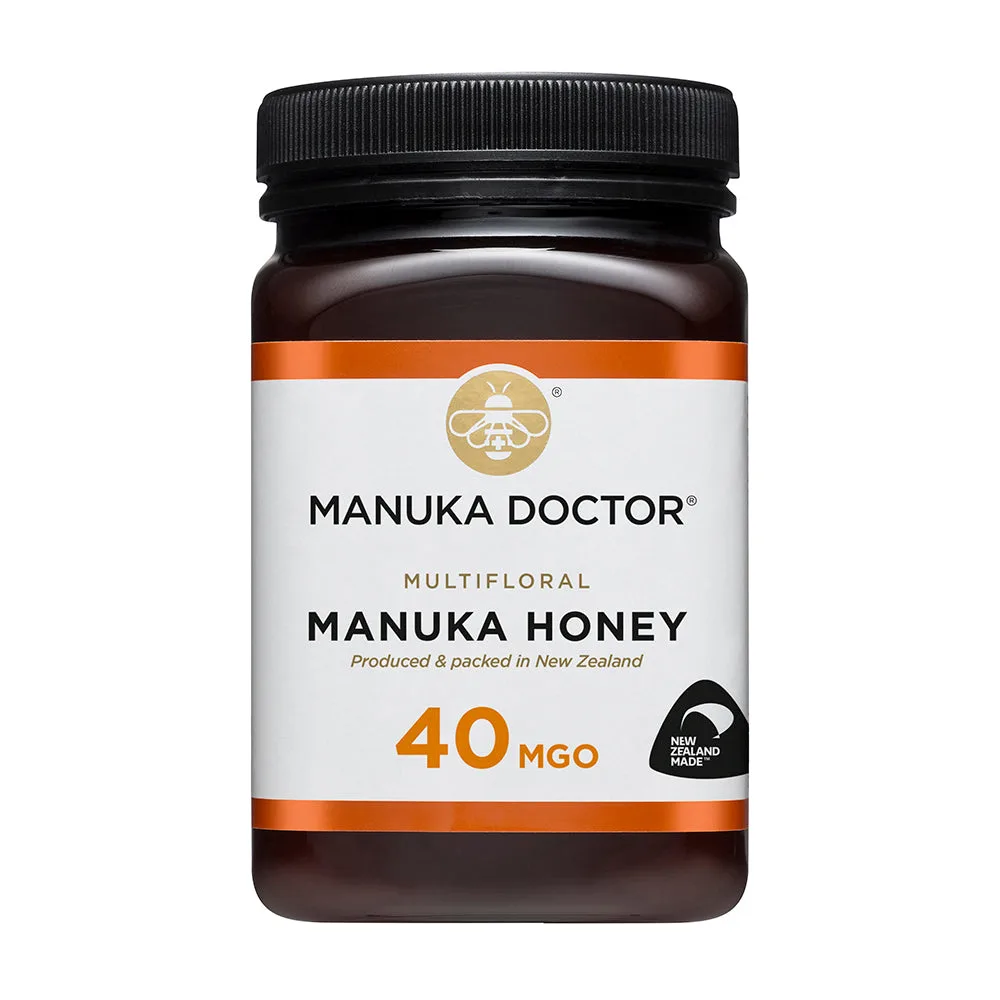
40 MGO Manuka Honey 500g
-
40 MGO Manuka Honey 500g: Flavour described as first sweet, then woody, ending with a very slight bitterness; smooth, creamy texture and golden colour. This tells you what to expect on the spoon and which foods it will pair with.
-
40 MGO Manuka Honey 500g: Packaged in 100% recycled, NZ-made rPET plastic pots with no outer display packaging. Useful if packaging and waste matter to your buying decision.
-
40 MGO Manuka Honey 500g: Every batch is tested to the New Zealand Government's MPI standard plus a separate lab test for MGO, and you can check certificates with the batch code on your jar. You can verify the batch yourself rather than relying on the label alone.
Safety, storage and practical details
Who should not eat this honey?
Honey should not be given to infants under 12 months old. That is the safety instruction supplied with this product. The record does not list allergens or confirm suitability for other dietary needs, so check the ingredients and nutrition information on your pot if you have specific requirements.
How should I store the 500g pot?
The supplied record does not include specific storage instructions. It does confirm a best-before date with at least 6 months remaining when you buy directly from Manuka Doctor, so keep an eye on that date and treat the pot as you would any honey.
What does the batch code on the jar do?
Manuka Doctor prints a unique batch code on the side of each jar. You can type it into the online checker to see the certificates for your batch, including the MPI standard test and the separate MGO lab test. It is a simple way to confirm what you bought.
Is this honey raw?
The record notes that brands use the term "raw" with different definitions, so it does not make a raw claim for this product. What it does confirm is batch testing to the MPI standard and a separate MGO test, which are the concrete checks to rely on.