Quick answer
Installing a 40 tooth gear on your mini lathe requires removing the existing change gear, aligning the new plastic gear on the banjo shaft, and adjusting the mesh with the leadscrew gear before tightening the locking nut.
Why the 40 tooth gear matters for threading
The 40 tooth gear is a common change gear used in mini lathe threading operations. It works with other gears in the train to produce specific thread pitches. Because it is made of plastic, it is lightweight and reduces wear on the metal gears it meshes with, but it is also more prone to damage if the mesh is too tight or if debris gets between the teeth.
Before starting, ensure your lathe is unplugged and the spindle is locked. The gear fits on the banjo shaft and must be secured with the correct spacer and locking nut to prevent slipping during operation.
Checking compatibility before you begin
This 40 tooth gear is manufactured by Sieg Industrial Group and is designed for mini lathe threading change gear systems. It is not universal, so verify that your lathe uses the same shaft diameter and tooth profile. If your lathe uses a different gear standard, this gear will not mesh correctly and may cause binding or inaccurate threads.
Step-by-step installation
- Remove the old change gear: Loosen the banjo locking nut and slide the old gear off the shaft. Note the order of any spacers or washers so you can replicate it with the new gear. Common mistake: losing small spacers. Keep them in a tray or photograph the assembly before disassembly.
- Position the 40 tooth gear on the banjo shaft: Slide the new plastic gear onto the shaft with the same spacer arrangement you noted. Do not force it—if it does not slide on easily, check for burrs or debris on the shaft. Checkpoint: The gear should spin freely on the shaft before you tighten anything.
- Set the gear mesh with the leadscrew gear: Rotate the banjo so the 40 tooth gear engages the leadscrew gear. Press a strip of paper between the gears, then tighten the banjo locking nut. The paper should pull out with slight resistance—this gives the correct backlash. Common mistake: mesh too tight causes noise and premature wear; too loose causes skipped teeth and inaccurate threads.
- Test the gear train by hand: Rotate the chuck by hand through several full turns. Listen for clicking, binding, or uneven resistance. The gears should turn smoothly with a consistent light drag. If you hear clicking, recheck the mesh and look for damaged teeth on any gear in the train.
- Secure the locking nut and run a test thread: Tighten the banjo locking nut fully. Set up a threading pass on scrap material at a low spindle speed. Cut a short thread and check the pitch with a thread gauge or nut. Final checkpoint: If the thread pitch is wrong, the gear combination or mesh may need adjustment—do not force the cut.
Product facts
-
Gear, 40 Teeth, Mini Lathe: This 40-tooth gear is a threading change gear for mini lathes, made of plastic by Sieg Industrial Group. The plastic construction makes it lightweight and easy to handle, but you must avoid over-tightening the mesh to prevent tooth damage.
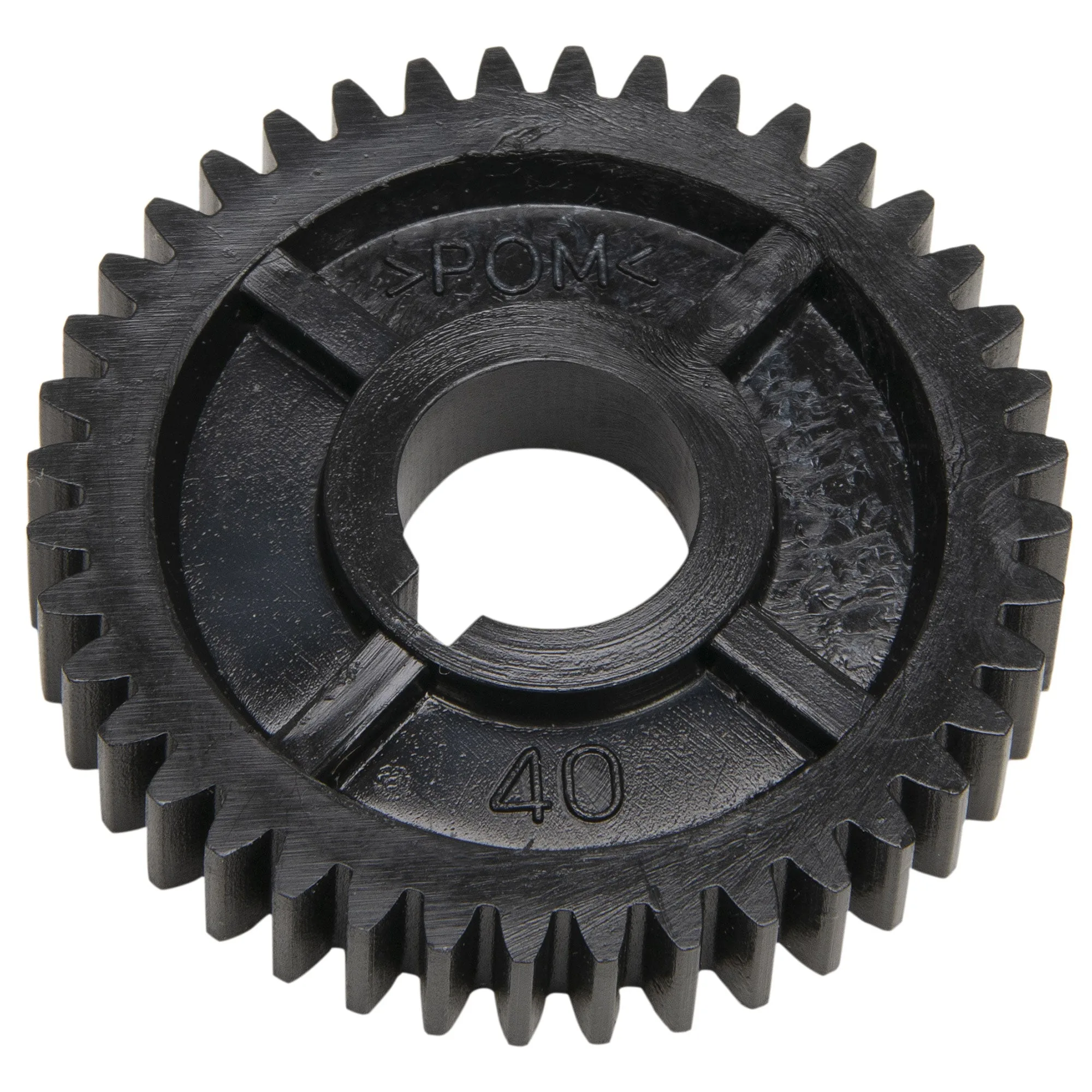
Gear, 40 Teeth, Mini Lathe