Quick answer
A 42-inch round conference table is a compact four-person table for small rooms, not a six-person conference table. Choose it when your room can spare about 8 by 8 feet and your meetings are short, collaborative, or one-on-one.
Why 42 inches lands at four seats, not five
Seating capacity on a round table comes from circumference, not from the diameter alone. A 42-inch top gives each of four people roughly 33 inches of edge space, which is comfortable for a laptop and a notebook. Squeezing in a fifth person drops that to about 26 inches per person, which is tight for anything longer than a quick stand-up.
If your meetings routinely include five or more people, treat the 42-inch size as a huddle table and plan a larger table for full-team sessions. The room-size rule below still applies, but the seating limit is the harder constraint.
The room-size rule that prevents a cramped conference room
Plan for at least 36 inches of clear space behind each occupied chair so people can push back and walk past. For a 42-inch round table, that means a room roughly 8 by 8 feet at minimum. A 10 by 10-foot room gives more comfortable circulation and space for a side credenza.
Measure door swings, HVAC returns, and any wall-mounted screen before you commit. A round table in a narrow room can leave corners unusable, so check that the diagonal path to the door stays clear.
When a metal base is the right call, and when it is not
A contemporary metal base suits rooms where the table is visible from a hallway or reception area and where you want an open look under the top. It also tends to leave more knee room than a four-leg pedestal at the same diameter, which matters in a small room.
The trade-off is that metal bases can show scuffs and may feel cooler underfoot in a bare room. If your space is carpeted and client-facing, that is usually fine. If the table doubles as a breakroom surface, a wood base or a laminate top may wear better.
Decision rules for your 42-inch round table
- Seat count check: Count your typical meeting size. If it is four or fewer, a 42-inch round table works. If it is five or more, choose a larger table or plan a second surface. Write down the largest recurring meeting size before you shop.
- Room clearance check: Measure the room and subtract 72 inches from both length and width to account for chair pull-out on opposite sides. If the result is less than 42 inches, the table will feel tight. Mark the chair zone on the floor with tape before delivery.
- Base and finish check: Choose a metal base when the table is client-facing and you want an open look. Choose a wood or laminate base when the table will see food, tools, or heavy daily abuse. Match the base to the room's visibility, not just the catalog photo.
Product facts to compare
-
42″ Round Modern Conference or Meeting Table w/ Contemporary Metal Base: 42-inch round top with a durable wood-look finish and a contemporary metal base. The 42-inch top matches the four-person rule above, and the metal base keeps the under-table area open in a small conference room.
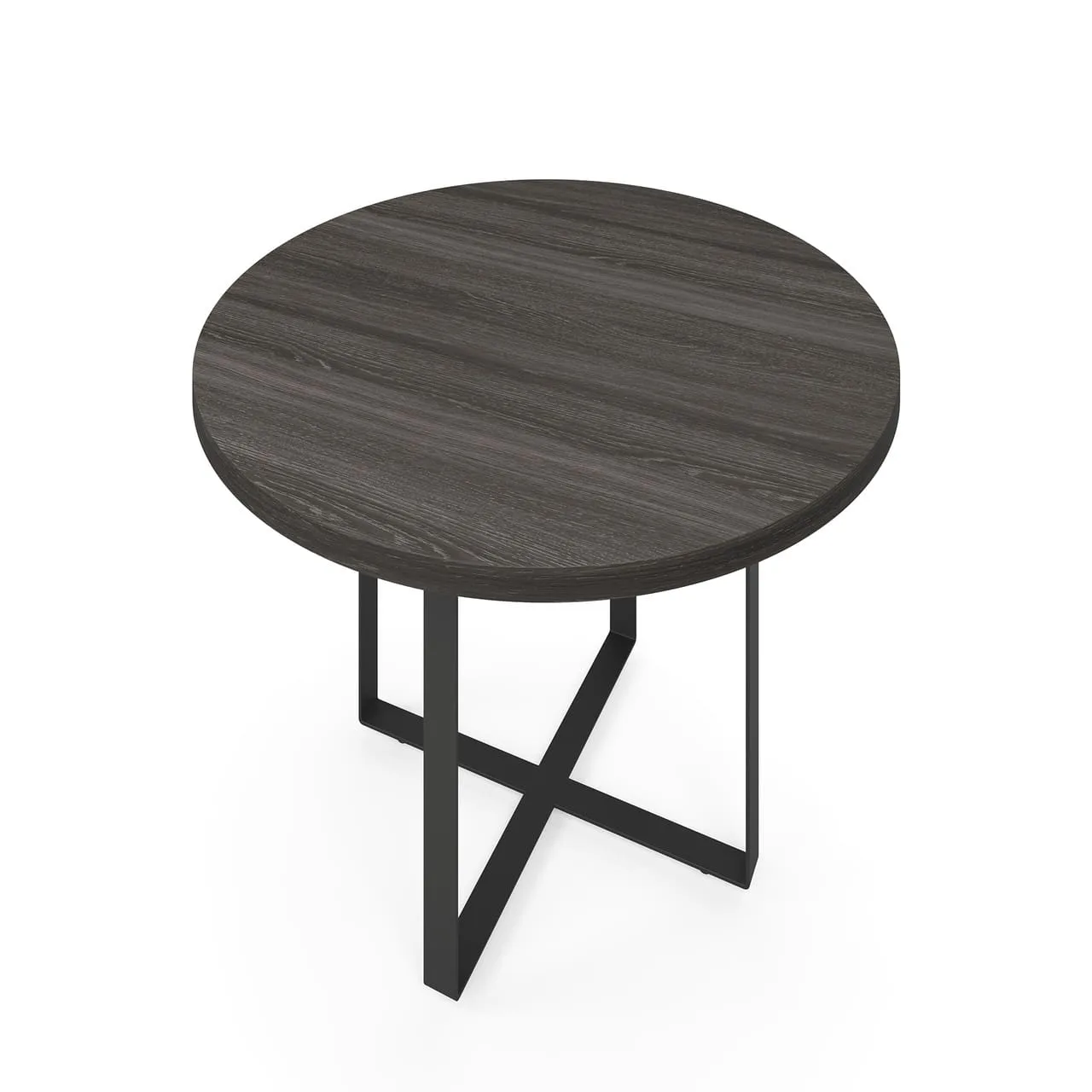
42″ Round Modern Conference or Meeting Table w/ Contemporary Metal Base
Who should choose this table
Best for
- Small teams of four or fewer holding stand-ups, one-on-ones, or client huddles
- Rooms around 8 by 8 feet or larger with clear chair pull-out space
- Offices that want a modern round meeting table with a metal base as a visible focal point
Not for
- Teams that regularly seat five or more people in one meeting
- Rooms narrower than about 8 feet where chairs would block the door or aisle
- Breakrooms or shared surfaces where a wood-look top and metal base would take heavy daily wear