Two Angles, Two Different Edge Looks
When you reach for a chamfer or bevel router bit, the angle you choose directly changes the look of the edge. A 45° chamfer bit creates a bold, angled cut often used for decorative edges or mitered corners. A 7° bevel bit, on the other hand, produces a very subtle slope—barely noticeable but enough to soften a sharp edge or prepare laminate for a clean seam. This article compares the Whiteside 2302 (45°) and the Whiteside 2298 (7°) to help you pick the right one for your project.
Key Specifications at a Glance
-
45° Chamfer Router Bit x 7/16″ Cut Height – Whiteside 2302: 45° angle, 7/16″ cut height, 5/8″ cut length, 1/4″ shank, recommended RPM 13,000-15,000 The 45° angle is a standard choice for visible chamfers and miter joints. The recommended RPM range helps you set your router speed correctly.
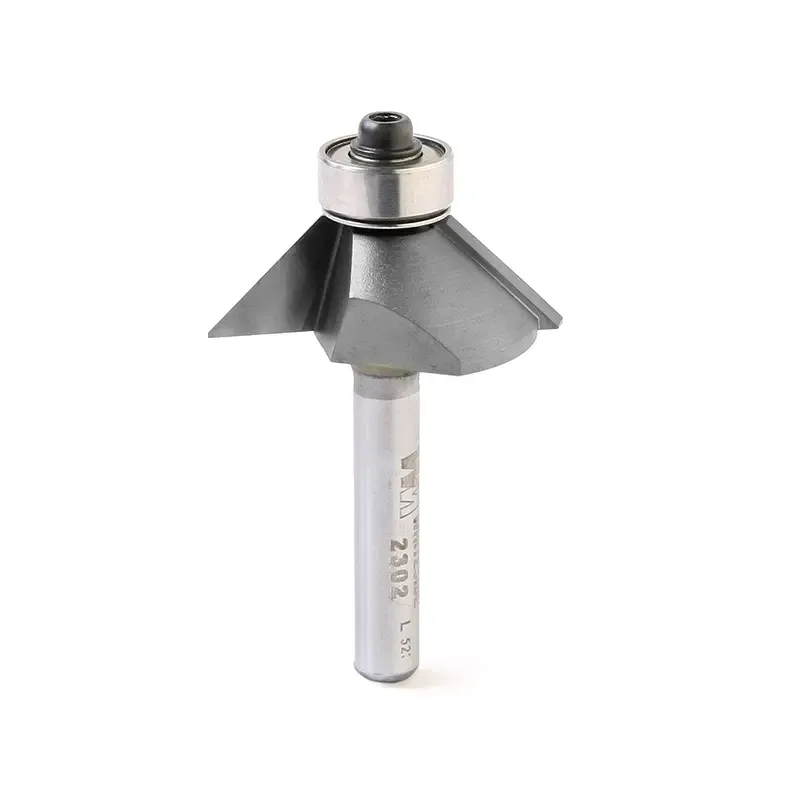
45° Chamfer Router Bit x 7/16″ Cut Height – Whiteside 2302
-
7° Bevel Chamfer Bit x 3/8″ Cut Height – Whiteside 2298 (AstraHP Coated): 7° angle, 3/8″ cut height, 2-1/8″ overall length, 1/4″ shank, recommended RPM 16,000 The shallow 7° angle is ideal for subtle bevels and laminate work. The single RPM recommendation simplifies setup.
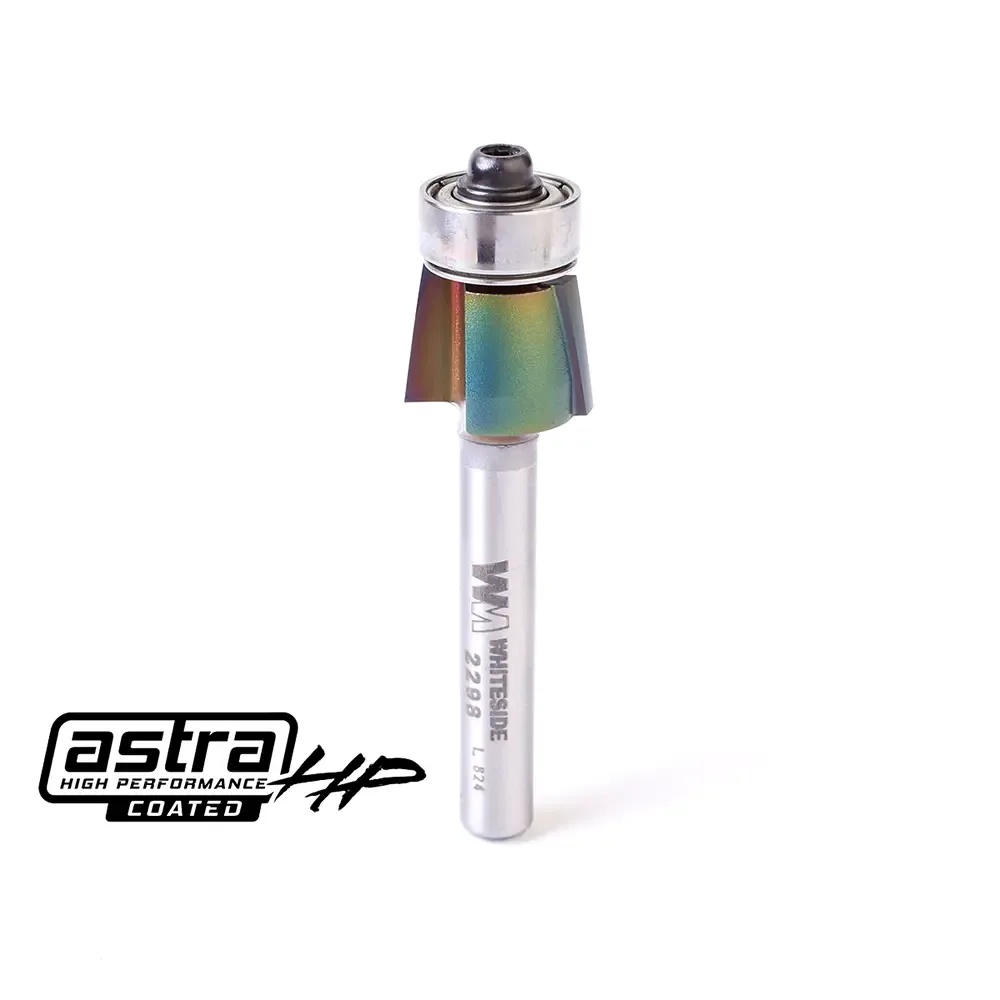
7° Bevel Chamfer Bit x 3/8″ Cut Height – Whiteside 2298 (AstraHP Coated)
45° vs 7°: How They Differ in Use
Here’s how the two bits compare for common woodworking tasks.
- Edge profile: The 45° chamfer bit makes a pronounced, angled cut that stands out. The 7° bevel bit creates a gentle slope that is almost flush with the surface.
- Best for: The 45° bit excels at decorative edges, mitered corners, and visible chamfers. The 7° bit is popular for laminate edge beveling and light softening of sharp edges.
- Cut height: The 45° bit has a 7/16″ cut height, giving you a deeper chamfer in a single pass. The 7° bit has a 3/8″ cut height, which is adequate for shallow bevels.
- Coating: The 7° bit (Whiteside 2298) features an AstraHP coating that reduces heat and friction. The 45° bit (Whiteside 2302) is uncoated but still carbide-tipped for durability.
Which One Should You Choose?
If you need a visible, decorative edge or are making mitered corners, the 45° chamfer bit (Whiteside 2302) is the clear choice. Its two-flute carbide-tipped design gives clean, accurate cuts, and the 7/16″ cut height allows for a substantial chamfer in one pass.
If your goal is a subtle bevel—for example, softening the edge of a laminate countertop or adding a barely-there detail—the 7° bevel bit (Whiteside 2298) is the better fit. The AstraHP coating helps keep the bit cool during extended use, and the 3/8″ cut height is well suited for light chamfering.
Both bits share a 1/4″ shank, so they fit most standard routers without needing a collet change. The choice ultimately comes down to the visual effect you want.