Quick answer
For most 4x24 belt sanders, buy a 3-pack in 40, 80, and 120 grit: 40 for heavy stock removal, 80 for general shaping and deburring, and 120 for a smooth pre-finish. Choose zirconia when you need long belt life on metal or hard wood; step up to finer grits only if your sander and project justify it.
Why zirconia changes the grit conversation
Zirconia abrasive is self-sharpening: the grains fracture during use to expose fresh cutting edges. That matters on a 4x24 belt because the larger platen area and higher horsepower of many 4-inch sanders put more heat and pressure into the belt than a narrow benchtop sander does. A belt that dulls quickly forces you to lean harder, which can burn wood or overheat metal.
The trade-off is that zirconia is not the finest finishing abrasive. It excels at coarse and mid-range work where toughness matters more than a polished scratch pattern. If you need a mirror finish, plan to switch to a different abrasive for your final passes rather than pushing zirconia to ultra-fine grits.
The grit progression that actually works on a 4x24
A 4x24 belt sander removes material fast, so skipping a grit is tempting but usually costs time. A 40-grit belt can leave deep scratches that an 80-grit belt struggles to erase without extra pressure. Moving from 40 to 80 to 120 keeps each step manageable and extends belt life because you are not forcing a finer belt to do coarse work.
For knife makers and blacksmiths, the same logic applies to steel: 40 for profiling, 80 for refining the bevel, and 120 for pre-hand-sanding. Welders often stop at 80 for blending welds because a finer grit can polish the surface and make paint adhesion harder.
When a 3-pack is enough and when it is not
A 3-pack of one grit makes sense if you already know your workflow and burn through a single grit faster than others. A mixed 3-pack is better for a new 4x24 sander because it lets you test the machine and material without committing to a full box of one grit.
If you regularly work both wood and metal, keep separate belts for each. Metal swarf and wood resin do not mix well on a belt, and cross-contamination can shorten belt life or mar a finish. Labeling belts by material is a cheap habit that pays off.
Decision rules for choosing your grits
- If you are profiling or removing lots of material: Start with 40 grit. Use it on mild steel, weld beads, or rough-sawn hardwood where speed matters more than surface finish. Keep a spare 40-grit belt on hand if you do frequent heavy stock removal.
- If you are shaping, deburring, or general sanding: Use 80 grit as your workhorse. It refines scratches from 40 grit and leaves a surface ready for paint, glue, or further sanding.
- If you are preparing for a finish: Move to 120 grit after 80. On wood, stop at 120 before applying stain or varnish unless your finish schedule calls for finer. On metal, 120 is a good pre-polish step. Do not jump from 40 straight to 120; the intermediate 80 step saves time and belts.
- If you need a mixed 3-pack: Choose one belt each in 40, 80, and 120 grit. This covers most repair, fabrication, and woodworking tasks on a 4x24 sander.
- If you work both wood and metal: Dedicate separate belts to each material. Mark the back of the belt with a marker to avoid mixing them up. Store wood and metal belts on separate hooks to prevent cross-contamination.
Product facts
-
4 X 24 Inch Premium Zirconia Sanding Belts, 3 Pack: 4x24 inch industrial-grade zirconia belts in a 3-pack, with grit options available. The 3-pack format lets you build a starter progression or stock a single working grit without buying a full box.
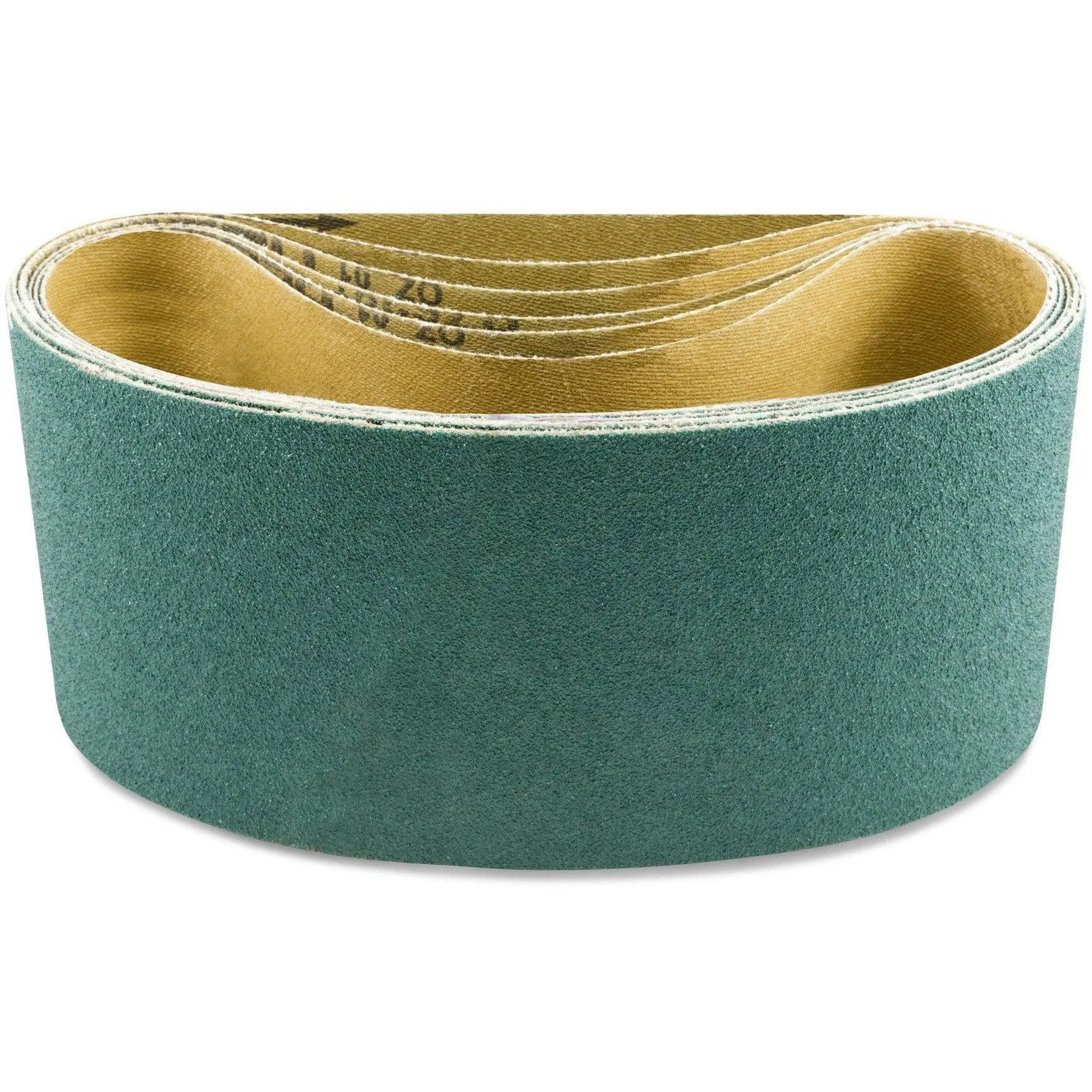
4 X 24 Inch Premium Zirconia Sanding Belts, 3 Pack
-
4 X 24 Inch Premium Zirconia Sanding Belts, 3 Pack: Zirconia’s self-sharpening grains extend belt life up to 2.5 times longer than aluminum oxide. Longer belt life means fewer changes during heavy grinding, which is especially useful when shaping metal or hard wood.
Who these belts fit
Best for
- Knife makers and blacksmiths who need long belt life on steel
- Welders blending welds and deburring fabricated parts
- Woodworkers shaping hardwoods or doing heavy stock removal with a 4x24 sander
Not for
- Users who need ultra-fine finishing grits beyond 120 for a polished surface
- Light-duty hobbyists who rarely use coarse grits and prefer a finer single-grit pack
- Sanding non-ferrous metals where loading is a concern and a different abrasive may perform better