Quick answer
Treat a 10.5-inch bed as a shallow-root garden: fill it with about 31 cubic feet of soil, then plant greens, herbs, bush beans, and other crops that finish in the top 8–10 inches. For tomatoes, carrots, or long-season roots, add a deeper section or choose a taller bed instead.
What 10.5 inches of soil actually limits
Depth is not just about volume; it sets how far roots can explore before hitting the native soil. In a 10.5-inch bed, most roots stay in the loose fill, so crops that need a long, unobstructed taproot or a large summer root mass are a poor fit unless you add depth.
The practical split: leafy greens, herbs, radishes, scallions, and bush beans perform well. Determinate tomatoes and peppers can work with careful watering, but they demand more attention. Carrots, parsnips, and main-season tomatoes are better in a deeper bed or a 10.5-inch bed placed over improved native soil.
Why the 4x8 footprint changes the fill plan
A 4x8 bed is large enough that soil volume adds up quickly, and a shallow bed can dry faster than a tall one because there is less mass to hold moisture. That makes the fill mix and watering routine as important as the depth itself.
The bed's 10.5-inch walls also mean you can reach the center from both long sides, so you can plant in bands rather than one dense block. That layout matters more in a shallow bed, where roots compete for the same limited layer.
Step-by-step: fill and plant a 10.5-inch bed
- Calculate soil volume before buying: Multiply 4 ft × 8 ft × 0.875 ft (10.5 in) to get 28 cubic feet, then add about 10% for settling—roughly 31 cubic feet. Order in bulk bags or a bulk delivery if possible. Common mistake: buying bagged soil by eye and running short halfway through. Write the number on the order so you do not make a second trip.
- Choose a fill mix for shallow roots: Use a blend of topsoil and compost rather than straight garden soil, which can compact in a shallow layer. Aim for a loose, crumbly texture that holds moisture but drains. Checkpoint: squeeze a handful—if it stays in a tight ball, add coarse compost or pine fines.
- Set the bed on cleared, level ground: Remove grass or weeds under the footprint and level the soil so the boards sit evenly. If you want roots to reach deeper, loosen the native soil below the bed with a fork before filling. Common mistake: setting the bed on uneven ground, which leaves gaps under the boards and uneven soil depth. A level base protects both the frame and your soil depth.
- Fill in layers and settle as you go: Add soil in 3–4 inch layers, watering lightly between layers to settle air pockets. Stop about 1 inch below the top board to leave room for mulch and watering. Checkpoint: after settling, the soil line should be level across the bed, not mounded in the center.
- Plant in bands by root depth: Put shallow crops such as lettuce, herbs, and radishes along the edges, and reserve the center for slightly deeper crops like bush beans or determinate peppers. Keep tall plants on the north side so they do not shade the bed. Common mistake: planting long carrots in a 10.5-inch bed without checking that the variety fits. Match crop root depth to the 10.5-inch fill, not to the bed's footprint.
- Mulch and set a shallow-bed watering routine: Apply 1–2 inches of mulch after planting and water when the top inch of soil feels dry. Shallow beds dry faster, so check every 2–3 days in warm weather. Checkpoint: push a finger into the soil—if it is dry at 1 inch, water deeply rather than sprinkling.
Product facts
-
Premium Cedar Raised Garden Bed 4 ft x 8 ft x 10.5 in (3/4 in Thick) RC6T21B: The Premium Cedar Raised Garden Bed 4 ft x 8 ft x 10.5 in (3/4 in Thick) RC6T21B uses sanded 3/4-inch boards and routed corner posts for tool-free assembly. The 10.5-inch wall height is fixed, so your soil volume and crop choices should be planned around that depth rather than adjusted later.
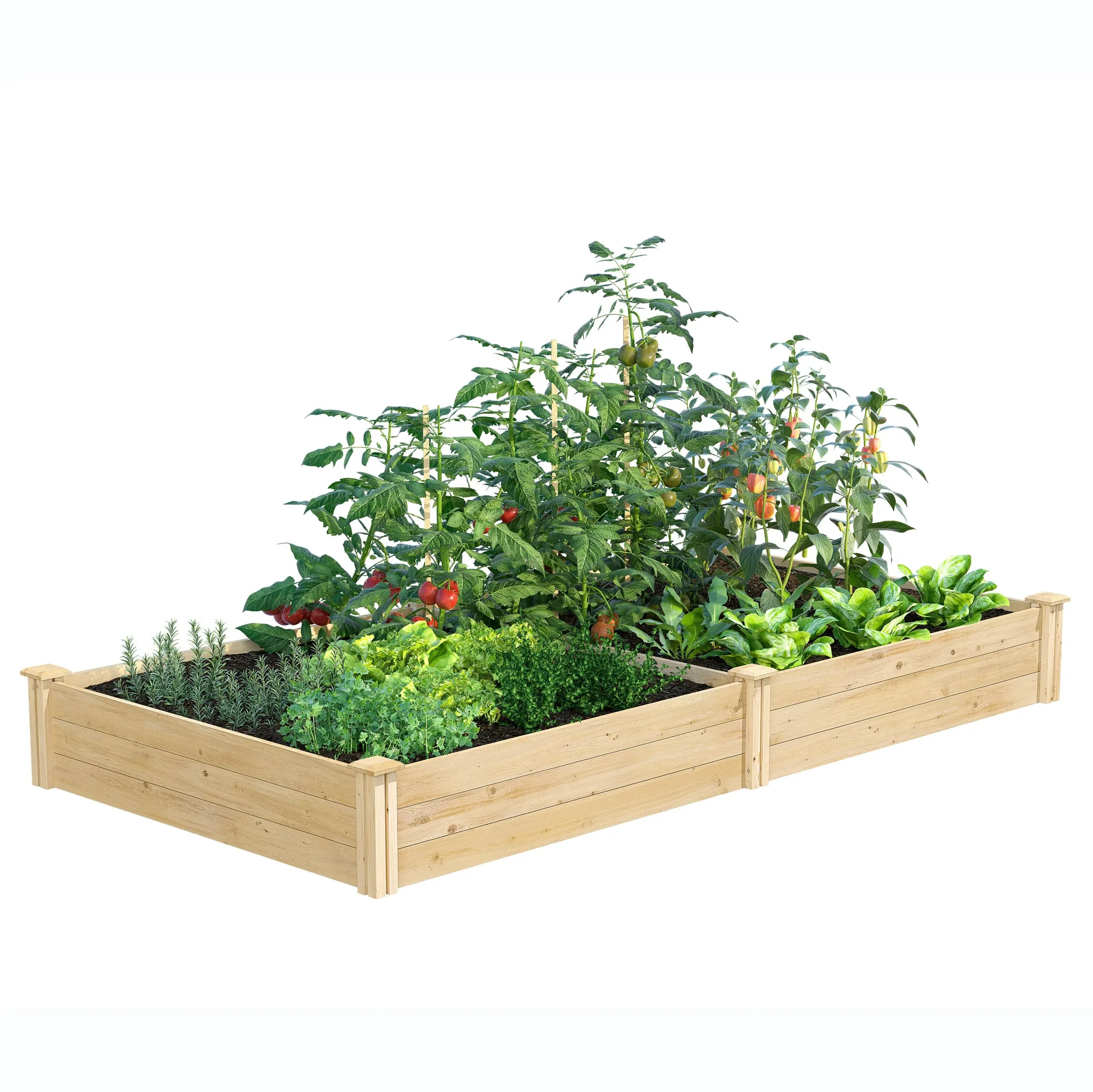
Premium Cedar Raised Garden Bed 4 ft x 8 ft x 10.5 in (3/4 in Thick) RC6T21B