Quick answer
Place the rack on a level, hard floor against a wall, assemble it fully before adding any dumbbells, then load the heaviest pairs on the lowest tiers and work upward. Keep the weight evenly split left to right so the A-frame stays stable.
Why placement and loading order matter more on a 5 tier rack
A five-tier rack holds more pairs than a low rack, so small mistakes in placement or loading become bigger stability problems. The rack is tall and narrow compared with a 3-tier model, which means the floor surface and the left-to-right balance of the dumbbells do most of the work in keeping it steady.
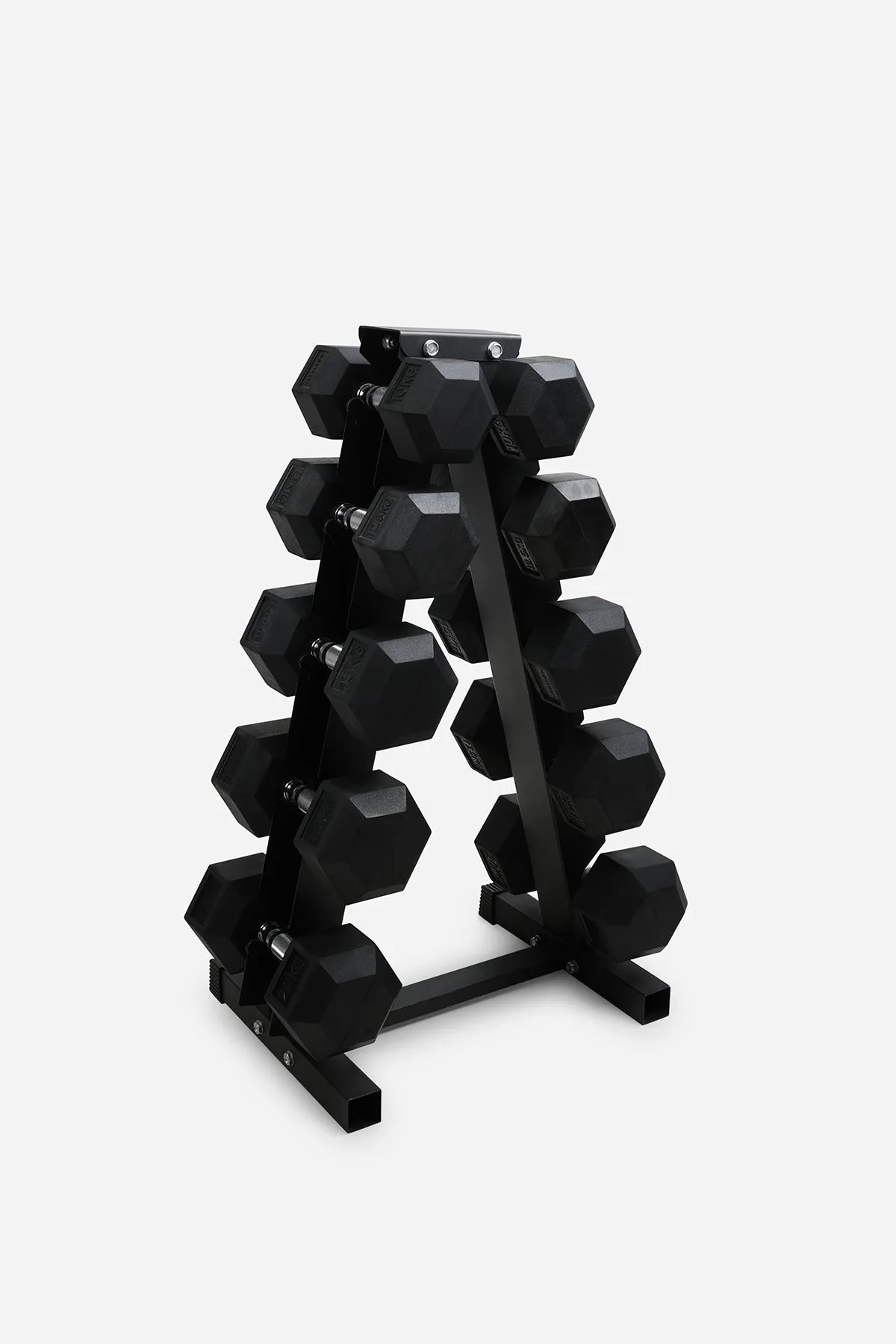
The Large 5 Tier A-Frame Dumbbell Rack is built from high-grade steel and is designed for dumbbells from 10kg to 30kg. That range is a useful planning limit: if your pairs fall outside it, this rack is not the right storage choice, regardless of how well you set it up.
Where not to put it
Skip soft mats, thick carpet, and uneven garage slabs under the feet. A rack that rocks slightly when empty will rock more once it is loaded, and you may not notice the movement until a heavy pair is at chest height. If the only available floor is uneven, fix the floor or choose a different location rather than shimming the rack casually.
Setup and loading steps
- Choose and clear the spot: Pick a level, hard floor area with enough clearance to walk around the rack and lift dumbbells off the top tier without twisting. Keep it away from door swings and any surface that flexes underfoot. Test the empty floor with a spirit level or a loose dumbbell; if it rolls, relocate the rack.
- Assemble fully before loading: Follow the rack's assembly instructions and tighten all frame connections before a single dumbbell goes on. Do not leave the top tiers loosely fitted while you test the lower ones. Recheck every connection after the first full load, since weight can reveal a fitting you missed.
- Load the bottom tier first: Start with your heaviest pairs on the lowest tier and place them symmetrically left and right. This keeps the centre of gravity low while the rack is still partly empty. Never load one side of a tier completely before starting the other.
- Work upward in weight order: Add progressively lighter pairs as you move up the tiers, maintaining left-right balance at every level. If two pairs are the same weight, split them across both sides of the same tier. Leave a gap rather than cramming a pair onto a tier it does not sit securely on.
- Check stability after loading: With the rack fully loaded, press gently on each upright and watch for rocking or flex. If it moves, unload the top tier first and correct the floor or assembly before reloading. A rack that rocks when loaded is not ready for use, even if it felt solid when empty.
- Plan daily use around the top tier: Store the pairs you use least on the highest tier and your working weights at waist height. When lifting from the top tier, face the rack squarely and use both hands. Reassess the layout if you find yourself reaching overhead for your main working pair every session.
Product facts
-
Large 5 Tier A-Frame Dumbbell Rack - Black: 5-tier vertical A-frame design in high-grade steel, intended for dumbbells from 10kg to 30kg. Check your dumbbell range before assembly so you do not build a rack that cannot safely hold your lighter or heavier pairs.

Large 5 Tier A-Frame Dumbbell Rack - Black