Quick answer
Carry 550 paracord when you need maximum strength and a proven track record for heavy tasks; choose 3mm accessory cord when you want a lighter, lower-profile option for everyday tasks that don't require high break strength.
The core trade-off: strength vs. weight and bulk
The main difference between 550 paracord and 3mm accessory cord is their construction and intended use. 550 paracord has a thicker diameter and inner strands, which give it higher tensile strength—typically rated for 550 pounds. This makes it ideal for load-bearing tasks like securing gear, building shelters, or emergency repairs. However, that strength comes with added bulk and weight, which can be a drawback in a minimalist EDC kit.
3mm accessory cord is a flat braid with no inner strands, making it thinner and lighter. It's not designed for heavy loads, but it's perfect for tasks where you need a small, flexible cord that's easy to pack and quick to deploy. Think of it as a compact companion for everyday utility, not a replacement for a heavy-duty rope.
Why 550 paracord is the classic choice
550 paracord has a long history of military use, from WWII parachute lines to modern survival vests. Its construction—a braided sheath with multiple inner strands—provides redundancy and strength that's hard to beat. If you need to lash gear to a pack, create a clothesline, or even make a makeshift boot lace that can handle serious tension, 550 paracord is the reliable workhorse.
The inner strands can also be removed and used separately for finer tasks like fishing line or sewing thread, adding to its versatility. This makes it a favorite for campers and preppers who want a single cord that can handle a wide range of scenarios.
Why 3mm accessory cord is the minimalist's pick
3mm accessory cord is a flat braid without inner strands, which makes it noticeably thinner and lighter than 550 paracord. This smaller diameter makes it easier to pack in a pocket or small pouch, and it's less obtrusive when you need to tie something quickly. It's also the type of cord used in military flight and survival vests, so it has its own pedigree of reliability.
For everyday tasks like securing a tarp, tying a water bottle to a pack, or creating a simple lanyard, 3mm cord is more than sufficient. It's also easier to work with in tight spaces where a thicker cord might be overkill. If you're looking to save weight and bulk in your EDC without sacrificing basic utility, this is the cord to grab.
How to choose: 550 paracord vs 3mm accessory cord
- Strength needs: If your task requires load-bearing strength—like securing a bear bag or lashing gear—choose 550 paracord. For light tasks like tying a bandana or bundling small items, 3mm cord is sufficient.
- Weight and bulk: 3mm accessory cord is thinner and lighter, making it easier to carry in a pocket or small pouch. 550 paracord is bulkier but offers more strength per strand. If you're counting grams, 3mm cord wins.
- Versatility: 550 paracord's inner strands can be removed and used for finer tasks, adding versatility. 3mm cord is a single, simple braid that's quicker to deploy but lacks that extra layer of utility.
- Everyday carry: For a minimalist EDC that's always on you, 3mm cord is a practical choice. For a dedicated camping or survival kit, 550 paracord is the better all-around option. Consider carrying both: 550 for heavy tasks, 3mm for quick fixes.
Product facts
-
PDW 3mm accessory cord: 3mm accessory cord is a flat braid without inner strands, used in military flight and survival vests. Its thinner, lighter construction makes it ideal for compact EDC and everyday tasks where you don't need high break strength.

PDW 3mm accessory cord
-
PDW 550 Paracord: 550 paracord has a thicker diameter and inner strands, with a history of use in WWII parachute lines. The inner strands and larger diameter provide higher strength and redundancy, making it suitable for heavier tasks like lashing and shelter building.
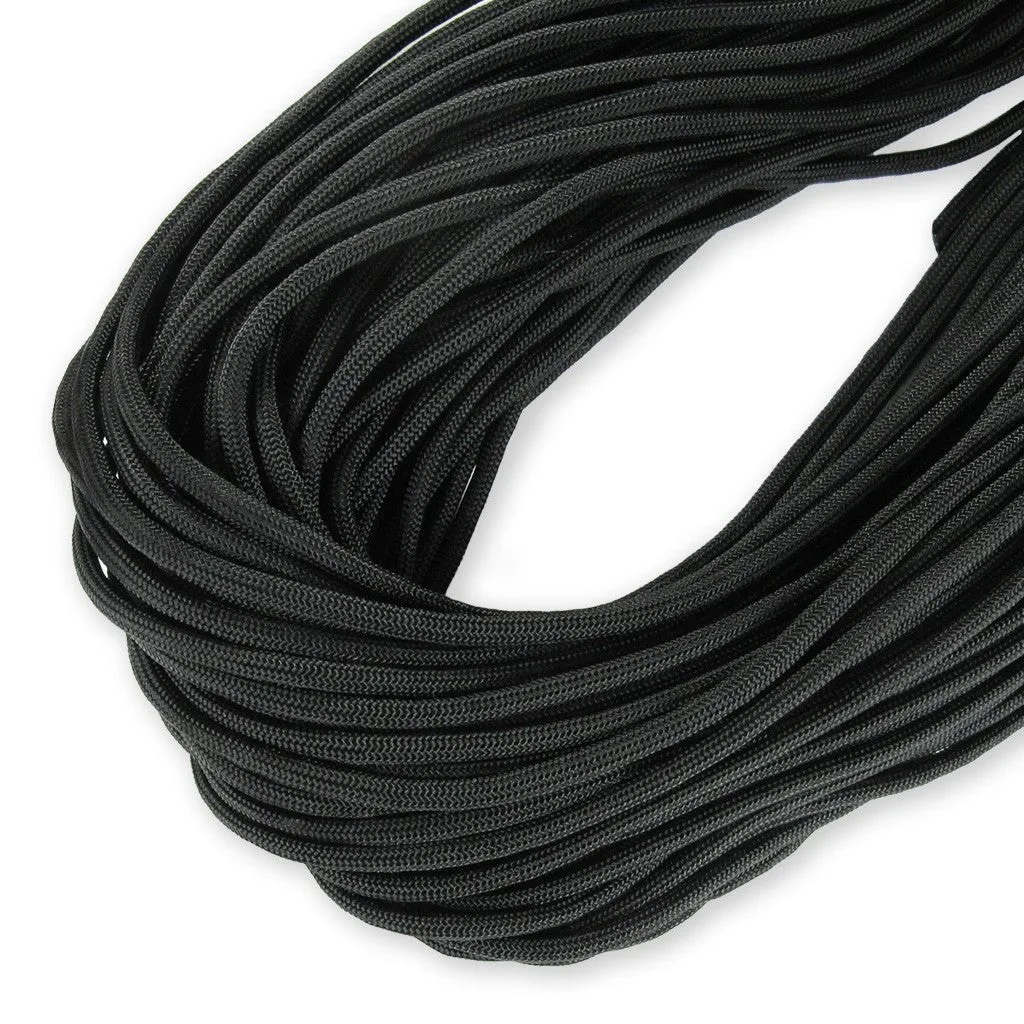
PDW 550 Paracord
Which cord fits your kit?
Best for
- Ultralight hikers and minimalist EDC carriers who prioritize weight and packability
- Everyday tasks like tying gear, making lanyards, or quick repairs where strength isn't critical
Not for
- Heavy-duty tasks like building a shelter or securing a heavy load—choose 550 paracord instead