Why Balance Matters in a Six-Person Layout
When setting up a six-person workspace, the tension between privacy and openness is real. Too much enclosure can feel isolating; too little can be distracting. A 6 person semi private corner cubicle with modern glass panels offers a middle ground: it lets natural light travel through the office while still giving each workstation a defined boundary. This comparison looks at how the design choices in the 6 Person Semi Private 6×6 Corner Cubicle with Modern Glass address that balance, and what trade-offs come with them.
What the Cubicle Provides
-
6 Person Semi Private 6×6 Corner Cubicle with Modern Glass: The 48-inch powered panels strike the right balance between openness and privacy, while frameless glass panels allow natural light to flow through the office. Panel height and glass placement directly affect how much visual separation and daylight each person gets. This is the core trade-off you are weighing.
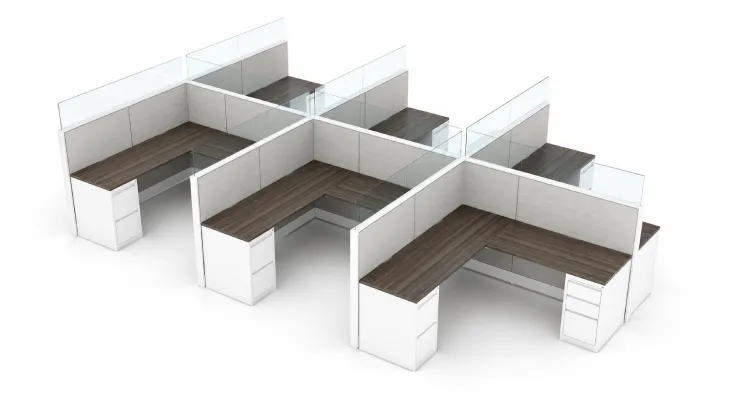
6 Person Semi Private 6×6 Corner Cubicle with Modern Glass
Panel Height vs. Daylight
At 48 inches, the powered panels provide shoulder-level privacy when seated, but do not block the view across the cubicle when standing. This height keeps the space feeling connected rather than compartmentalized. The frameless glass panels amplify that effect by transmitting natural light from windows or overhead fixtures into the interior workstations, reducing the need for task lighting during the day. The trade-off: if your team handles sensitive screen content or needs frequent private calls, the 48-inch height may not feel sufficient. A taller panel would block more sound and sight lines but would also cut off the daylight advantage.
Corner Configuration and Floor Plan Efficiency
The 6′ x 6′ corner layout fits neatly into an office corner, using space that might otherwise be wasted. Each of the six workstations has access to the shared central area, and the corner placement naturally creates two distinct zones along the walls. This arrangement works well for teams that need both collaborative space and individual focus areas. However, because it is a corner unit, it is less flexible for long, narrow rooms or open floor plans where a linear or pod layout might fit better.
Storage That Keeps the Surface Clear
Built-in storage includes both Box/Box/File and fixed File/File pedestals. That means each employee has a place for active paperwork and personal supplies without cluttering the work surface. The combination of drawer types supports different filing habits: the Box/Box/File pedestal offers two shallow drawers for small items plus a file drawer, while the fixed File/File pedestal is dedicated to hanging files. This variety is useful when team members have different organizational needs. The downside: the pedestals take up under-desk space, so employees who prefer open legroom or use large equipment may need to adjust their setup.
Privacy vs. Openness at a Glance
The following points summarize how the cubicle's features compare in terms of privacy and openness.
- Visual privacy: 48-inch panels block seated eye lines but not standing views. Glass panels add transparency, so the space feels open even when panels are in place.
- Sound privacy: Standard panels and glass do not provide acoustic isolation. Conversations and phone calls will be audible to nearby coworkers. The supplied information does not confirm sound-dampening ratings.
- Natural light: Frameless glass panels allow daylight to pass through, brightening interior workstations that would otherwise be dark. This reduces glare from overhead lights and supports circadian rhythms.
- Personal territory: Each workstation has a defined footprint and dedicated storage pedestals, giving employees a sense of ownership without full enclosure.
What the Supplied Information Does Not Cover
The catalog details do not include assembly instructions, recommended panel torque settings, or cable management specifications. If your team relies on extensive wiring or needs to mount monitors on panels, you will want to verify compatibility with the actual product upon delivery. Similarly, the glass type (tempered or laminated) and any safety certifications are not listed, so treat the glass as a standard frameless panel until confirmed.