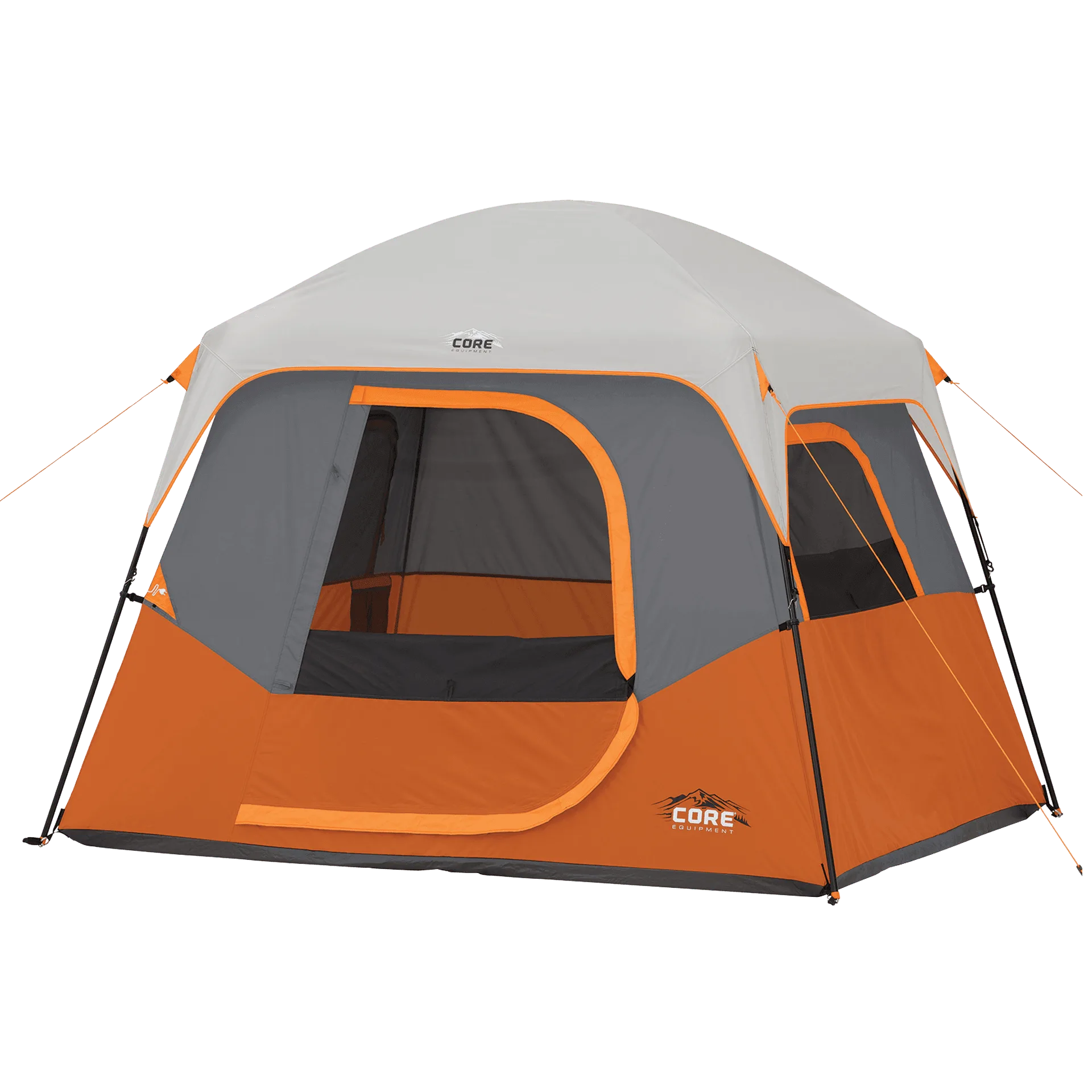
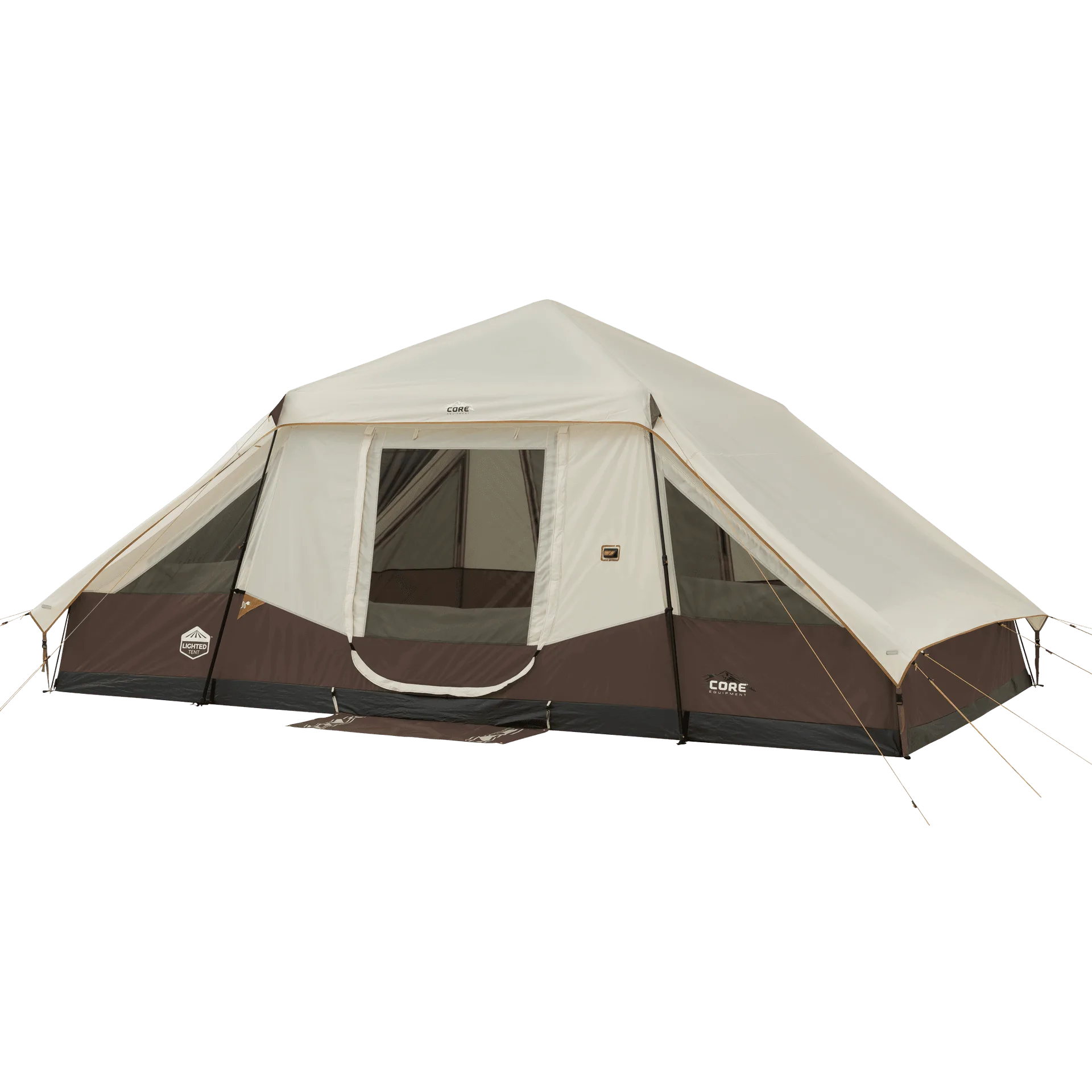
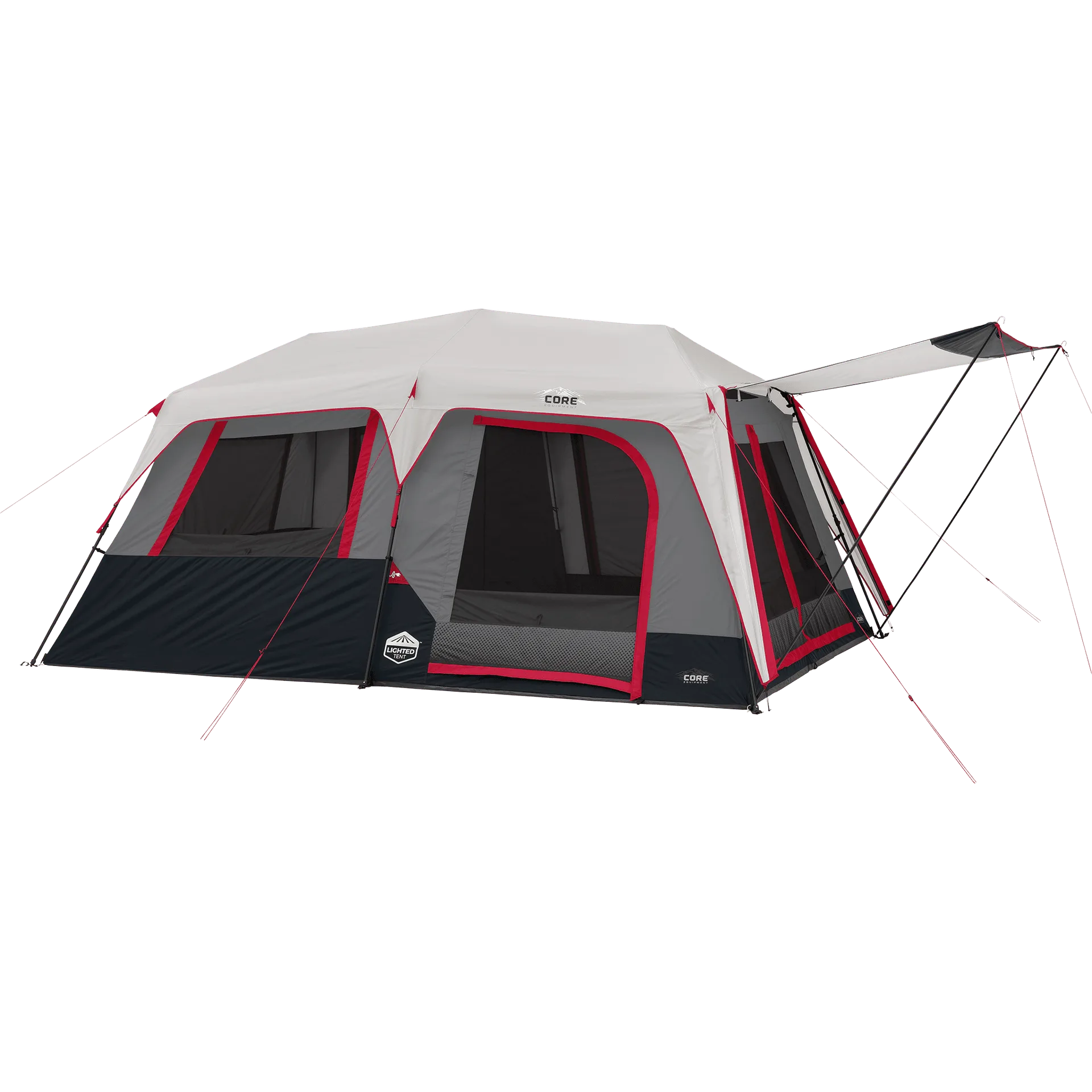
The real difference is how you move inside
A dome tent and a cabin tent can both sleep six, but they ask different things of your campsite and your body. Dome tents trade some upright volume for a compact, wind-shedding shape. Cabin tents push walls closer to vertical for more usable height and a room-like floor plan. The right pick depends on whether you value standing room and gear layout or a smaller packed footprint and a simpler pole set.
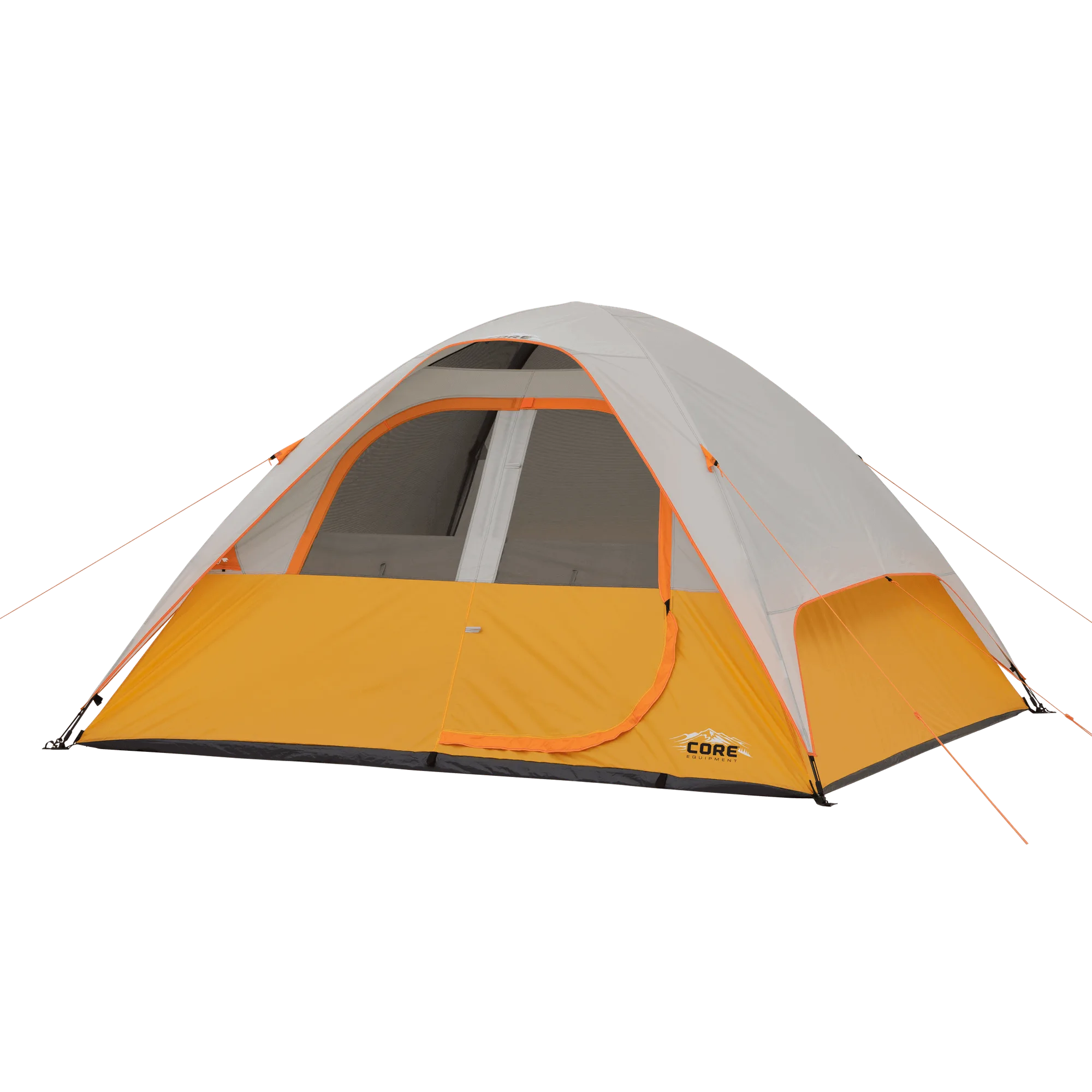
The CORE 6 Person Dome Tent is a useful reference point because its catalog entry tells you exactly what its dome design includes: CORE Connect ball-and-socket pole feet, adjustable ground vents and a mesh ceiling, H2O Block water-repellent fabric with a taped rainfly and sealed seams, an electrical port, and multiple interior storage pockets. What the supplied record does not include is floor dimensions, peak height, or packed size, so treat those as questions to confirm before you buy any tent in this class.
Dome vs. cabin at a glance
These are the practical tradeoffs to weigh when both tents are rated for six people. Cabin-tent details below are general category traits, not claims about a specific CORE cabin model.
- Headroom and movement: Cabin tents typically offer more vertical wall area and a higher, flatter ceiling, so adults can move and change clothes with less crouching. Dome tents slope inward from the peak, so headroom drops quickly toward the sides. The CORE 6 Person Dome Tent's supplied record does not list a peak height, so compare that number directly if standing room matters.
- Floor plan and sleeping layout: A cabin tent's straighter walls usually translate to more rectangular usable floor space for air mattresses and cots. A dome's curved walls eat into corner space. Neither the CORE dome record nor general dome design supplies a room-by-room floor plan, so measure your sleeping pads and compare them to the tent's listed floor dimensions before ordering.
- Setup feel: The CORE 6 Person Dome Tent uses CORE Connect Technology, a ball-and-socket foot system that keeps poles securely aligned for quick, straightforward assembly. Cabin tents vary widely; some use similar pole-and-sleeve designs, while instant-cabin models pop up with pre-attached poles. If setup speed is your priority, compare the specific cabin model's setup method, not the category label.
- Weather exposure: The CORE dome's H2O Block Technology combines water-repellent fabrics, a fully taped rainfly, and sealed seams to resist rain. Its lower, rounded profile also presents less flat wall area to wind than a cabin tent. That does not make it a four-season tent, and the supplied record lists no wind or weather rating, so match any tent to the conditions you actually expect.
- Ventilation and stargazing: The CORE 6 Person Dome Tent has adjustable ground vents that pull in fresh air and a mesh ceiling that lets warm air escape and the night sky show through. Cabin tents often rely on large windows and roof vents instead. Neither approach is automatically cooler; campsite shade and airflow matter as much as tent design.
Where the CORE 6 Person Dome Tent makes the most sense
This dome is a strong fit for families who want a straightforward pole setup, a compact footprint on a tent pad, and a tent that feels secure in breezy weather. The CORE Connect foot system is the standout convenience: ball-and-socket feet keep pole ends aligned, which removes much of the fumbling that makes dome setup frustrating. The electrical port is a practical extra for running a power cord to a lantern or device charger, and the interior pockets help keep small items off the floor.
It is a less obvious choice if your group includes tall adults who want to stand up, or if you plan to furnish the inside with cots and a table. In those cases, a cabin tent's straighter walls usually win on livability. The honest tradeoff is that cabin tents can be heavier and more awkward to pitch, and their broad sides catch wind. The CORE dome's rounded shape is more forgiving on exposed sites, though the supplied information does not include a wind rating.
CORE 6 Person Dome Tent: supplied details that affect the comparison
-
6 Person Dome Tent: CORE Connect Technology uses a ball-and-socket foot system that keeps poles securely aligned for quick, straightforward assembly and take-down. Setup effort is one of the main reasons families choose a dome over a cabin tent. This feature directly addresses the usual dome-tent pain point.
6 Person Dome Tent
-
6 Person Dome Tent: H2O Block Technology combines water-repellent fabrics, a fully taped rainfly, and sealed seams to resist rain. Weather readiness is a key comparison point. The dome's sealed rainfly is designed to shed rain, but no weather rating is supplied, so avoid treating it as storm-proof.
-
6 Person Dome Tent: Adjustable ground vents pull in fresh air while the mesh ceiling allows warm air to escape. Ventilation affects comfort on warm nights. The mesh ceiling also supports stargazing, a feature cabin tents may not offer in the same way.
-
6 Person Dome Tent: The tent includes an electrical port for easy power access and multiple interior storage pockets. These conveniences make the dome feel more organized for family camping, even without the upright volume of a cabin tent.
What to confirm before you choose either style
The supplied CORE record does not list floor dimensions, peak height, packed size, weight, or a capacity rating beyond the six-person name. Use these checks to fill the gaps for any tent you are considering.
- Measure your sleeping setup: Lay out your air mattresses or pads and compare the total footprint to the tent's listed floor dimensions. Six-person ratings assume tight side-by-side sleeping, not room for gear.
- Check peak height against your tallest camper: Dome tents slope inward, so the peak height is not the height at the edges. If standing or changing clothes upright matters, compare peak height and wall slope, not just the person count.
- Confirm the packed size and weight: A dome tent is usually easier to carry and store than a cabin tent, but the CORE record does not supply packed dimensions. Check the product page or the box before you commit if you have limited trunk space.
- Match the tent to your typical weather: The CORE dome is designed with rain resistance, but no wind or weather rating is supplied. For exposed, windy sites, a lower-profile dome is often the more comfortable choice; for hot, still campsites, prioritize ventilation and shade.
A practical way to decide
If your family prioritizes quick setup, a compact footprint, and a tent that handles breezy campsites without fuss, the CORE 6 Person Dome Tent is a sensible starting point. Its CORE Connect pole system, taped rainfly, adjustable ventilation, and interior storage cover the basics well. If you need standing height, room for cots, or a more residential layout, a cabin tent is likely worth the extra setup effort. Either way, confirm the dimensions and packed size against your vehicle and campsite before you buy, because those numbers decide comfort more than the dome-or-cabin label.