What This Guide Covers
If you're working with a long-belt floor sander, the 6x168 inch size is a common choice for refinishing wood floors. This guide explains how to select the right grit, install the belt correctly, and use it safely based on the product's specifications.
The 6 X 168 Inch Aluminum Oxide Wood & Non-Ferrous Sanding Belts from Red Label Abrasives are built for dry sanding applications only. They feature an open coat construction that resists loading and static buildup, making them a practical option for wood floor work.
How to Set Up a 6x168 Sanding Belt for Floor Sanding
Follow these steps to install and prepare your belt for floor sanding. Always refer to your sander's manual for specific tensioning and tracking adjustments.
- Choose Your Starting Grit: For raw wood floors, start with a coarser grit like 36 or 60 to remove old finish or level uneven boards. For lighter sanding between coats, 80 or 100 grit works well. The belt is available in 36, 60, 80, 100, 120, 150, 180, 220, and 320 grit.
- Install the Belt on Your Sander: These belts have a bi-directional tape joint, so you can run them in either direction—ignore any directional arrows on the belt. Align the belt on the drums, tension it according to your machine's specs, and rotate by hand to check tracking.
- Test Tracking and Tension: Plug in the sander and run it briefly at low speed to confirm the belt stays centered. Adjust the tracking knob as needed. A properly tracked belt reduces edge wear and prevents damage to the floor.
- Begin Sanding with Proper Technique: Start the sander before contacting the floor. Move in smooth passes along the grain. Overlap each pass slightly to avoid uneven spots. The anti-loading stearate coating helps prevent clogging, especially on resinous woods.
Grit Progression for Wood Floor Refinishing
A typical floor refinishing job uses a sequence of progressively finer grits. Start with 36 or 60 grit to remove old finish and level the floor. Move to 80 grit to smooth scratches from the coarse stage. Finish with 100 or 120 grit for a surface ready for stain or sealer.
For touch-ups between coats, 150 or 180 grit belts work well without cutting too deep. The 320 grit option is suitable for final buffing before applying a top coat.
The open coat aluminum oxide construction is designed to resist loading, which is especially helpful when sanding softwoods or painted surfaces that tend to gum up belts.
Key Specifications of the 6x168 Belt
-
6 X 168 Inch Aluminum Oxide Wood & Non-Ferrous Sanding Belts, 2 Pack: Durable X-weight backing is designed for dry applications only. Waterproof: No. This belt must never be used with water or wet sanding methods. Using it wet can damage the backing and create a safety hazard.
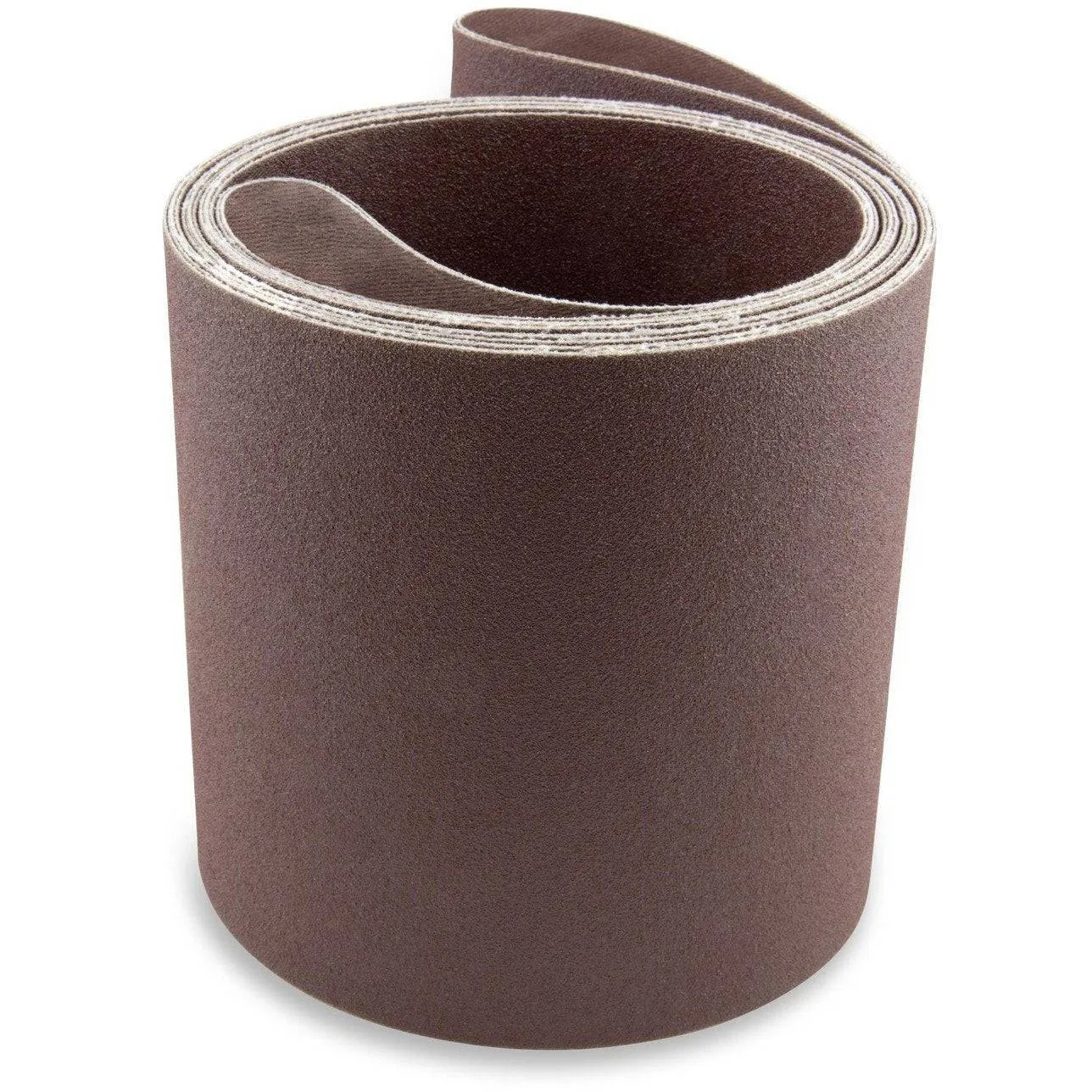
6 X 168 Inch Aluminum Oxide Wood & Non-Ferrous Sanding Belts, 2 Pack
-
6 X 168 Inch Aluminum Oxide Wood & Non-Ferrous Sanding Belts, 2 Pack: Bi-directional tape joint allows belt to run in either direction (disregard arrows). You don't need to worry about belt orientation during installation. This simplifies setup and reduces waste.
-
6 X 168 Inch Aluminum Oxide Wood & Non-Ferrous Sanding Belts, 2 Pack: Open coat, anti-loading and anti-stearate coating reduces heat and clogging. Longer belt life and consistent cutting performance, especially on wood and painted surfaces.
Dry-Use Only: What the Product Record Confirms
The product record clearly states that the X-weight backing is designed for dry applications only and is not waterproof. This means you should never use these belts with water or any liquid lubricant. For floor sanding, this is standard practice—most drum sanders and floor edgers operate dry. If your project involves wet sanding, you'll need a different belt designed for that purpose.
The belts are hand-built in the USA and come in a 2-pack. Available grits range from 36 to 320, giving you flexibility for coarse removal through fine finishing.