
Quick answer
For most Arduino projects needing a 5V rail up to about 1A, the 7805 is the practical default. Choose the AMS1117 3.3V module when your board or sensor needs a fixed 3.3V supply, and use the 78L05 TO-92 regulator only for light loads under 100mA where board space is tight.
Current capacity is the first dividing line
The 7805 and 78L05 both output 5V, but their current ratings separate them sharply. The 7805 is a three-terminal regulator in the L78xx series, commonly used for general 5V rails. The 78L05 is rated for currents up to 100mA, making it suitable for a single sensor or logic chip, not a motor or a board with several peripherals.
The AMS1117 module outputs 3.3V at up to 1A when the input is 4.5V. That higher current capability matters if you are powering an ESP8266, a 3.3V logic board, or a display that draws more than a few tens of milliamps. If your project needs 5V at more than 100mA, the 78L05 is the wrong choice regardless of its small size.
Package and mounting decide how you build it
The 78L05 comes in a TO-92 package, the same shape as a small-signal transistor. That makes it easy to plug into a breadboard or solder into a tight corner, but it also limits heat dissipation. The 7805 is available in TO-220 and other packages, which generally handle more power but need more board area or a heatsink.
The AMS1117 module arrives as a small board with standard 0.1-inch header pins for input and output. Those pins let you insert the module face down into a breadboard or solder it to perfboard without adding external components. If you want a quick 3.3V rail without designing a regulator circuit, the module format saves time.
Dropout voltage and input range affect your supply choice
The AMS1117 module accepts an input from 4.0V to 12V and regulates it down to 3.3V. That range is useful when your input is a 5V USB supply or a 9V battery, but the regulator still needs some headroom above 3.3V to stay in regulation. The supplied catalog does not state a dropout voltage figure, so check the datasheet if your input will be close to 3.3V.
The 7805 and 78L05 are fixed 5V regulators, and their input must be higher than 5V plus their dropout. The catalog does not list dropout for either part, so treat the input voltage requirement as a specification to verify before you commit. In practice, a 9V battery or a 12V adapter is a safer starting point than a 5V source for a 5V regulator.
Thermal limits and protection features
The 78L05 includes internal thermal overload protection and short-circuit current limit, which helps protect the part during a wiring mistake. The 7805 series is widely used and generally robust, but the catalog does not list protection features for the specific part, so do not assume them without checking the datasheet.
The AMS1117 module is a complete board, but the catalog does not mention thermal shutdown or current limiting. For any linear regulator, the heat dissipated equals the voltage drop across it multiplied by the current. If you are dropping 12V to 3.3V at 1A, that is a lot of heat, and the module may need airflow or a heatsink. The catalog does not give thermal resistance, so plan for derating.
Key trade-offs at a glance
- 7805 vs 78L05 current: The 7805 is a general-purpose 5V regulator, while the 78L05 is limited to 100mA. If your load exceeds 100mA, choose the 7805 or another higher-current regulator. Add up your worst-case current draw before selecting the 78L05.
- AMS1117 module vs discrete regulators: The AMS1117 module gives you a fixed 3.3V output at up to 1A on a breadboard-ready board. The 7805 and 78L05 are 5V parts, so they are not direct substitutes when you need 3.3V. Match the output voltage to your logic level first, then pick the current rating.
- Package and thermal trade-off: TO-92 (78L05) is small but limited in power dissipation. TO-220 (7805) handles more current but needs space. The AMS1117 module is compact but its thermal performance is not specified in the catalog. If you are dropping a large voltage at high current, plan for heat sinking or switch to a switching regulator.
Product facts
-
AMS1117 3.3V Power Supply Module: AMS1117 3.3V regulator module with 0.1-inch header pins, input 4.0–12V, output up to 1A at 3.3V (Vin = 4.5V). Gives you a ready-made 3.3V rail for breadboards and perfboards without building a regulator circuit.
AMS1117 3.3V Power Supply Module
AMS1117 3.3V Power Supply Module
-
78L05 5V Regulator in TO-92 Package (Pack of Ten): 78L05 fixed 5V regulator in TO-92 package, rated up to 100mA, with internal thermal overload protection and short-circuit current limit. Fits tight spaces and protects itself, but only for light loads like a single sensor or logic chip.
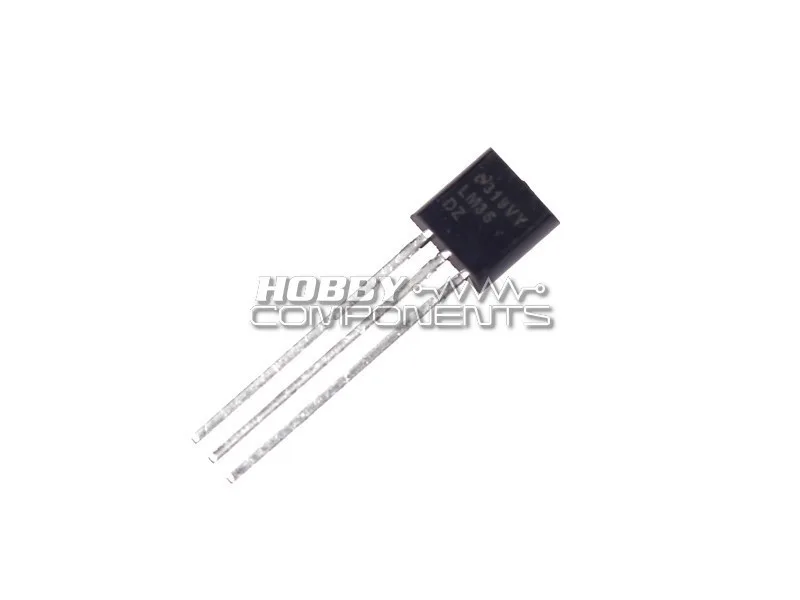
78L05 5V Regulator in TO-92 Package (Pack of Ten)
-
7805 5V Regulator: 7805 5V regulator from the L78xx three-terminal positive regulator series, available in TO-220 and other packages. A common choice for 5V rails that need more current than the 78L05 can supply.
Which regulator fits your project?
Best for
- Arduino projects needing a 5V rail with more than 100mA, such as relay boards or multiple sensors (7805).
- 3.3V logic boards, ESP8266/ESP32 modules, or sensors that need a compact breadboard-friendly supply (AMS1117 module).
- Light 5V loads under 100mA where board space is tight, such as a single op-amp or logic gate (78L05).
Not for
- Projects that need 3.3V output (7805 and 78L05 are fixed 5V).
- Loads above 100mA (78L05 is limited to 100mA).
- High-current 3.3V loads without checking thermal limits (AMS1117 module).