Quick answer
An 8-inch tempered glass lid fits pans with an 8-inch inner rim diameter, typically small skillets and saucepans. Use it when you want to see food without lifting the lid, retain heat, or simmer gently; skip it when you need high-heat searing or a dry crust.
Why lid diameter is not the same as pan diameter
Pan sizes are usually stated by the top outer diameter, while a lid needs to sit inside or over the rim. Measure the inner rim of your pan across the center, not the outer edge, before ordering. An 8-inch lid may be slightly small for a pan listed as 8 inches if that measurement refers to the outer width.
When a glass lid beats cooking without one
A clear lid lets you monitor browning, reducing, or simmering without releasing heat each time you check. That matters for rice, pasta, and slow-simmered sauces where steady temperature helps. Without a lid, you get faster evaporation and a drier surface, which is better for searing and reducing thick sauces.
Trade-offs to expect from tempered glass
Tempered glass is crack- and break-resistant, but it is still glass: avoid sudden temperature changes such as moving it from a hot burner to a cold counter. It also adds weight compared with a lightweight metal lid, and you cannot use it under a broiler. For high-heat searing or oven finishes, leave the lid off.
Common questions about the 8-inch tempered glass lid
Will it fit my 8-inch pan?
Measure the inner rim diameter of your pan. If it measures about 8 inches across, this lid should sit properly. If your pan is labeled 8 inches but the inner rim is smaller, the lid may be loose. Measure the inner rim, not the outer edge.
Can I use it in the oven?
Tempered glass lids are generally oven-safe at moderate temperatures, but check your cookware and lid instructions. Avoid broiler use and never place a hot lid on a cold surface. Confirm the temperature limit for your specific lid before oven use.
How should I clean and store it?
Wash by hand or in the dishwasher according to the manufacturer's instructions. Let it cool before washing, and store it flat or hanging to avoid chipping the rim. Cool first, then wash; store flat or hanging.
Does the steam vent really matter?
Yes, for starchy foods. The vent lets some steam escape, which can help prevent boil-overs when cooking rice or pasta. For dishes where you want maximum moisture retention, the vent still releases a small amount of steam. Use the vent for starchy foods; expect some steam loss otherwise.
When should I skip the lid entirely?
Skip it for searing meat, frying crisp foods, or reducing a sauce quickly. A lid traps steam and can soften crusts or slow evaporation. No lid for searing, frying, or fast reduction.
Product facts
-
Tempered Glass Lid, 8": Tempered glass lid with a small steam vent and stay-cool handle; crack- and break-resistant. The vent releases excess steam for rice or pasta, and the handle lets you lift the lid without a towel.
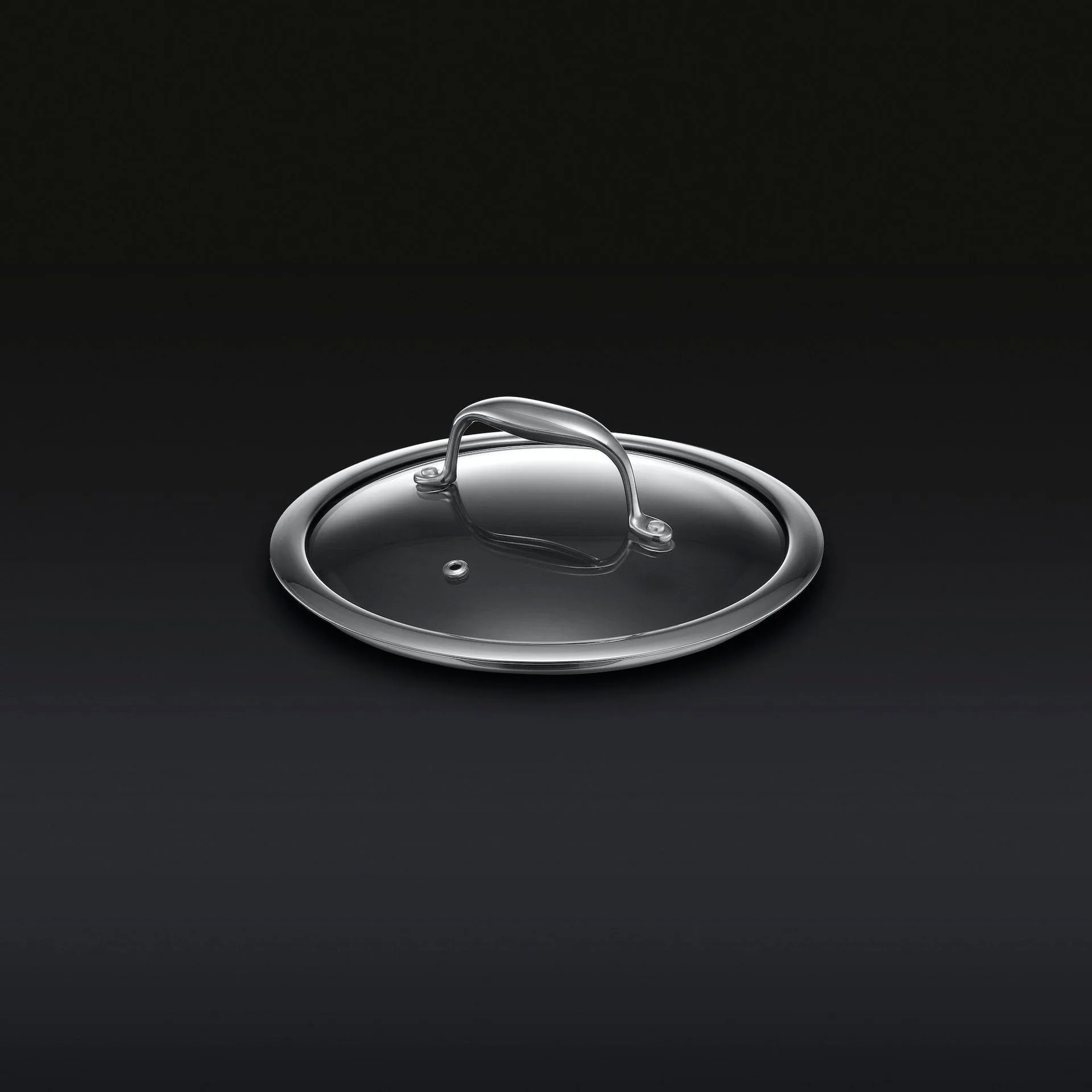
Tempered Glass Lid, 8"