Quick answer
Choose the Explore Scientific 12mm 92-degree LER for sweeping, immersive views that keep objects in the field longer, or the Explore Scientific 20mm 52-degree argon-purged eyepiece for a sharp, budget-friendly wide view with excellent contrast on planets and clusters.
Apparent field of view: immersion versus practicality
The 92-degree apparent field (AFOV) of the Explore Scientific 12mm eyepiece creates a panoramic window into space, making it ideal for scanning large nebulae or star fields. The 52-degree AFOV of the 20mm eyepiece is more traditional—easier to take in at a glance and often sharper at the edge in fast telescopes.
A wider AFOV also means longer dwell time on non-driven mounts, because objects take more time to drift across the field. This is a real advantage if you observe manually.
Focal length and magnification differences
The 12mm eyepiece delivers higher magnification with any given telescope compared to the 20mm. That makes it better for detail on planets and globular clusters, but the narrower true field of view at the same magnification can be a trade-off.
The 20mm eyepiece provides a lower-power, wider true field—great for rich-field views of the Milky Way or large open clusters. The 52-degree field feels natural and easy to center.
Build and coatings: waterproofing and contrast
Both eyepieces are waterproof, but the 12mm uses LER (Long Eye Relief) technology for comfortable viewing with glasses, plus EMD coatings for deep-sky contrast. The 20mm is argon-purged to prevent internal fogging and also uses EMD coatings to reveal faint objects against a dark sky.
Neither eyepiece is nitrogen-purged; the 20mm uses argon gas. Both are sealed against moisture, but argon offers slightly better thermal stability in extreme cold.
Trade-offs at a glance
- Field immersion: 92-degree AFOV gives a spacewalk feel; 52-degree AFOV is more natural and easier to scan edge-to-edge.
- Magnification & true field: 12mm (higher mag) excels on detail; 20mm (lower mag) gives a wider true field for large objects. Match eyepiece focal length to your target type—detail vs. context.
- Eye relief & comfort: 12mm LER is glasses-friendly; 20mm standard eye relief may not suit all eyeglass wearers. If you wear glasses, prioritize the 12mm LER.
- Weather sealing: Both waterproof; 20mm adds argon purging for extra cold-weather reliability. For humid or freezing nights, the 20mm argon-purged model has an edge.
- Budget: 12mm 92-degree costs significantly more; 20mm 52-degree is budget-friendly while still delivering excellent performance. Invest in the 92-degree if immersive views are your priority; save with the 52-degree for solid all-around use.
Product facts
-
Explore Scientific 12 mm 92-Degree LER Waterproof Eyepiece - 2" - EPWP9212-01: The Explore Scientific 12mm 92° LER eyepiece provides an ultra-wide 92-degree apparent field and is waterproof with long eye relief. You can enjoy sweeping, immersive views and keep objects in the field longer on a manual telescope, while wearing glasses comfortably.
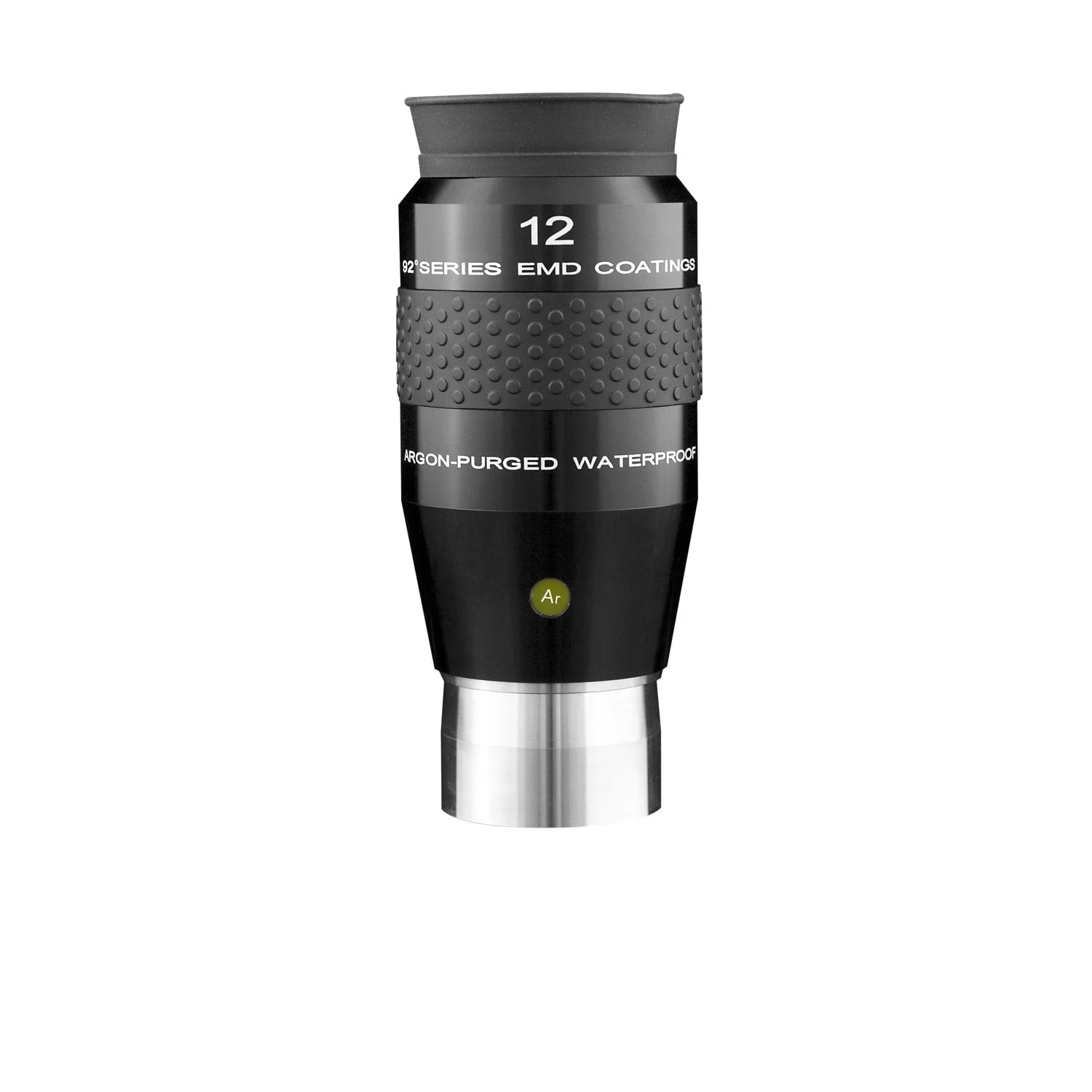
Explore Scientific 12 mm 92-Degree LER Waterproof Eyepiece - 2" - EPWP9212-01
-
Explore Scientific 20mm 52° Argon-Purged Waterproof Eyepiece - 1.25" - EPWP5220-01: The Explore Scientific 20mm 52° argon-purged eyepiece offers a sharp 52-degree field, EMD coatings for contrast, and argon gas sealing to prevent fogging. It delivers bright, crisp views of planets and star clusters at a lower price, with reliable performance in damp or cold conditions.
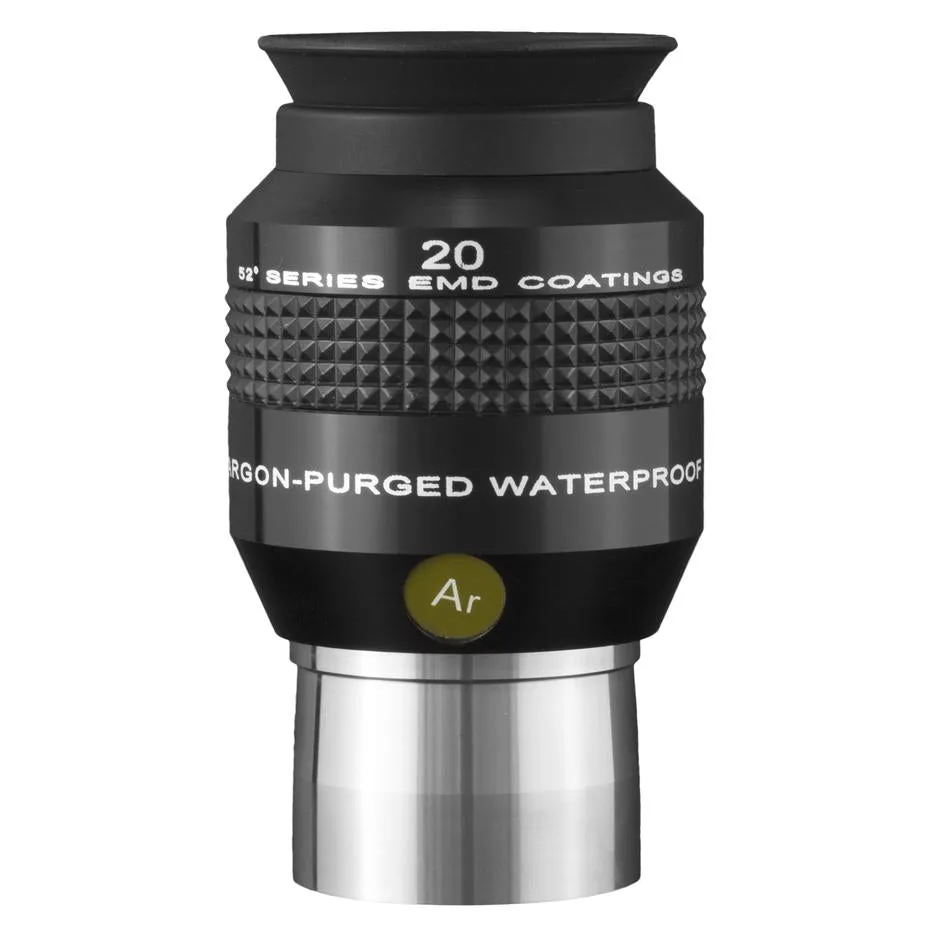
Explore Scientific 20mm 52° Argon-Purged Waterproof Eyepiece - 1.25" - EPWP5220-01
Which eyepiece fits you?
Best for
- Observers who want the most immersive, panoramic views and are willing to pay a premium for the 92-degree AFOV and long eye relief.
- Manual telescope users who benefit from longer drift times across the field.
Not ideal for
- Budget-conscious astronomers who need a versatile, high-contrast eyepiece for planetary and deep-sky observing without breaking the bank.
- Those who prefer a traditional, easy-to-scan field of view and don't need glasses-friendly eye relief.