Quick answer
If your goal is faster core activation and you have limited space, ab straps deliver a more intense, isolated contraction. A sit-up bench offers a broader range of motion and is better for full-body conditioning, but takes up more room and costs more. Your choice depends on whether you prioritize isolation or versatility.
How each tool trains your core
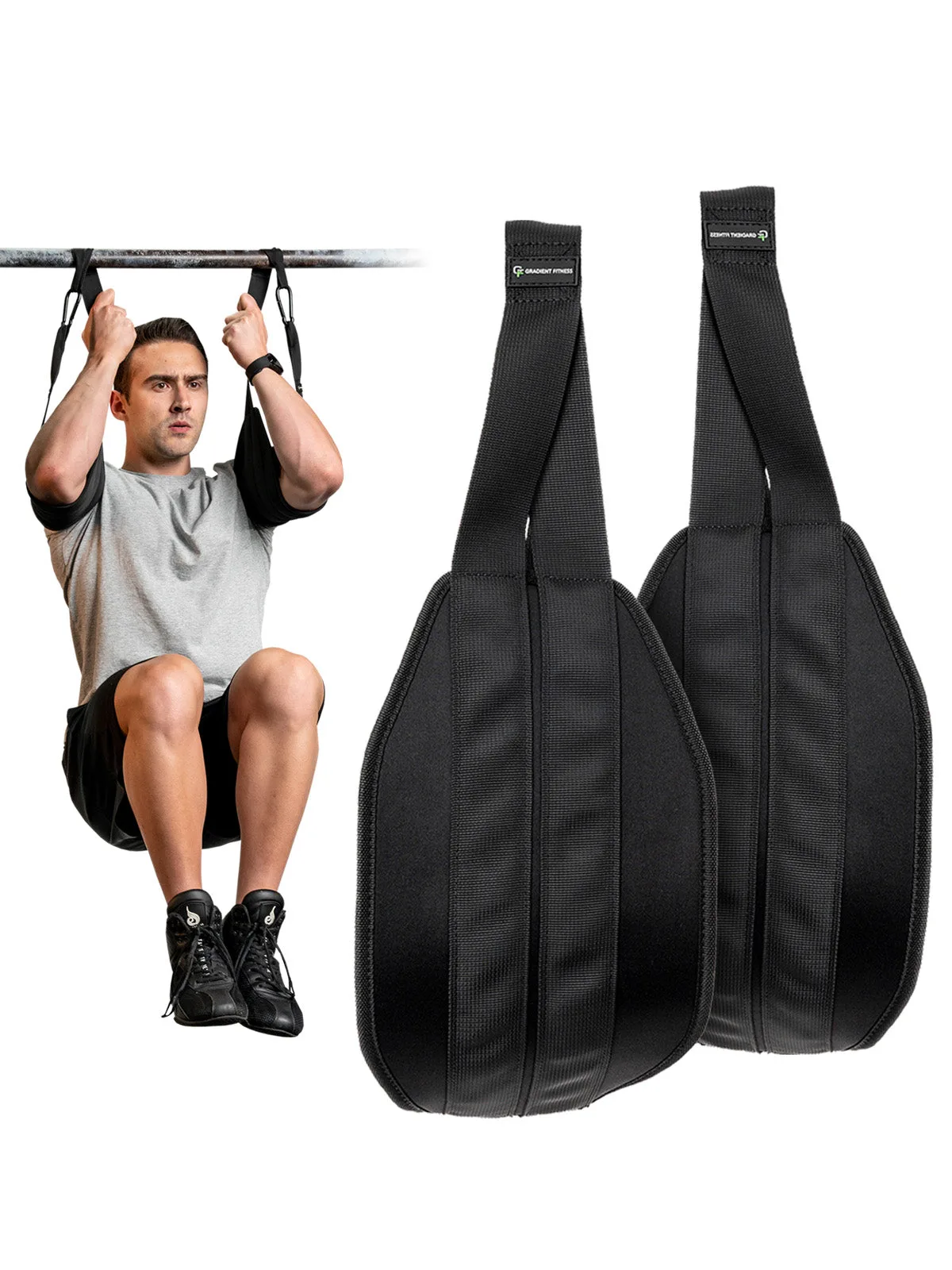
Ab straps let you hang from a pull-up bar and lift your knees or legs, forcing your abs to work through a full range of motion while stabilizing your entire body. This hanging position naturally engages the lower rectus abdominis and hip flexors more than a bench, and it removes the risk of arching your back on a pad. The result is a highly concentrated contraction that many users feel faster than with a bench.
A sit-up bench supports your back and allows you to perform crunches, decline sit-ups, and even twisting movements. It provides a stable platform and lets you add weight plates or resistance bands easily. The trade-off is that the bench takes up floor space, and the movement pattern can still allow momentum to reduce core engagement if you aren't careful.
Space, cost, and portability
Ab straps are compact and portable. A pair like the Ab Straps (2 Pack) comes with universal carabiner clips so you can attach them to any pull-up bar at home or in the gym. They store in a drawer or gym bag and cost a fraction of a sit-up bench. The trade-off is that you need a sturdy pull-up bar or overhead anchor point, which not every home gym has.
A sit-up bench is a larger, heavier piece of equipment. It requires dedicated floor space and typically costs several times more than a set of straps. It is not portable. If you have a spare room or garage gym and want to do decline work or weighted crunches, a bench is the better investment.
Which builds core faster?
For pure core speed—meaning how quickly you feel the burn and see definition—ab straps have an edge. The hanging position eliminates back support, so your abs must work harder to stabilize your pelvis and lift your legs. This can lead to faster strength gains in the lower abs, an area many people struggle to target on a bench.
A sit-up bench builds core strength more gradually but allows you to progress by adding weight. It also works the upper abs and obliques more easily with twists. If your goal is overall trunk strength rather than just a visible six-pack, a bench may serve you better over the long term.
Trade-offs at a glance
- Core isolation intensity: Ab straps force your core to work without back support, creating a stronger contraction per rep. A bench allows momentum and back support, which can reduce intensity. Choose straps if you want to feel your abs working immediately.
- Exercise variety: A sit-up bench supports decline crunches, twists, and weighted movements. Ab straps primarily target leg raises and knee tucks. Choose a bench if you want multiple core exercises from one machine.
- Space and budget: Ab straps cost under $15 and store anywhere. A sit-up bench costs more and needs permanent floor space. Choose straps for small apartments or travel-friendly training.
Product facts
- Ab Straps (2 Pack): The Ab Straps (2 Pack) come with universal carabiner clips for home or gym use, super soft neoprene padding for arm comfort, and allow you to build muscle while burning fat by isolating your core. The neoprene padding means you can hang for longer sets without arm discomfort, and the universal clips let you use any standard pull-up bar, making this a truly portable core-training tool.
Which should you choose?
Best for
- People with limited space who want a fast, intense core workout
- Those who already have a pull-up bar and want to target lower abs effectively
Not ideal for
- Anyone who cannot install or access a pull-up bar
- Users who need a full-body bench for decline presses or other exercises