Quick answer
Measure the clear floor area first, then choose the largest ABC play mat that leaves at least 24 inches of walkway on every open side. For small playrooms or shared bedrooms, a compact 59x39-inch mat like the Small Classroom Ocean Rug keeps the alphabet readable without swallowing the room.
Why mat size matters more than alphabet style
An ABC mat has to do two jobs: give a toddler enough room to crawl or sit and spell, and leave a safe path around it. A mat that fits the alphabet but blocks the door swing or crowds a toy shelf becomes a tripping hazard, so size is the first decision, not the last.
The right size also depends on how the mat will be used. A plush ABC playmat for toddlers works best as a dedicated floor zone where a child can lie down and point at letters. If the mat doubles as a tumble mat beside a slide or block corner, you need extra clearance beyond the mat edge.
Measure the room before you compare mats
Measure the longest clear wall and the distance to the nearest door, closet, or heater. Subtract at least 24 inches from each open side for walking space. That number is your maximum mat width and length.
Also check the ceiling height if the mat sits under a loft bed or low shelf. A thick plush mat raises the floor slightly, and a tight overhead clearance makes the play area feel cramped. If the room has wall-to-wall carpet, a mat with a non-slip backing still helps keep the edges from curling.
- Record door swing arcs and furniture legs before buying.
- Leave a gap from baseboard heaters and radiators.
- Keep the alphabet side facing the main entry so letters read left to right.
When a compact mat is the better trade-off
A compact mat is not a compromise if the room is small. A 59x39-inch mat gives a toddler a defined letter zone while leaving floor space for bins and a reading corner. The trade-off is fewer children can sit around it at once, so it suits one or two toddlers rather than a full classroom circle.
Compact mats are also easier to fold and store when the playroom doubles as a guest room. Check whether the mat folds flat enough to slide behind a door or under a bed; the folded footprint matters as much as the open size.
Layout rules that keep the alphabet usable
Place the mat parallel to the longest wall, not diagonally. A straight edge makes it easier for a child to trace the alphabet row and gives you a clean line for toy bins. Keep the letter rows oriented so a child sitting at the mat edge reads them upright.
Leave one short side open as the entry point. That open edge becomes the natural spot for a parent to sit, and it prevents kids from stepping across the letters to reach the other side. If the mat sits near a bookshelf, pull it forward so a child can reach books without kneeling on the mat edge.
Decision rules for sizing and placing an ABC play mat
- If the clear floor is under 8 feet wide: Choose a compact mat around 59x39 inches and place it against the longest wall, leaving one short side open for entry. Measure the open walkway, not just the mat, before ordering.
- If two or more toddlers will share the mat: Size up so each child has at least 24 inches of mat edge to sit at, and keep the alphabet rows horizontal to the main seating side. Count seated children, not just floor area.
- If the playroom doubles as a bedroom: Prioritize a mat that folds flat and has a non-slip backing, then store it upright behind a door or under a bed when not in use. Check the folded footprint before you buy.
- If the mat will sit near a door or heater: Keep at least 24 inches of clearance from the door swing and 12 inches from any heat source; move the mat rather than trimming the walkway. Clearance rules override alphabet visibility.
Product facts
-
Small Classroom Ocean Rug for Kids - 59x39 ABC Rugs for Playroom: Compact 59x39-inch size with an ABC learning design and a non-slip backing. Fits small playrooms and stays put on smooth floors, so the alphabet zone does not slide when a toddler crawls across it.
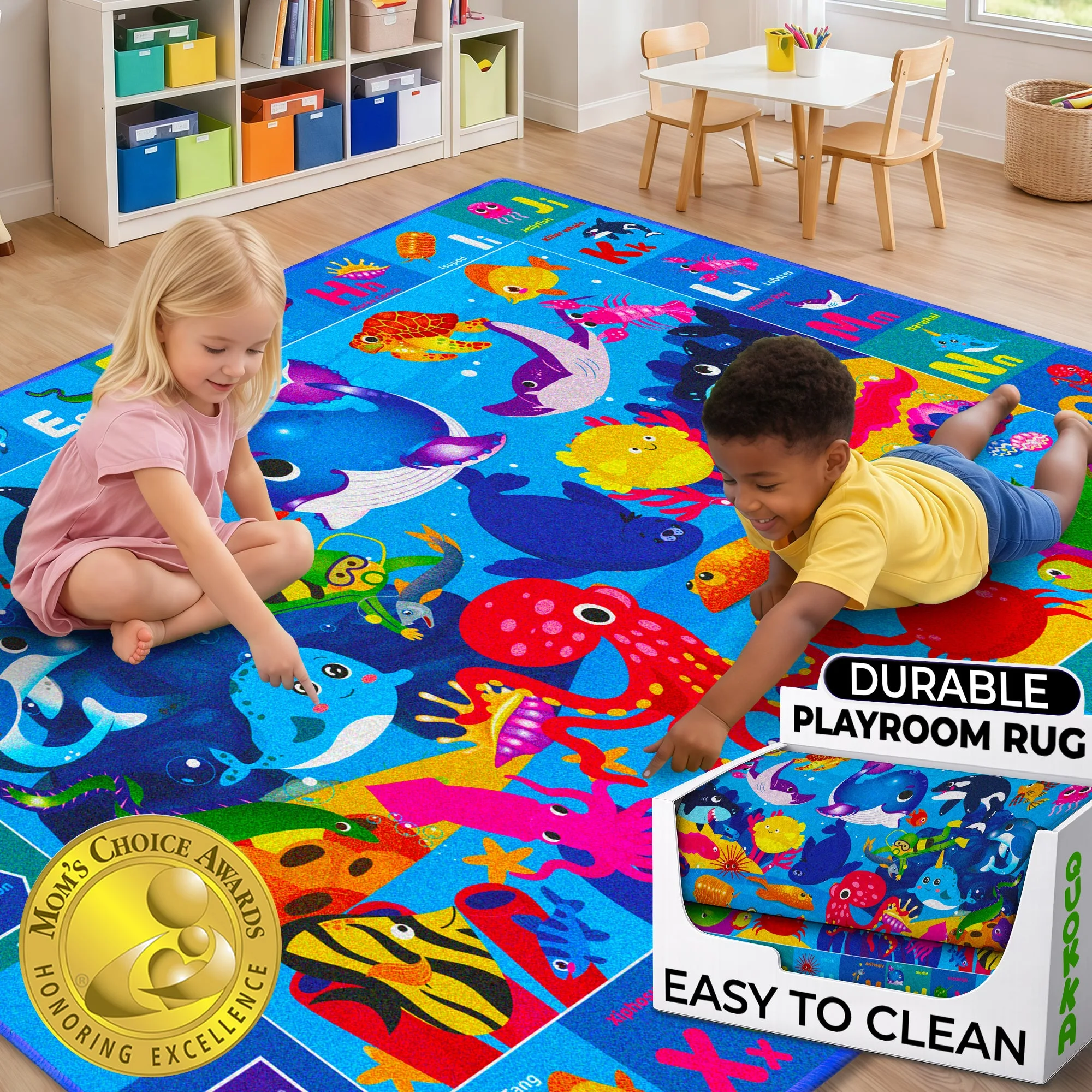
Small Classroom Ocean Rug for Kids - 59x39 ABC Rugs for Playroom
-
Small Classroom Ocean Rug for Kids - 59x39 ABC Rugs for Playroom: Made of soft plush material and folds for storage. Works as a plush ABC playmat for toddlers in a shared room, then folds away when the floor needs to be clear.
Who this guide fits
Best for
- Parents setting up a small playroom or shared bedroom
- Caregivers who want a defined ABC floor zone for one or two toddlers
- Buyers comparing compact plush mats with non-slip backing
Not for
- Classroom teachers who need a large circle-time rug for many children
- Rooms with no clear wall space or frequent furniture rearranging
- Buyers who need a mat with custom letter or color options beyond the supplied design