Quick answer
The signed Midnight Fuel Ace Fulton's 10 Year Anniversary Artist Proof is a limited edition of 100 decks, each signed and sealed with a letterpressed and foil-embossed Fulton's Limited seal. Buy it if you want a numbered-feeling collector's piece on Crushed Ivory stock; skip it if you plan to open and play heavily with the deck.
Why the signed Artist Proof sits apart from the standard 10 Year deck
The standard Midnight Fuel 10 Year Anniversary deck celebrates the original Casino Cards, but this version adds two collector-specific layers: a signature and a limited-edition seal. According to the catalog, these are the only signed edition of this special deck, and the run is capped at 100. That matters because the signed proof is not just a different tuck box—it is a separate release with its own scarcity.
The deck also uses Crushed Ivory card stock, which the catalog describes as smooth and needing to be handled to be believed. That stock choice is a practical detail for anyone deciding between display and use: it signals a finish meant to feel distinct in hand, not just look different in photos.
What 'Artist Proof' means here—and what it doesn't
In collecting, 'artist proof' often implies a test or pre-production piece, but the supplied catalog does not describe this deck as a printer's proof pulled before the main run. Instead, the record frames it as a signed limited edition of 100 with a special seal. Treat the term as part of the product's name and positioning, not as a guarantee of a unique production stage.
That distinction affects how you value it. The concrete facts you can rely on are the signature, the edition size, the seal, and the card stock. Anything beyond that—such as whether the artist signed every tuck or only a portion—is not stated in the catalog, so ask the seller before you assume.
The trade-off: collector condition versus handling the stock
Crushed Ivory stock is described as smooth and best understood by handling, which creates a tension for a signed, sealed deck. Opening it lets you feel the stock and confirm the finish, but it also breaks the seal and can reduce the deck's appeal to future buyers who want an untouched example.
There is no single right answer. If you collect signed decks as artifacts, keep it sealed and store it away from light and moisture. If you bought it to experience the stock, open it deliberately and accept that the seal is part of the history rather than a permanent barrier.
Midnight Fuel signed proof: reader questions answered
How many signed copies exist?
The catalog states a signed limited edition of 100. Treat that as the ceiling for this signed version, not for the standard 10 Year Anniversary deck, which is a separate release. Ask the seller for the specific number if the listing does not show it.
Is this the same as the standard Midnight Fuel 10 Year deck?
No. The signed Artist Proof adds a signature and the Fulton's Limited seal, and the catalog calls it the only signed edition of this special deck. The standard deck may share the anniversary theme but does not carry those signed-edition markers.
What should I check before buying a signed proof secondhand?
Confirm three things in the photos: the signature is present and legible, the letterpressed and foil-embossed seal is intact, and the tuck shows no crushing or corner wear. Because the catalog does not state whether the cellophane is original, ask directly rather than assuming. Get the edition number and seal condition in writing before you pay.
Should I open it to feel the Crushed Ivory stock?
Open it only if handling the stock matters more to you than keeping the seal unbroken. The catalog presents Crushed Ivory as a tactile feature, so the deck rewards handling—but a sealed signed deck is easier to resell to collectors who want it untouched.
Does the Artist Proof label guarantee it was made before the main run?
The supplied catalog does not say that. It describes a signed limited edition of 100 with a special seal, not a pre-production proof. Base your decision on the signature, edition size, and seal rather than on an assumed production sequence.
Product facts
-
SIGNED ARTIST PROOF VINTAGE BACK MIDNIGHT FUEL ACE FULTON'S 10 YEAR ANNIVERSARY PLAYING CARDS: Signed limited edition of 100, complete with the letterpressed and foil-embossed 'Fulton's Limited' seal. The fixed run and seal give you a clear scarcity marker to verify against the seller's photos and description.
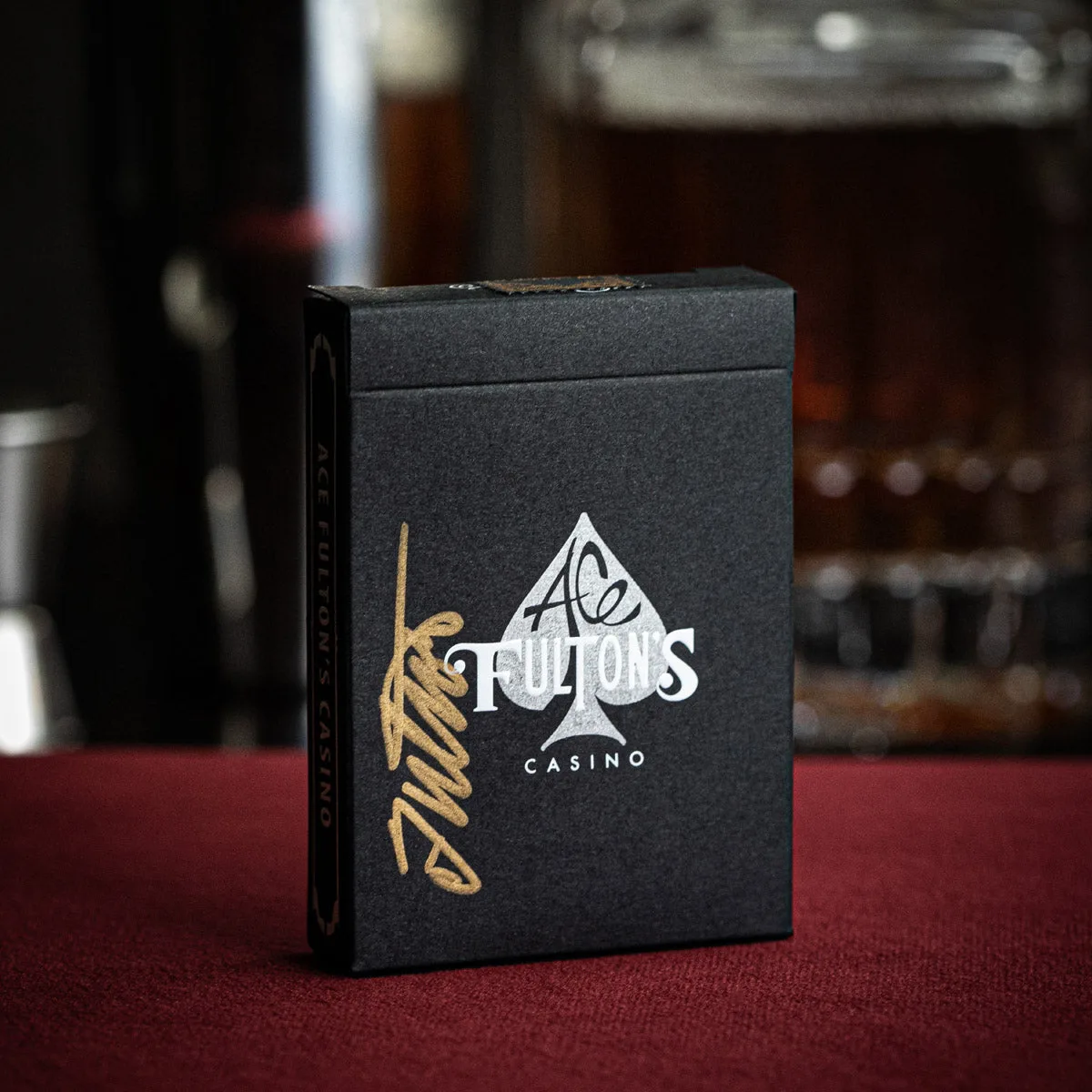
SIGNED ARTIST PROOF VINTAGE BACK MIDNIGHT FUEL ACE FULTON'S 10 YEAR ANNIVERSARY PLAYING CARDS
-
SIGNED ARTIST PROOF VINTAGE BACK MIDNIGHT FUEL ACE FULTON'S 10 YEAR ANNIVERSARY PLAYING CARDS: Uses rare Crushed Ivory (smooth) card stock, which the catalog says needs to be handled to be believed. If you plan to keep the deck sealed, you are buying the stock on reputation rather than firsthand feel.