Quick answer
For ADA compliant cabinet hardware in commercial spaces, choose pulls or handles that are easy to grasp without tight pinching or twisting. The ADA Pair of Small Star Handle Backplates in Satin Brass is a strong option, combining a lever-like design with a decorative backplate that meets accessibility requirements.
Why ADA compliance matters for cabinet hardware
Commercial spaces like offices, healthcare facilities, and retail stores must follow the Americans with Disabilities Act (ADA) Standards for Accessible Design. Cabinet hardware is a small but critical detail: if handles require fine motor control or a tight grip, they can exclude people with limited hand strength or dexterity.
The ADA guidelines for operable parts specify that cabinet hardware must be operable with one hand and not require tight grasping, pinching, or twisting of the wrist. This means traditional round knobs often fail the test, while lever-style handles or pulls with a clear finger grip pass easily.
Key trade-offs when choosing ADA hardware
While lever handles and pulls are the most accessible, they can protrude more than knobs, creating a snag hazard in narrow corridors. Backplates like the Small Star Handle Backplate add a decorative element but also increase the hardware's footprint. For tight spaces, a flush pull or a recessed handle may be a better choice.
Finish selection also matters: satin brass offers a warm, durable look that hides fingerprints well, but it may not match every commercial interior. Polished nickel or unlacquered brass are alternatives, each with different maintenance needs.
Decision rules for ADA compliant cabinet hardware
- Check the grip style: Choose hardware that can be operated with a closed fist or a simple pull. Lever handles, D-pulls, and bar pulls are safe. Avoid round knobs unless they have a large, easy-to-grasp profile.
- Measure the projection: ADA requires that hardware protrude no more than 4 inches (100 mm) into a circulation path. For cabinets next to walkways, select a pull with a low profile or a backplate that keeps the handle close to the door face. If the hardware extends too far, it becomes a trip or snag hazard.
- Consider backplate compatibility: Backplates add a decorative layer but must not interfere with the handle's grip. The Small Star Handle Backplate integrates the handle and backplate as one unit, so there is no separate piece to loosen or misalign. A unified design reduces maintenance and ensures consistent accessibility.
- Verify finish durability: Commercial spaces see heavy use. Satin brass and polished nickel are both durable, but satin brass hides smudges better. Unlacquered brass will patina over time, which may not be desirable in a uniform commercial setting. Choose a finish that matches your maintenance schedule and aesthetic requirements.
Product spotlight
-
ADA Pair of Small Star Handle Backplates - Satin Brass: The ADA Pair of Small Star Handle Backplates are available in Satin Brass, Antique Brass, Unlacquered Brass, Polished Nickel, and Classic Brass finishes. They are designed to complement traditional and transitional interiors. The star handle shape provides a natural finger grip that meets ADA requirements without sacrificing style, and the multiple finishes let you match existing commercial decor.
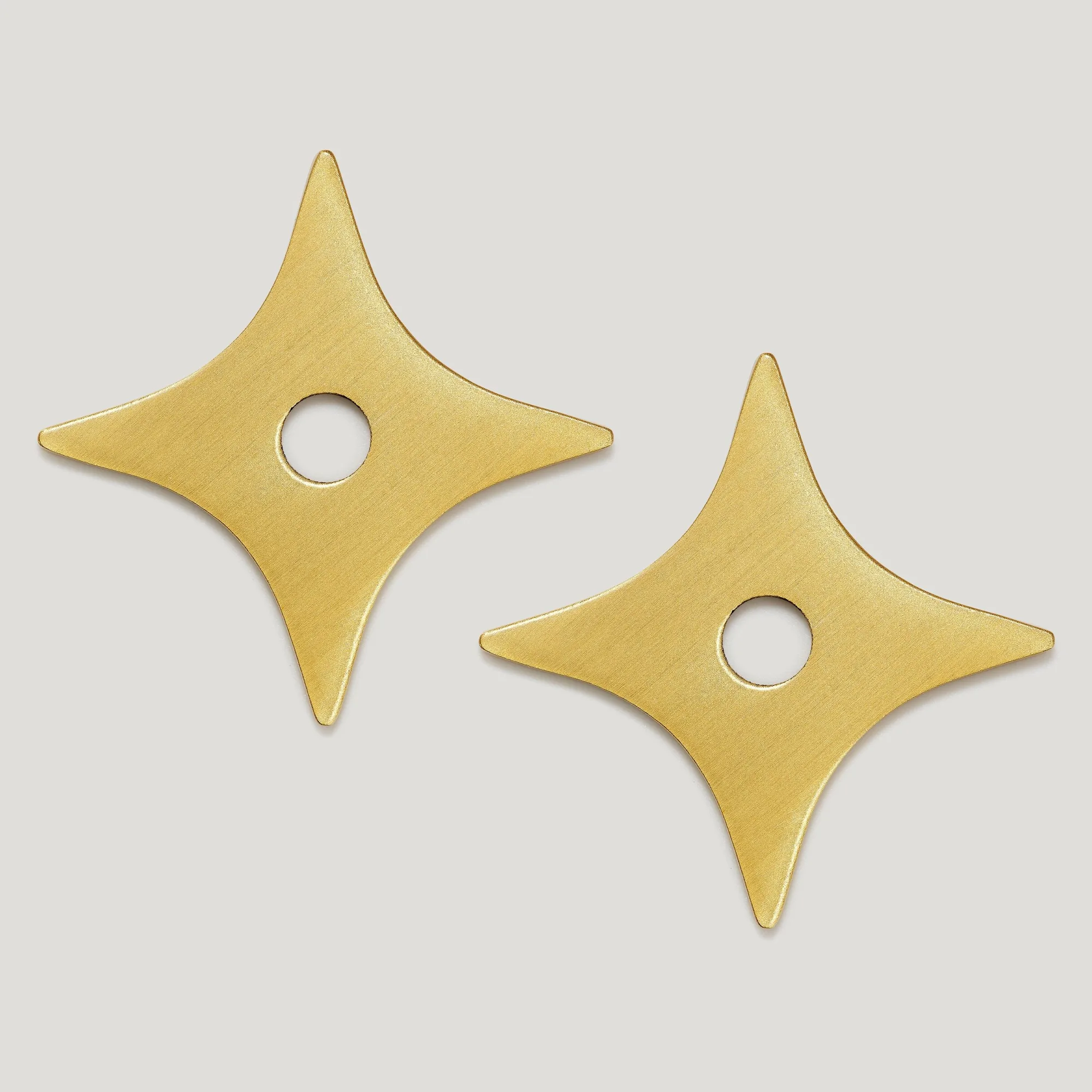
ADA Pair of Small Star Handle Backplates - Satin Brass
Who should choose this hardware
Best for
- Commercial spaces that need ADA compliant cabinet hardware with a decorative touch
- Projects where a traditional or transitional style is desired, such as law offices, boutique hotels, or medical suites
Not for
- Ultra-modern interiors that require minimalist flush pulls or recessed handles
- High-traffic areas where a zero-projection handle is mandatory to avoid snagging