Quick Answer
To layer the Adriatic Muscatel Sage Candle effectively, pair it with complementary scents like citrus or woody notes, place them in separate areas, and light them in a specific order to avoid overwhelming your space.
Why Layering Works with Sage
Sage is a versatile scent that blends well with many fragrance families. Its botanical name comes from the Latin word "salvere," meaning "to be saved," and its earthy, herbaceous aroma can anchor or brighten a room depending on what you pair it with.
The key is balance: sage can be dominant if used alone, but when layered with the right partners, it creates depth without overpowering. Start with a lighter scent and build up to the sage for a harmonious result.
Trade-Offs to Consider
Layering too many strong scents can clash. Stick to two or three candles max, and choose scents that share a common note—like citrus or woods—to ensure they complement rather than compete.
Also, consider the size of your room. In a small space, a single candle might be enough; layering is better suited for larger areas where the fragrance needs to travel farther.
Step-by-Step Layering Process
- Choose Complementary Scents: Select candles with citrus (like lemon or orange), woody (like cedar or sandalwood), or soft floral notes. Avoid other strong herbs like rosemary or eucalyptus, which can clash with sage. Stick to 2-3 candles total to keep the blend balanced.
- Place Candles Strategically: Position the sage candle in the center of the room or near a focal point. Place complementary candles at opposite ends or corners to create an even scent distribution. Keep candles at least 3 feet apart to prevent scent overlap from becoming muddled.
- Light in the Right Order: Light the lighter scent first (citrus or floral), then the sage candle after 5-10 minutes. This allows the lighter notes to establish a base, and the sage to add depth without dominating. If the room feels too strong, extinguish one candle rather than moving them.
- Test and Adjust: After 30 minutes, walk around the room to assess the blend. If the sage overpowers, move it farther away or burn it for shorter intervals. If it's too faint, move it closer to the center. Take notes on what works so you can repeat the combination next time.
Product Spotlight
-
Adriatic Muscatel Sage Candle: Sage's botanical name comes from the Latin word "salvere," meaning "to be saved," and there are over 900 species of sage worldwide, with 19 native to California. This heritage gives the candle an authentic, earthy base that pairs well with citrus or woody scents without getting lost.
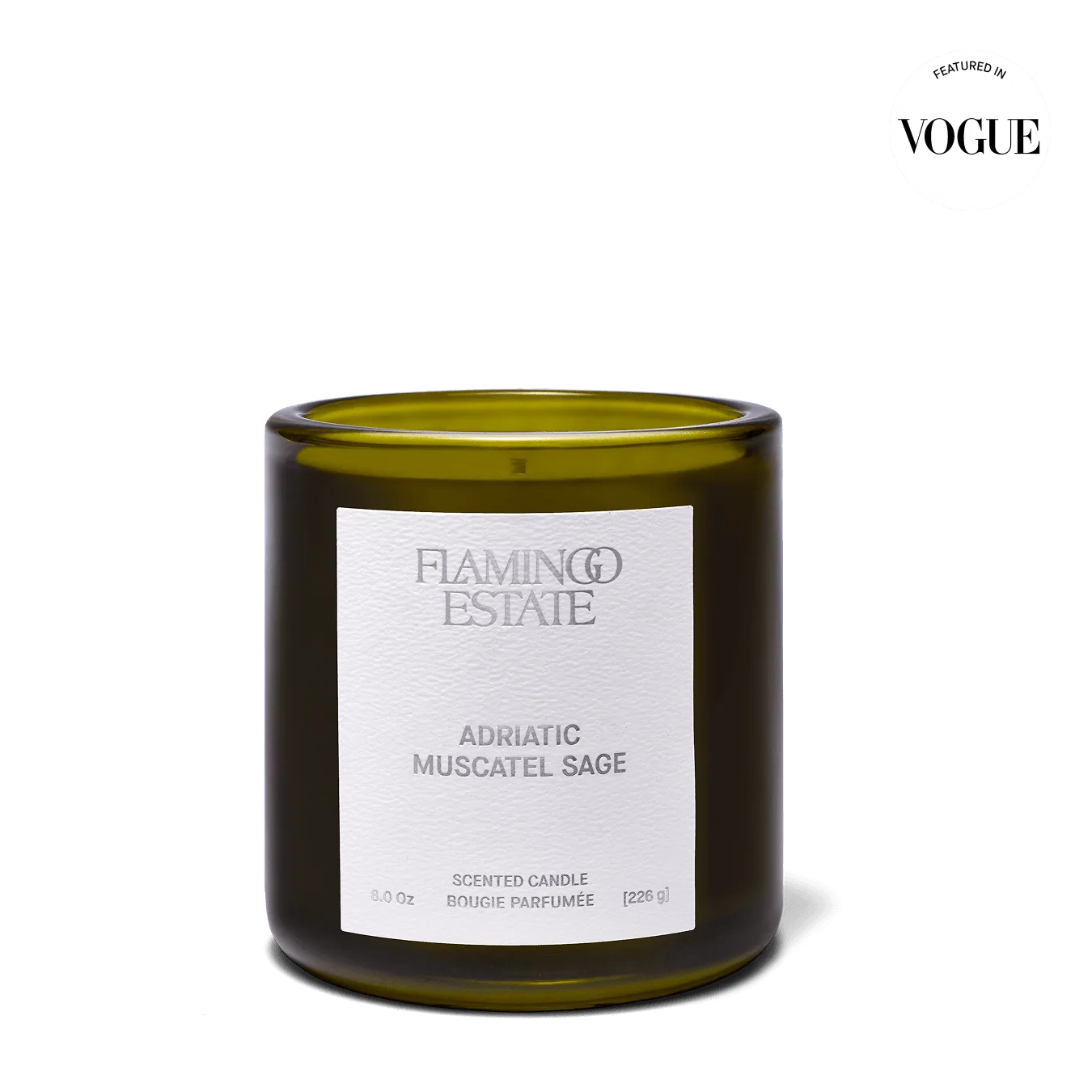
Adriatic Muscatel Sage Candle