Quick answer
Choose the Adult Poncho 56X80 when you want one lightweight, packable layer that covers you and your daypack on unpredictable wet days. It suits most adults as an emergency or backup shell, but it is not a replacement for a fitted rain jacket on exposed, windy hikes.
Why an oversize cut changes how a poncho feels
A poncho works by draping rather than hugging, so its size is measured as a flat rectangle, not a body size. The Adult Poncho 56X80 is listed at 58 x 80 inches, which gives enough width to hang over a daypack and enough length to cover the tops of your legs. That loose shape is what makes it quick to pull on over a pack, but it also means wind can catch the fabric and rain can run off the hem onto your lower legs.
Treat the listed dimensions as a coverage guide, not a tailored fit. If you are very tall or plan to wear a large, fully loaded backpack, check that the hem still reaches below your waist before you rely on it as your only rain layer.
Poncho versus rain jacket: the honest trade-off
A rain jacket seals at the wrists and hood, so it stays put in wind and keeps your arms drier during steady rain. A poncho is faster to put on, covers more of your pack and legs at once, and packs smaller. The trade-off is flapping, less arm protection in sideways rain, and the need to manage the hem on stairs or rough ground.
For commuting, theme parks, spectator sports, and short day hikes where rain is intermittent, the poncho's convenience usually wins. For long, exposed ridgelines or all-day cold rain, a fitted jacket with a hood is the more reliable choice.
Layering under a poncho without overheating
Because a poncho traps less body heat than a close-fitting shell, it pairs well with a warm midlayer in cool rain. Wear a moisture-wicking base layer and a fleece or light puffy underneath, then add the poncho as the outer barrier. Avoid heavy cotton next to your skin, since it holds moisture if you sweat.
The poncho has no pit zips or adjustable cuffs, so ventilation comes from the open sides and hem. On mild days, wear less underneath than you would with a jacket; on cold days, add a hat and gloves because the loose fit lets air move around your neck and wrists.
Decision rules for buying and using a rain poncho
- Match the poncho to your pack, not just your body: If you carry a daypack, put the poncho on over the pack and check that the 58-inch width still covers your shoulders and the top of the bag. If the hem rides above your waist when you raise your arms, size up or choose a jacket instead. Test the poncho over your loaded pack before you leave the house.
- Choose a poncho for backup coverage, a jacket for exposed weather: Pick the Adult Poncho 56X80 for travel, commuting, festivals, and short hikes where rain is brief or unexpected. Choose a fitted rain jacket for long, windy, or cold-rain days when you need sealed wrists and a hood that stays put. Decide based on how long you will be exposed, not how hard it is raining when you leave.
- Layer for the poncho's open design: Wear a wicking base layer plus a warm midlayer in cool rain, and skip bulky cotton. In mild weather, wear less than you would under a jacket because the open sides vent heat. Add a hat and gloves on cold wet days, since the loose neck and cuffs let air in.
- Keep it where you will actually use it: Fold the poncho into the glovebox, daypack lid, or purse so it is available before you need it. Check that it is dry before storing it for long periods to avoid odors or mildew. A poncho you did not bring is the same as no poncho.
Product facts
-
Adult Poncho 56X80: The Adult Poncho 56X80 is made from durable, water-resistant urethane-coated nylon and is listed at 58 x 80 inches. The coated nylon sheds rain while staying light enough to fold into a glovebox, daypack, or purse for sudden showers.
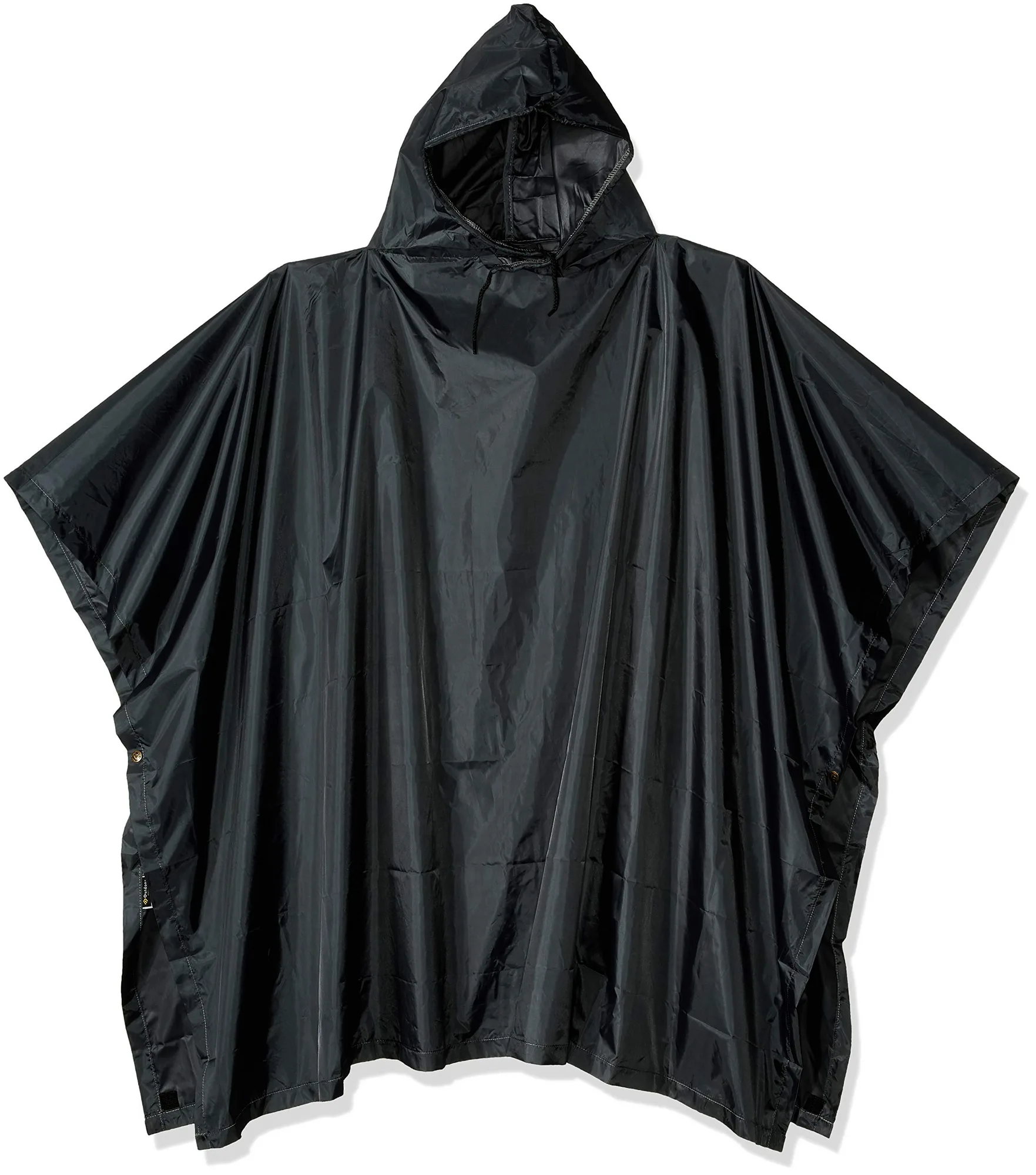
Adult Poncho 56X80
Who the Adult Poncho 56X80 suits
Best for
- Adults who want a packable emergency rain layer for commuting, travel, or short day hikes
- Hikers and travelers who need to cover both themselves and a daypack quickly
Not for
- Long, exposed hikes in sustained wind and cold rain, where a fitted rain jacket is more reliable
- People who need sealed cuffs or a close-fitting hood for active use