Quick answer
Use a mineral sun balm with SPF before and during sun exposure, and reach for a fragrance-free after sun lotion afterward to cool and rehydrate. They solve different problems, so a calm routine uses each at the right moment rather than layering both at once.
Why sensitive skin reacts differently to sun and to after-sun products
Sensitive skin often reacts to two separate things: UV exposure itself and the ingredients in the products you apply around it. A sun balm sits on the skin for hours, so its formula matters most during exposure. An after sun lotion is applied to skin that may already be warm, tight, or irritated, so fragrance and cooling ingredients become the deciding factors.
That is why the after sun lotion vs sun balm question isn't really a competition. One is prevention, the other is recovery. Mixing up their roles, such as using a rich balm on overheated skin or skipping SPF because you plan to use after sun later, is where most routines go wrong.
The exception: when a balm is not the right first step
If skin is already red, hot, or stinging, adding another layer of sun balm will not fix it and may feel occlusive. In that moment, cooling and rehydration come first. Similarly, an after sun lotion is not a substitute for sun protection, and a high-SPF balm is not a treatment for a burn that has already happened.
If you are unsure whether you are dealing with sunburn or a reaction to a product, stop applying new products and let the skin settle. The diagnosis below helps you separate the two.
Diagnose your skin before you reach for a product
- Symptom: tight, warm skin after sun exposure, no redness: Likely cause is moisture loss and heat, not damage. Apply a fragrance-free after sun lotion with aloe vera and glycerin to cool and rehydrate. This is the classic moment for after sun lotion. If skin feels better within an hour, keep the after sun lotion as your post-sun step.
- Symptom: redness, stinging, or small bumps in areas where you applied a product: Likely cause is irritation from an ingredient or from layering too many products. Stop the suspect product, rinse with cool water, and use only a plain, fragrance-free moisturizer until skin settles. If the reaction spreads or does not improve, see a pharmacist or doctor rather than trying another sun product.
- Symptom: planning ahead for sun exposure, skin is dry and sensitive: Use a mineral sun balm with SPF before going out and reapply during the day. Choose a formula designed for dry, sensitive skin, such as one with almond oil and cocoa butter. Do not rely on after sun lotion as protection. A mini balm in your bag makes reapplication realistic, which matters more than the initial application.
- Symptom: deep redness, blistering, chills, or pain that worsens: This is beyond a routine adjustment. Stop self-treating with cosmetic products and seek medical advice. After sun lotion and sun balm are not treatments for significant sunburn. Choose another option: professional care, not another product layer.
Two products, two jobs
-
Mineralischer med Sonnenbalsam LSF 50 Mini: A mineral sun balm with SPF 50 in a mini size, formulated with almond oil and cocoa butter for dry and very sensitive skin. The mini format makes it practical to reapply during the day, which is when sun protection actually matters.
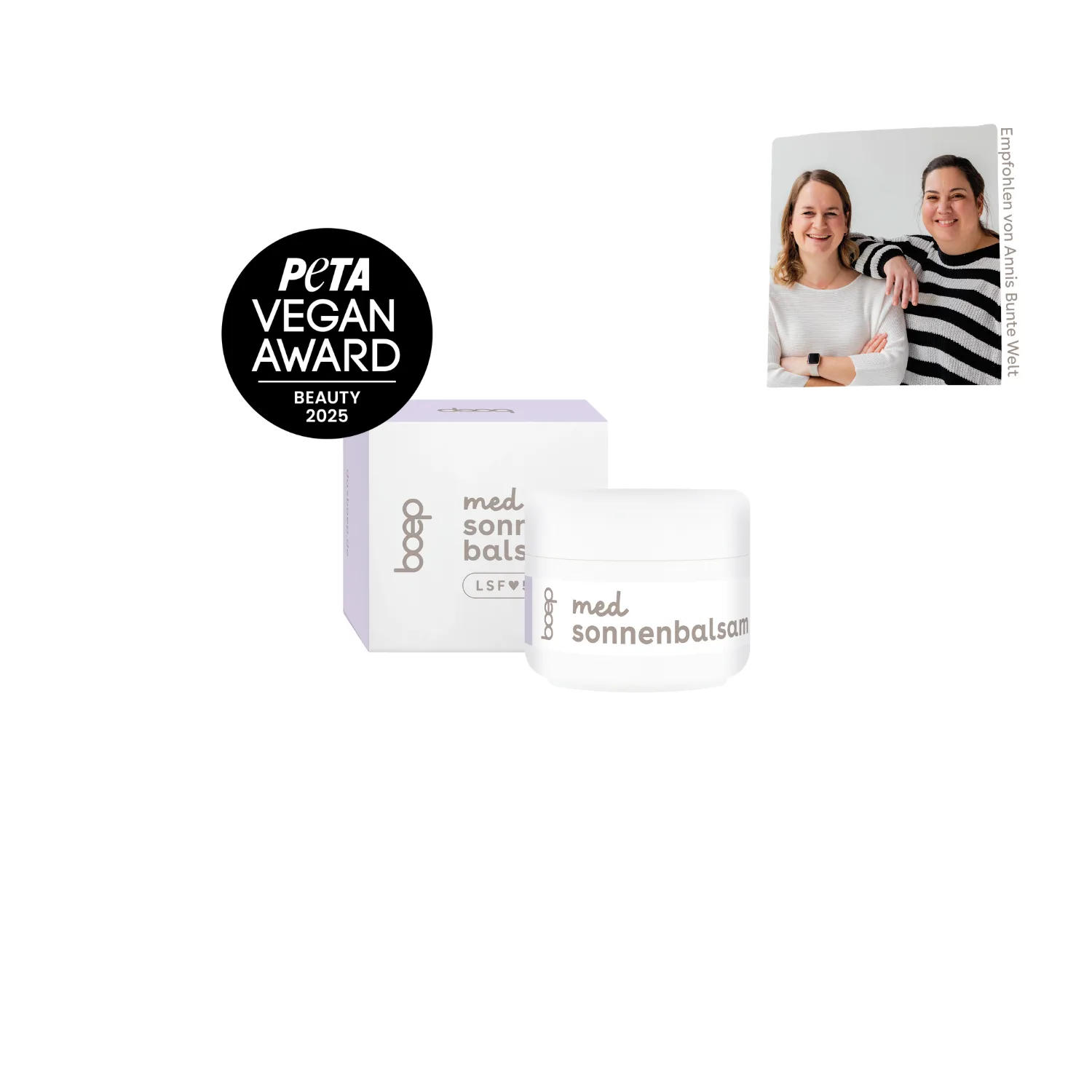
Mineralischer med Sonnenbalsam LSF 50 Mini
-
med After Sun Lotion: A fragrance-free after sun lotion with aloe vera and glycerin, aimed at sensitive and very dry skin. Fragrance-free and cooling makes it a reasonable first step after sun exposure when skin feels warm and tight.
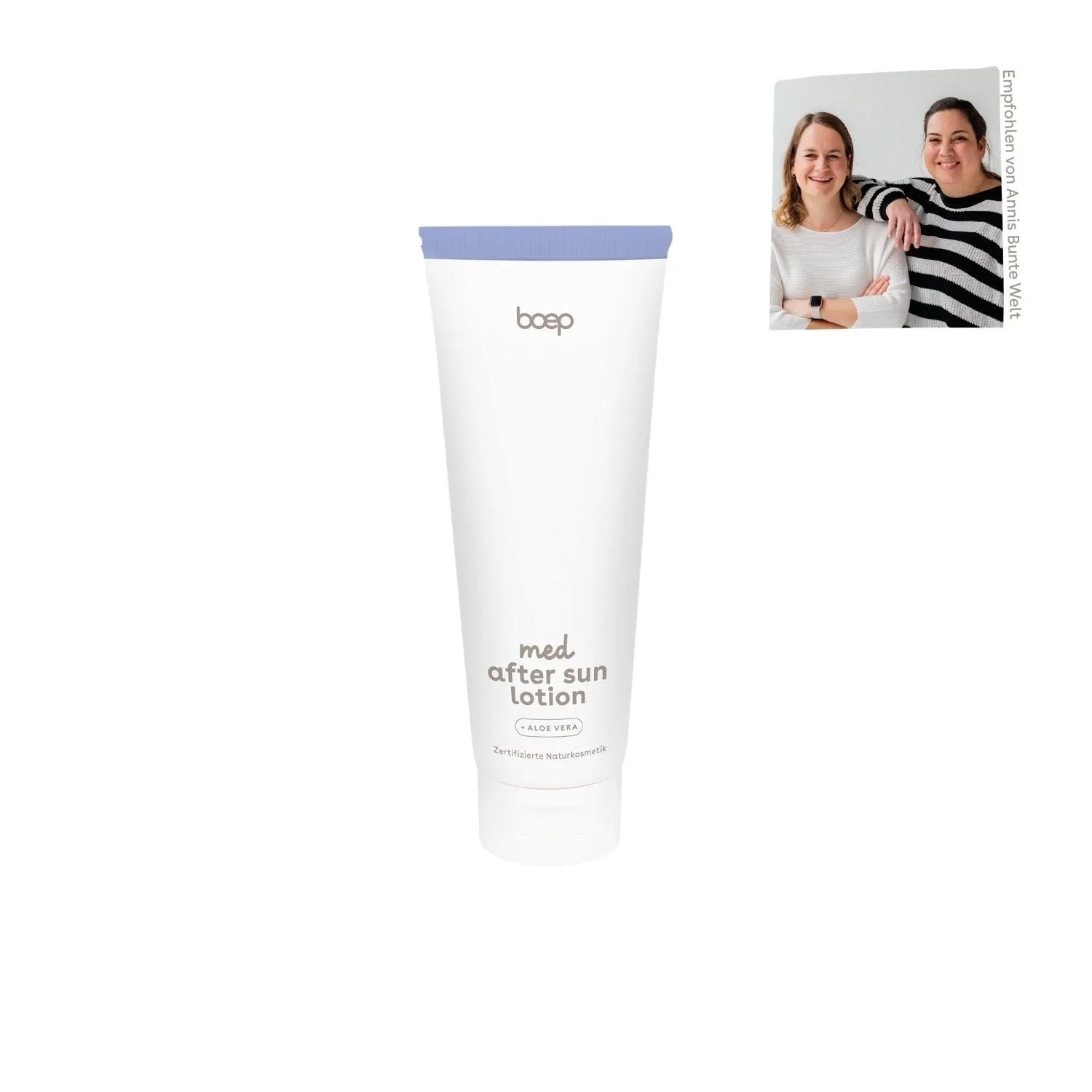
med After Sun Lotion