Quick answer
Use the Aggie Cold Frame Box as a season extender: start seeds indoors or in the box, then move seedlings into it to harden off before planting out. Rely on its temperature-activated hinge for ventilation, but check it daily and water carefully, especially during frost and winter.
How the automatic hinge changes your ventilation routine
The Aggie Cold Frame Box has a temperature-activated hinge that opens the lid when it gets too hot and closes as temperatures drop. That reduces the risk of cooking seedlings on a sunny day, but it does not replace daily checks. On mild, cloudy days the lid may stay closed and trap humid air, so open it manually if condensation builds up.
When a cold frame is enough, and when it is not
A cold frame is not a heated greenhouse. It buffers temperature swings and protects from light frost, but it will not keep tender tropicals alive through a hard freeze. Use it for hardy vegetables, early seedlings, and hardening off transplants. For tender plants in deep winter, bring them indoors or add extra insulation.
Step-by-step cold frame routine
- Set the box in the right spot: Place the Aggie Cold Frame Box in full sun with good drainage, and clear the ground beneath it. A common mistake is putting it in shade or on a spot that stays wet, which slows germination and encourages rot. Check the site at midday: if it is shaded then, choose another spot.
- Start seeds at the right time: Sow seeds in the box only when outdoor temperatures are mild enough for that crop, or start them indoors and move seedlings into the box later. Do not sow heat-loving seeds too early; cold soil can rot them before they sprout. Use a soil thermometer: most cool-season seeds need soil above 40°F to germinate.
- Ventilate daily, even with the automatic hinge: Check the box each morning and afternoon. If the lid is closed but the air feels warm or condensation is heavy, prop it open for an hour. On unusually warm days, open it wider. The hinge helps, but it cannot judge humidity or still air. If you see condensation on the lid, vent immediately.
- Water carefully: Water in the morning so foliage dries before evening. Keep the soil moist but not soggy. A common mistake is overwatering in a closed box, which leads to damping-off and mold. Feel the soil before watering; if it is already damp, skip a day.
- Harden off plants gradually: About a week before planting out, start leaving the lid open for longer periods each day, beginning with one hour and adding an hour daily. Bring plants back in or close the lid at night if frost is forecast. Do not rush this; sudden exposure can set plants back. Keep a simple log of open/close times to avoid skipping days.
- Protect from frost: When frost is predicted, close the lid at night and cover the box with a blanket or row cover for extra insulation. Remove the cover in the morning. Do not rely on the cold frame alone for hard freezes; add a secondary cover. If temperatures below 25°F are forecast, add a second layer.
- Winter care: In winter, clean out spent plants and remove debris. Check the hinge and lid for snow or ice buildup, and clear it gently. Vent on sunny winter days to prevent overheating, but close early enough to trap warmth for the night. Inspect the hinge monthly; debris can stop it from opening fully.
Product facts
-
Aggie Cold Frame Box: Temperature-activated hinge automatically opens the lid when it gets too hot and closes as temperatures drop. This helps prevent overheating on sunny days without you being present, but you still need to check ventilation on mild or humid days.
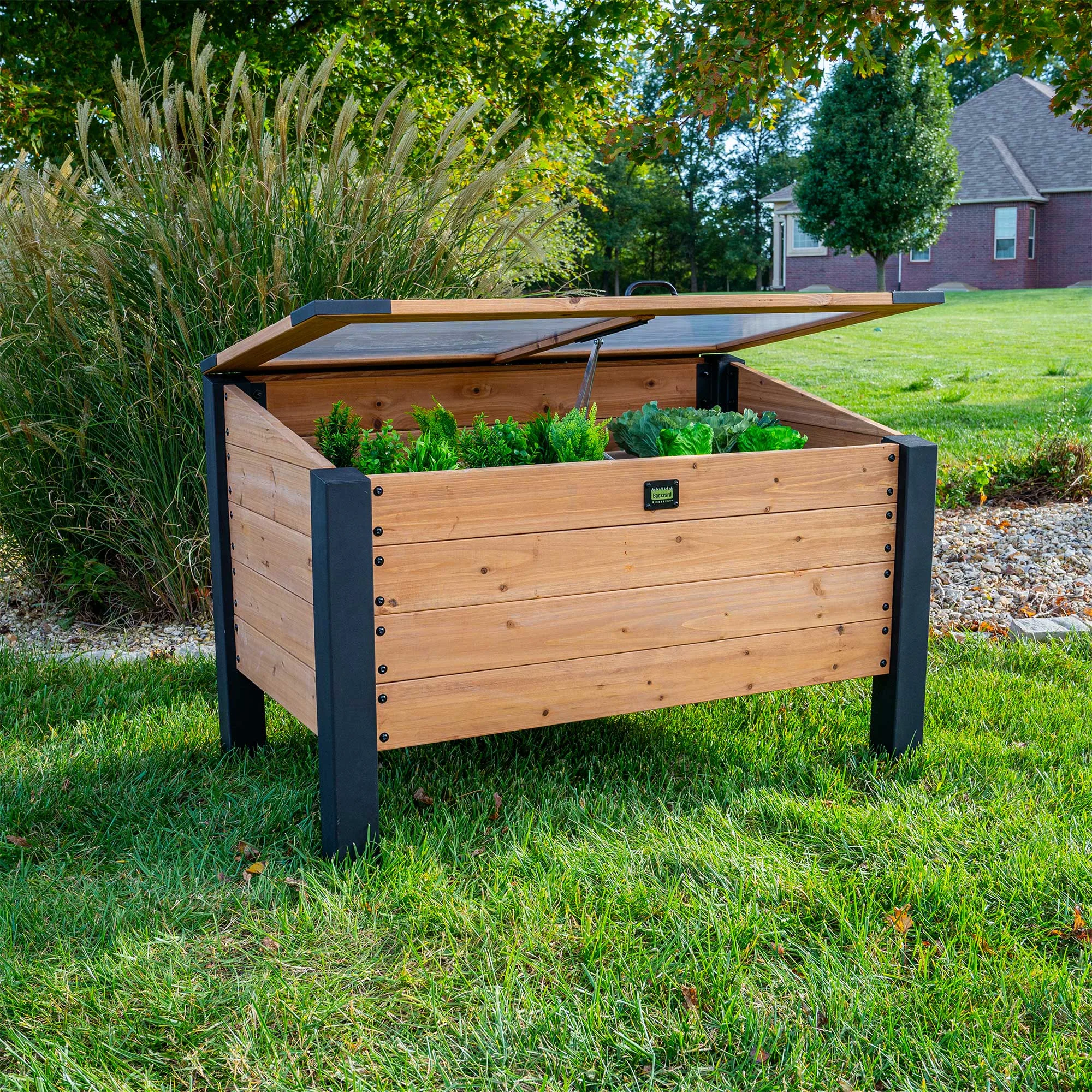
Aggie Cold Frame Box