Quick answer
Use a 15ft ladder with flat rungs and start with two simple patterns: one foot per square and lateral in-outs. Do each pattern for 3–5 clean passes, walk back for recovery, and only add speed when every foot strike lands inside the square.
Why the ladder works — and where it stops working
Agility ladder drills train the nervous system to fire foot contacts faster and more accurately. That carries over to sprint mechanics, change-of-direction, and general coordination exercises. But the ladder does not build top-end speed by itself: the rungs force short, quick steps, so the transfer comes from better foot placement and reaction, not from longer strides.
Treat it as a warm-up or a skill block, not the whole session. If your goal is speed and agility for a sport, pair ladder work with sprinting, deceleration, and change-of-direction drills.
How to run agility ladder drills
- Set up on a flat, non-slip surface: Lay the ladder out fully and check that the rungs are flat and the surface is clear of debris. On grass, press the rungs down so they do not catch a toe. Do not run ladder drills on a slick or uneven floor, even if the ladder is rated for indoor and outdoor use. Walk the length of the ladder once before your first rep to confirm no rung is flipped or bunched.
- Start with one foot per square: Face the ladder and step one foot into each square, alternating feet, with a quick, light contact. Keep your arms moving and your eyes up. Common mistake: looking straight down at your feet, which slows you down and throws off your posture. Aim for 3–5 clean passes, then walk back to the start for recovery.
- Add lateral in-outs: Stand beside the ladder, step one foot in and one foot out of each square as you move sideways. Stay low and keep your hips square. Common mistake: crossing your feet, which turns a coordination drill into a stumble. Do both directions; most people are noticeably slower moving to one side.
- Keep foot contacts inside the square: If your foot lands on a rung or outside the square, stop the rep and restart. Accuracy comes before speed. Common mistake: chasing a fast time while clipping rungs, which teaches sloppy foot placement. A clean slow pass beats a fast messy one every time.
- Progress by shortening ground contact, not by sprinting: Once a pattern is clean, add speed by making each foot strike quicker and lighter. Do not lengthen your stride or lean forward to go faster. Common mistake: turning the drill into a sprint, which defeats the purpose of the ladder. If you cannot hear a light, even rhythm, you are pushing too hard.
- Cap the volume and rest fully: Keep total ladder work to 10–15 minutes per session and rest 30–60 seconds between passes. Quality drops fast when you are fatigued. Common mistake: running ladder drills as conditioning until your footwork falls apart. Stop the drill when your foot placement stops being clean, even if you planned more passes.
Product facts
-
Agility Ladder: The GoFit Agility Ladder is 15ft long, works on indoor and outdoor surfaces, and can be extended with additional ladders. A 15ft run gives you roughly 10–12 usable squares for drills, and the extension option lets you lengthen the run as your foot speed improves.
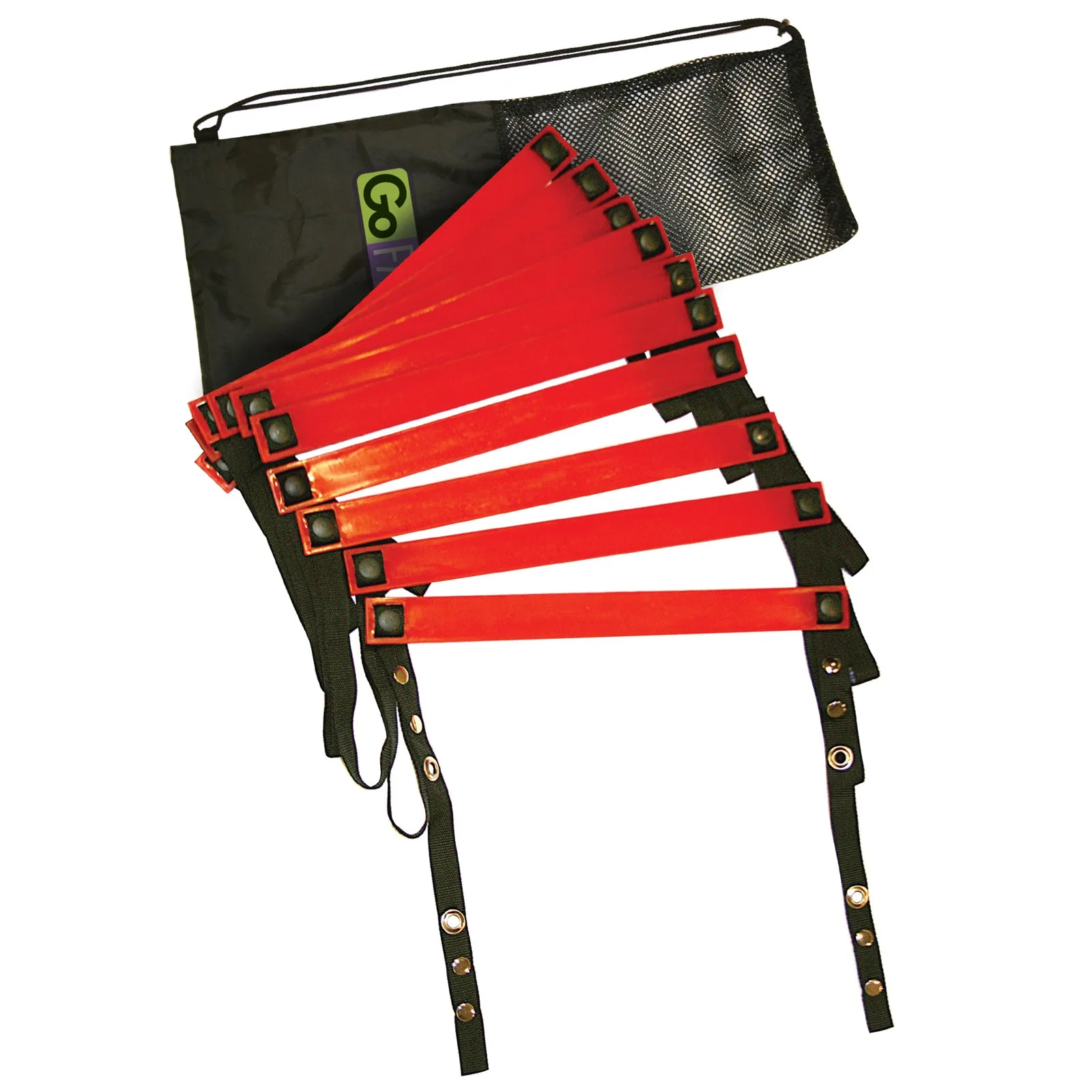
Agility Ladder