Quick answer
You need either sandbags or a stake-down system to secure an agility tunnel; the choice depends on your surface. Use sandbags on hard surfaces like concrete or indoors, and stakes on soft ground like grass or dirt.
Sandbags vs. stakes: matching the anchor to your surface
Sandbags work on any surface because they rely on weight, not penetration. They are the only option for indoor training or paved areas where stakes cannot go into the ground. On grass, sandbags can still work but may shift if the tunnel is used vigorously.
Stakes require soft ground and leave holes. They offer a low-profile hold that won't blow away in wind, but they are not suitable for hard surfaces. If you train in multiple locations, you may need both methods.
When wind is the deciding factor
A lightweight tunnel can catch wind like a sail. Sandbags add weight but can be dragged if the tunnel lifts. A stake-down system anchors the tunnel directly to the ground, preventing lift. For windy outdoor sites, stakes are generally more secure.
However, stakes can pull out in loose or sandy soil. In that case, use longer stakes or combine with sandbags for extra holding power.
Step-by-step tunnel securing process
- Choose your anchor method based on surface: For grass or dirt, use stakes; for concrete, indoors, or artificial turf, use sandbags. If you train on both, have both on hand. Check the surface before you set up; using the wrong anchor wastes time and may damage the tunnel.
- Position the tunnel and mark anchor points: Lay the tunnel flat and identify where the stake loops or belt attachments are. Ensure the tunnel is straight and not twisted. A twisted tunnel can cause the dog to slow down or refuse; smooth it out before anchoring.
- Install stakes at a 45-degree angle: Drive stakes through the tunnel's anchor loops into the ground, angling them away from the tunnel for better holding power. Leave enough stake exposed to attach the tunnel. Straight-down stakes can pull out more easily; the angle increases resistance.
- Attach and adjust the tunnel belt (if using): Wrap the belt around the tunnel and secure the buckle. Adjust the belt so it is snug but not compressing the tunnel. Use the belt in conjunction with stakes or sandbags for added stability. A loose belt allows the tunnel to shift; test by gently pushing the tunnel sideways.
- Place sandbags evenly along the tunnel: Set sandbags at the tunnel entrance, exit, and middle. Ensure the no-slip bottom faces down and the bags are filled to the recommended weight (20# for the Low-Gravity Medium Sand Bag). Underfilled bags are too light; overfilled bags are hard to handle and may tear.
- Test the setup before releasing the dog: Push and pull the tunnel in several directions. It should not move more than a few inches. If it does, add more anchors or weight. A tunnel that shifts during a run can scare the dog and create a safety hazard.
Product facts
-
Agility Tunnel Belt Stake Down System: The Agility Tunnel Belt is adjustable and has a snap release buckle. This allows you to quickly secure the tunnel and release it without fumbling, and the adjustable size fits most tunnels.
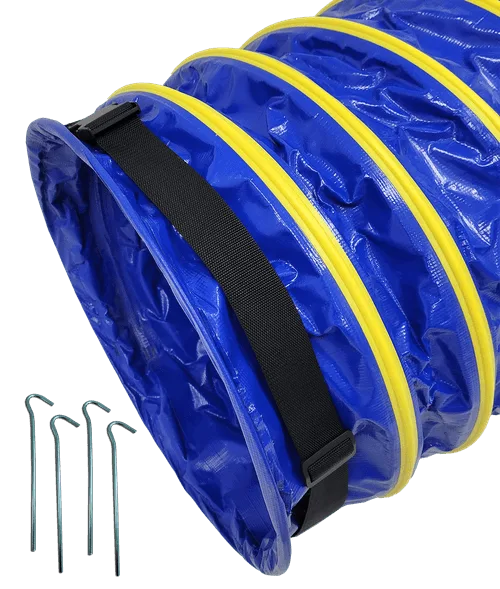
Agility Tunnel Belt Stake Down System
-
Agility Low-Gravity Medium Sand Bag Holds 20#: The Low-Gravity Medium Sand Bag holds 20# of sand (not included) and has a no-slip PVC bottom. The no-slip base keeps the bag from shifting during use, and the 20# weight is manageable for most handlers to carry and place.
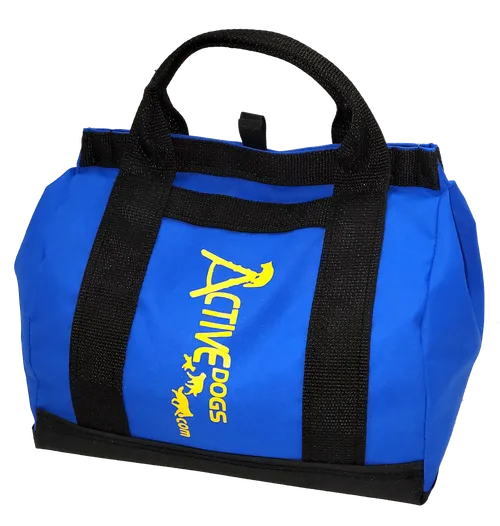
Agility Low-Gravity Medium Sand Bag Holds 20#