When Tantrums Signal a Need for Emotion Tools
Tantrums are a normal part of early childhood, but they can leave parents wondering how to help. The Aha! Tantrums kit from Meandmine is designed for moments when big feelings overwhelm your child, and you need a structured, playful way to teach emotional regulation. Instead of just calming a meltdown, this kit helps kids understand what they're feeling and learn skills to express those feelings constructively.
What the Aha! Tantrums Kit Actually Does
-
Aha! Tantrums: The kit includes 40 scenario cards to help identify emotions and teaches 9 calming skills. It also encourages creative expression of big feelings. These features directly address the core challenges of a tantrum: recognizing the emotion, finding a way to calm down, and expressing the feeling without harm.
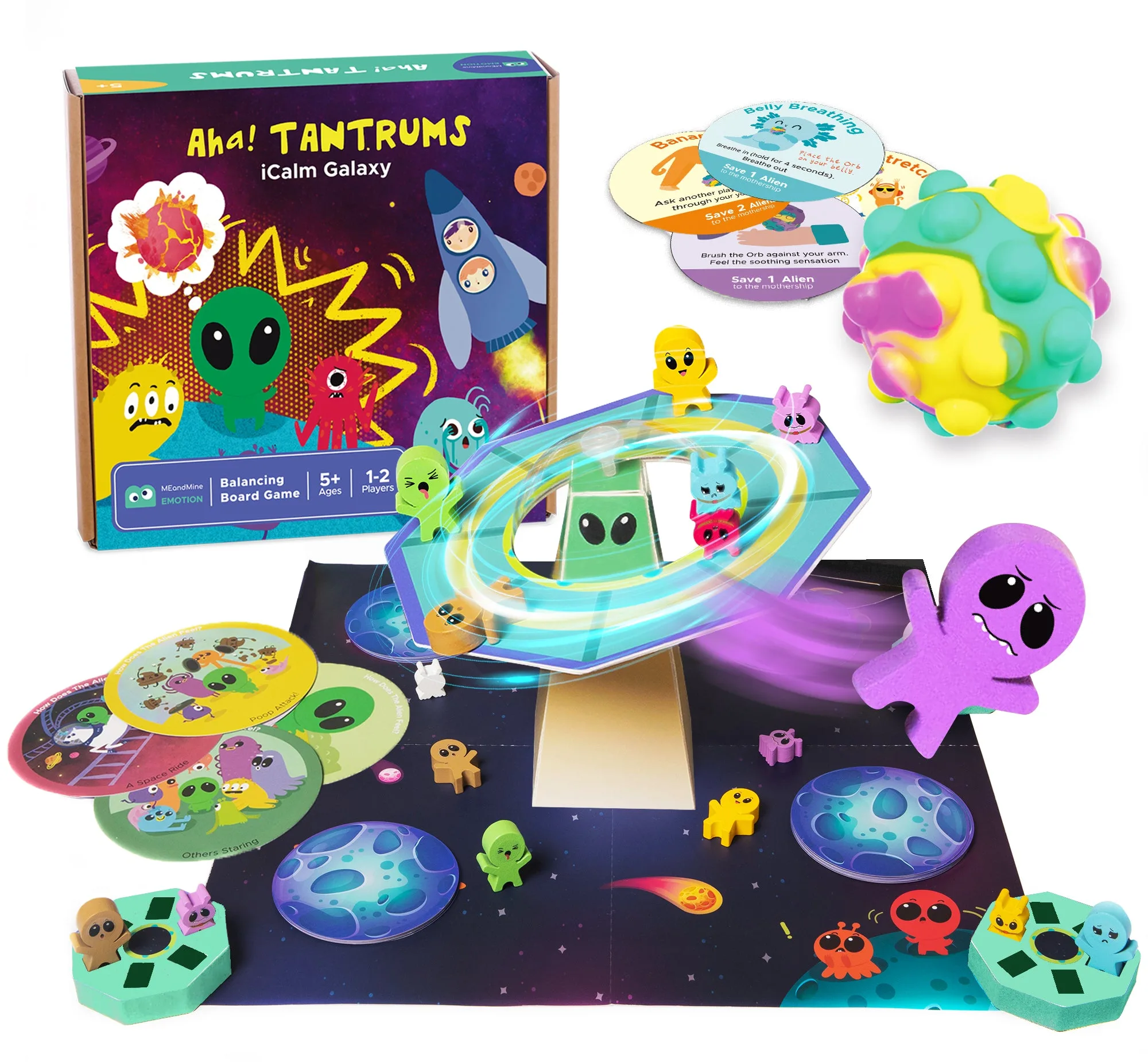
Aha! Tantrums
When to Reach for This Kit
Use the Aha! Tantrums kit when your child is in a calm, receptive state, not during a full-blown meltdown. The activities—building and playing a board game—require focus and cooperation. Ideal times include after a tantrum has passed, during a quiet afternoon, or as part of a daily routine to build emotional vocabulary. The kit is best for children who can sit for a short game (1-4 players) and are ready to learn about emotions through play.
What the Kit Does Not Cover
The kit does not provide a step-by-step script for handling a tantrum in the moment. It is a preventive and educational tool, not a crisis intervention. If your child needs immediate calming strategies during a meltdown, you may need to use other techniques first. The kit's value comes from regular use to build long-term emotional literacy, not from a single session.
How to Get Started
Start by introducing the space rescue story and the alien characters. Let your child help build the board game. Use the scenario cards to talk about different emotions and practice the calming skills together. The more you play, the more natural it becomes for your child to recognize and name feelings. Over time, these skills can transfer to real-life situations, making tantrums less frequent and easier to navigate.