Two different jobs, not two versions of the same speaker
The AIR XD 10 and AIR XD Sub 18 are not competing choices. One is a full-range top; the other is a dedicated low-frequency cabinet. Comparing them directly on a single spec misses the point of an active PA system, where each box covers a band the other is not designed to carry alone.
The useful comparison is how they divide the work, which controls each one gives you, and what you need to confirm before treating them as a matched pair.
What each cabinet is built to do
-
AIR XD 10 1x10" 2-Way Active Extended Definition Loudspeaker: The AIR XD 10 is a full-range active loudspeaker with a custom 10-inch low-frequency driver and extended low-end response down to 55 Hz. It is designed to carry the main program material on its own, so it is the top in a top-plus-sub system rather than a bass-only cabinet.

AIR XD 10 1x10" 2-Way Active Extended Definition Loudspeaker
-
AIR XD 10 1x10" 2-Way Active Extended Definition Loudspeaker: Powered by 1,500W of Class D amplification, the AIR XD 10 can reach up to 130 dB SPL while maintaining clarity and headroom. That output figure is a manufacturer claim for the cabinet, not a guarantee of a specific result in your room or venue.
-
Air XD Sub 18 1 x 18" Active Extended Definition Subwoofer: The Air XD Sub 18 is an active subwoofer built around a custom 18-inch low-frequency driver with an enlarged voice coil, intended for large-scale events and installations. Its role is low-end extension and high SPL, which is exactly the range the AIR XD 10 is not built to dominate.
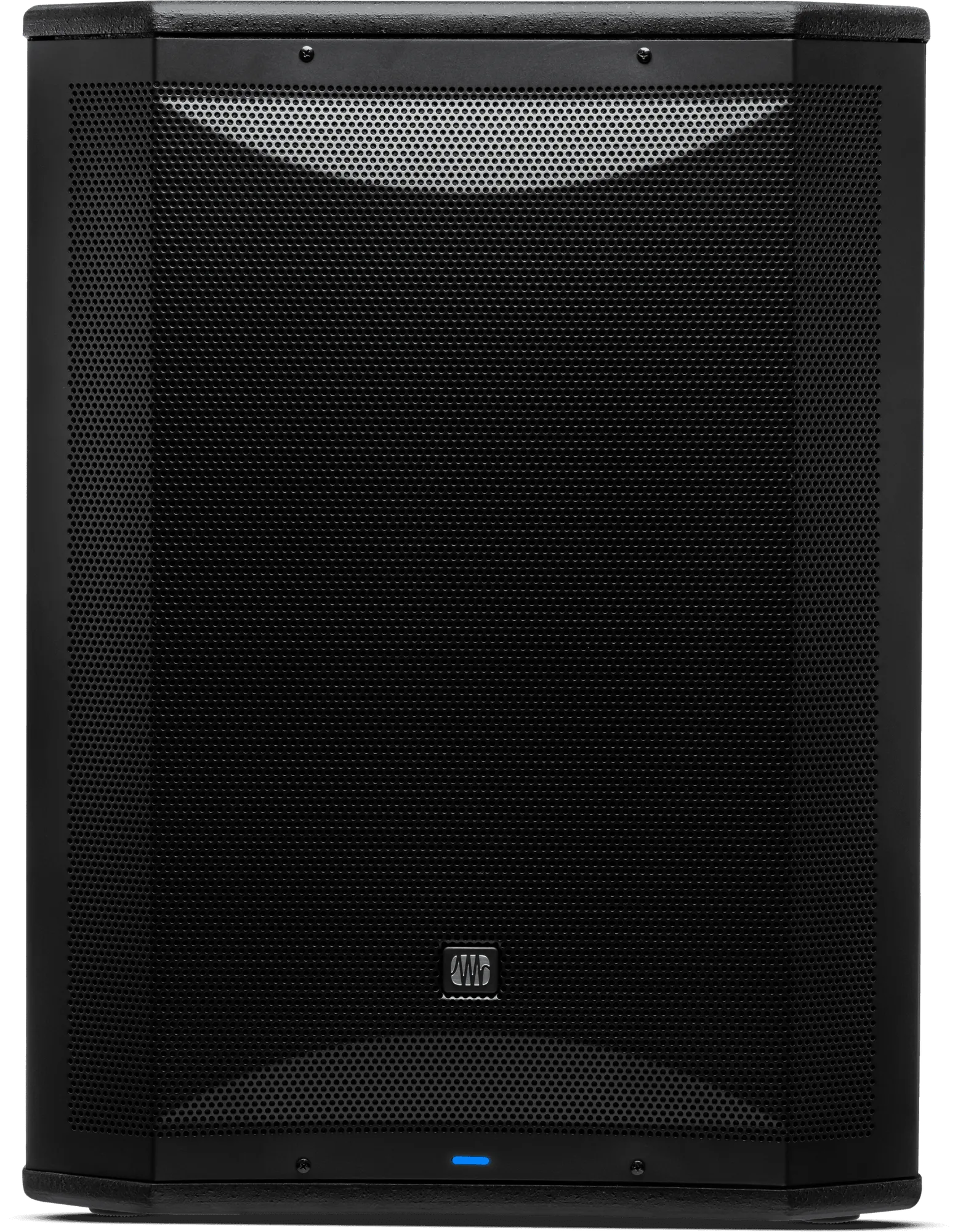
Air XD Sub 18 1 x 18" Active Extended Definition Subwoofer
-
Air XD Sub 18 1 x 18" Active Extended Definition Subwoofer: The Air XD Sub 18 is powered by 2,000W of Class D amplification and is described as delivering clean, consistent output with exceptional headroom for demanding live sound. The power difference reflects the different jobs: the sub is sized to move low frequencies at volume, not to replace a full-range top.
Why a 10-inch top with an 18-inch sub can make sense
A 10-inch top paired with an 18-inch sub is a common split when you want a compact, easy-to-place top and let a larger cabinet handle the low end. The AIR XD 10 is designed to be flown, pole-mounted, ground-stacked, or used as a floor monitor, which gives you placement options that a large sub does not.
The AIR XD Sub 18 is the opposite trade: a bigger, heavier cabinet with ground-stacking provisions, ergonomic handles, built-in caster mounting, and the option to be stacked, flown, or installed permanently. If your priority is a small top with real low-end support, this pairing follows that logic. If you need one box to do everything, neither cabinet is a substitute for the other.
Controls and connections that affect pairing
The pairing decision is less about raw power and more about whether the two cabinets can be aligned and connected the way you work.
- Tuning and crossover control: The AIR XD Sub 18 offers variable lowpass filtering, alignment delay, and cardioid/end-fire array presets. The AIR XD 10 offers onboard DSP presets, ±10 dB EQ, and performance tuning modes for speech, music playback, FOH, or monitor use. Together they give you separate control over the top and the sub, but the supplied information does not specify a recommended crossover frequency or delay value, so treat those as settings to establish for your own system rather than fixed instructions.
- Wireless pairing: Both cabinets include built-in Bluetooth with TWS Bridge Mode. The AIR XD 10 uses it for wireless stereo pairing, and the Air XD Sub 18 uses it for wireless stereo pairing with Air XD full-range speakers. That shared feature is relevant if you want to reduce cable runs between cabinets.
- Inputs and routing: The AIR XD 10 has an integrated mixer with combo mic/line and aux inputs. The Air XD Sub 18 provides flexible routing and direct outputs for integration into FOH or monitoring setups. Check that the way you plan to feed the sub matches the outputs available on your mixer or top.
- Onboard display: Both cabinets use a full-color LCD for metering, system control, and access to DSP presets and tuning. The supplied information does not give the exact display size for either model, so do not rely on a screen dimension when comparing them.
What to confirm before you buy the pair
The supplied records do not include a manufacturer-recommended crossover setting, a stated maximum number of subs per top, or a verified coverage angle for the AIR XD 10. Those are decision limits, not defects. Confirm them against the full documentation or with the seller before committing to a system design.
- Crossover and delay values: The sub offers variable lowpass filtering and alignment delay, but no specific starting values are supplied. Plan to set and verify these for your room rather than copying a number from a spec sheet.
- Coverage and placement: The AIR XD 10 is described as having multiple mounting options, but a coverage angle is not stated in the supplied information. Placement and aiming should be decided on site.
- How many subs you need: The records describe the Air XD Sub 18 as suited to large-scale events and installations, but they do not state a ratio of subs to tops. Size the system to the venue, not to a rule of thumb.
- Power and cabling: Both are active cabinets with Class D amplification, so each needs its own power. The supplied information does not list power consumption or cable requirements, so check the full manual for your installation.
Who each cabinet suits in this pairing
Choose the AIR XD 10 as your top if you want a full-range cabinet that can be flown, pole-mounted, or used as a monitor, with onboard presets and a small integrated mixer for quick setups. Choose the Air XD Sub 18 when you need low-end extension and high SPL for larger events or installed systems, and you want tuning options such as variable lowpass filtering, alignment delay, and cardioid presets.
Buy them together when you want a compact top supported by a dedicated sub. Do not buy the sub expecting it to replace a full-range speaker, and do not buy the AIR XD 10 expecting 18-inch low-end. The pairing works because each cabinet stays in its lane.