Quick Answer
The Airbar 6 cools better than a standard fan when you need wide, horizontal airflow across a medium to large room, but a standard fan may be simpler if you only need a narrow, direct breeze.
Why Direction Changes Everything
Standard fans—whether pedestal, box, or desk models—typically push air in one fixed direction, creating a narrow stream that cools whatever is directly in front of it. That's fine for a single person at a desk, but it leaves the rest of the room stagnant.
The Airbar 6 changes the game by allowing you to orient the fan vertically or horizontally. In its horizontal position, it delivers a wide, low-profile airflow that can sweep across a credenza or along the floor, reaching more of the room without taking up visual space.
For medium to large spaces, that wide horizontal throw means you feel a consistent breeze across a broader area, which can make the whole room feel cooler—not just one spot.
The Trade-Off: Power vs. Flexibility
Standard fans often have a smaller footprint and are lighter, making them easy to move from room to room. However, they lack the versatility of the Airbar 6, which can adapt to different spaces and airflow needs.
The Airbar 6 is designed to handle medium to large spaces, so it may be overkill for a small nook where a simple desk fan would suffice. But if you want a fan that can double as a space-saving horizontal blower for a living room or office, the Airbar 6's flexibility is a clear win.
You also need to consider the surface: the Airbar 6 in horizontal mode sits low, which is great for cooling a lounge area, but it may not be ideal if you need airflow at eye level, such as when you're standing or working at a counter.
Airbar 6 vs Standard Fan: Trade-Offs at a Glance
- Airflow Direction: Airbar 6 offers both vertical and horizontal airflow, allowing you to direct air widely across a room. Standard fans typically blow in one fixed direction, limiting coverage.
- Space Fit: Airbar 6's horizontal mode is low-profile and fits on credenzas or along walls, making it ideal for rooms where floor space is tight. Standard fans often require more clearance and can be bulky.
- Room Size: Airbar 6 is built for medium to large spaces, providing powerful airflow to cover a wider area. Standard fans may struggle to circulate air effectively in larger rooms. If your room is larger than 250 square feet, consider a fan with a wider throw like the Airbar 6.
- Setup & Portability: Standard fans are often lighter and easier to move, but Airbar 6's dual orientation adds versatility at the cost of a slightly larger footprint. Choose based on how often you'll relocate the fan.
Product Facts
-
Airbar® 6 Vertical or Horizontal Tower Fan: Typical tower fans are stuck being one dimensional, but the Airbar 6 allows you to have that low-profile, credenza-complementing, horizontal airflow option that has the size and power to handle medium to large size spaces. This means you can place it on a shelf or table in horizontal mode to spread air across a wide area, or stand it vertically for a more traditional tower fan effect.
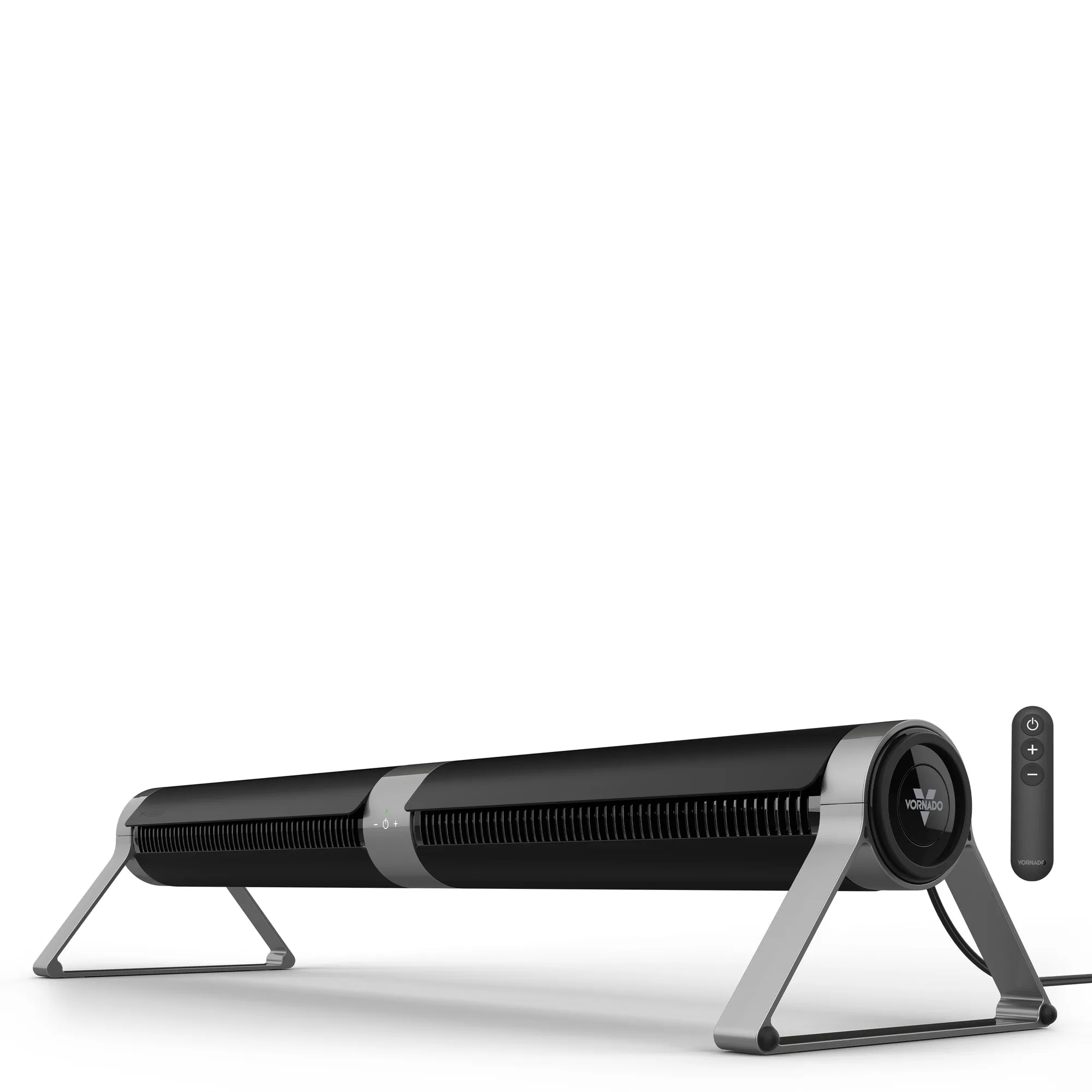
Airbar® 6 Vertical or Horizontal Tower Fan
Which Should You Choose?
Best For
- People who need wide, horizontal airflow across a medium to large room
- Those who want a low-profile fan that can sit on a credenza or shelf without taking up floor space
Not For
- Small, personal spaces where a compact desk fan or personal circulator is sufficient
- Users who need a highly portable fan to move constantly between rooms