Watercolor pencils are a versatile and often underrated tool in the model builder's arsenal. Unlike traditional paints, they offer a unique level of control and subtlety, making them perfect for weathering, panel lining, and adding fine details. If you're new to the hobby or just curious about incorporating pencils into your workflow, this guide will walk you through the basics of using AK watercolor pencils on plastic models.
AK Interactive's line of watercolor pencils is specifically designed for modelers, with a range of colors that complement their popular weathering products. In this tutorial, we'll cover the essential techniques, from choosing the right pencil to blending and sealing your work. By the end, you'll have the confidence to add this versatile medium to your modeling toolbox.
Why Choose Watercolor Pencils for Plastic Models?
Watercolor pencils offer several advantages over traditional paints. First, they are incredibly forgiving—you can apply them, activate them with water, and even wipe them off before sealing. This makes them ideal for beginners who are still learning brush control or color theory. Second, they produce a soft, translucent effect that is perfect for creating subtle gradients, stains, and shadows on your models.
Another major benefit is the lack of harsh chemicals. Unlike enamel or lacquer paints, watercolor pencils are water-based, so they have minimal odor and are easy to clean up with just water. This makes them a safer and more convenient option for hobbyists who work in small spaces or without dedicated ventilation. Plus, they are perfect for adding fine details like chipping, scratches, and rust streaks, which are often tricky to achieve with a brush.
- Water-soluble: easily activated with water for blending
- Forgiving: mistakes can be corrected before sealing
- Low odor: water-based and safe for indoor use
- Versatile: great for weathering, panel lines, and details
Getting Started: Essential Tools and Materials
Before you start, you'll need a few basic supplies. Obviously, you'll need a set of AK watercolor pencils—the AK Watercolor Pencil Red Primer is a great choice for priming or adding a subtle base tone, while the AK10020 Watercolor Pencil Red Primer is specifically designed for that purpose. For most projects, a basic set of colors like black, brown, and rust will cover most weathering needs.
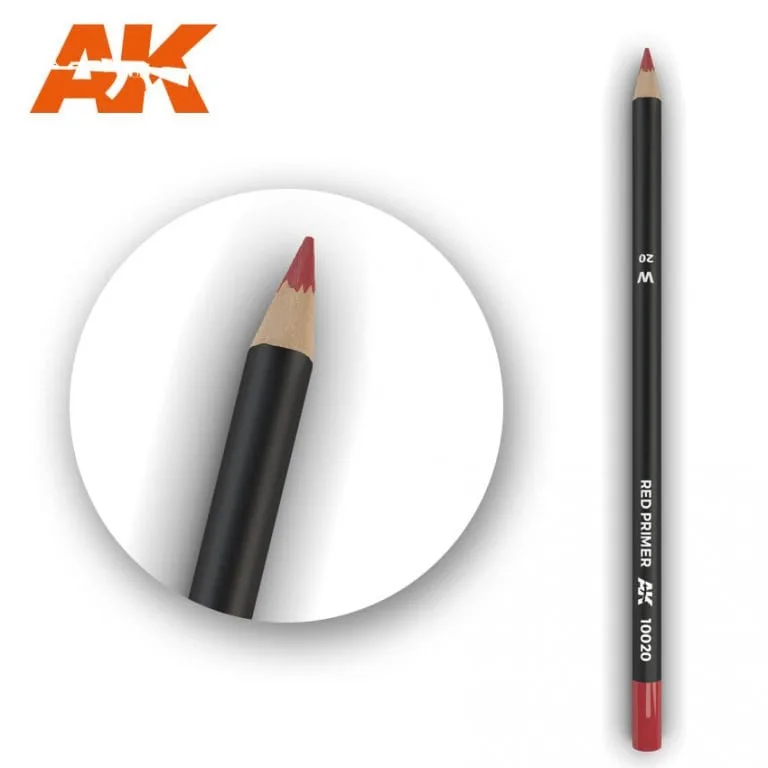
AK10020 Watercolor Pencil Red Primer
You'll also need a fine brush for applying water, a palette or small dish for mixing, and some paper towels for blotting. A good quality watercolor paper or a piece of scrap plastic to test your techniques on is also recommended. Finally, you'll want a clear sealant like a matte varnish to protect your work once you're satisfied with the result.
- AK watercolor pencils (start with a few basic colors)
- Fine brush for water application
- Palette or small dish for mixing
- Paper towels for blotting and corrections
- Matte varnish for sealing
Step-by-Step: Applying Watercolor Pencils to Plastic Models
Start by preparing your model surface. Ensure it is clean and free of any oils or dust. If the model is painted, a matte finish will help the pencil grip better. If you're working on bare plastic, you may want to apply a primer first—this is where a product like the AK Watercolor Pencil Red Primer can be useful, as it not only primes but also provides a toothy surface for the pencil.
Next, sketch your design lightly with the pencil. You can apply the color directly to the model or use a piece of paper to pick up pigment and then transfer it with a brush. For fine lines, keep the pencil sharpened. For broader areas, you can use the side of the lead to shade. Once you have your base color down, use a damp brush to activate the watercolor effect. The pigment will dissolve and spread, creating a smooth, translucent wash. Work in small sections to control the amount of water and avoid over-saturating the plastic.
- Always test on a scrap piece first to see how the color reacts
- Use a light touch when applying the pencil; you can always build up layers
- Keep a paper towel handy to blot excess water and lift pigment
- For crisp lines, let the pencil dry completely before activating with water
Blending and Layering Techniques
One of the strengths of watercolor pencils is their ability to blend seamlessly. To create a gradient, apply two or more colors next to each other and then use a damp brush to merge them. This is perfect for creating realistic stains, oil leaks, or heat discoloration on gun barrels. For more control, you can also use the pencil directly on the damp surface—this will give you a more intense color that you can then blend out.
Layering is another key technique. Start with a light base color, let it dry, then apply a darker shade on top. This creates depth and richness. For example, to create a rust effect, you might layer a light brown, then a darker rust, and finally a touch of orange. Remember to seal each layer with a thin coat of matte varnish if you plan to work over it again—this prevents the previous layer from reactivating.
Sealing and Protecting Your Work
Once you're satisfied with your pencil work, it's crucial to seal it to prevent smudging and protect it from handling. A matte varnish is usually the best choice, as it preserves the flat finish typical of military and scale models. You can apply it with an airbrush or a brush, but make sure it's a thin, even coat. Some modelers prefer to use a gloss varnish first to protect the pencil and then apply a matte coat on top for the final finish.
Sealing is especially important if you plan to handle the model frequently or if you're going to apply additional weathering products over the pencil work. For instance, you might use a product like the AK306 Salt Streaks For Ships over your pencil shading to add extra texture. Just make sure the pencil layer is fully sealed before you do.
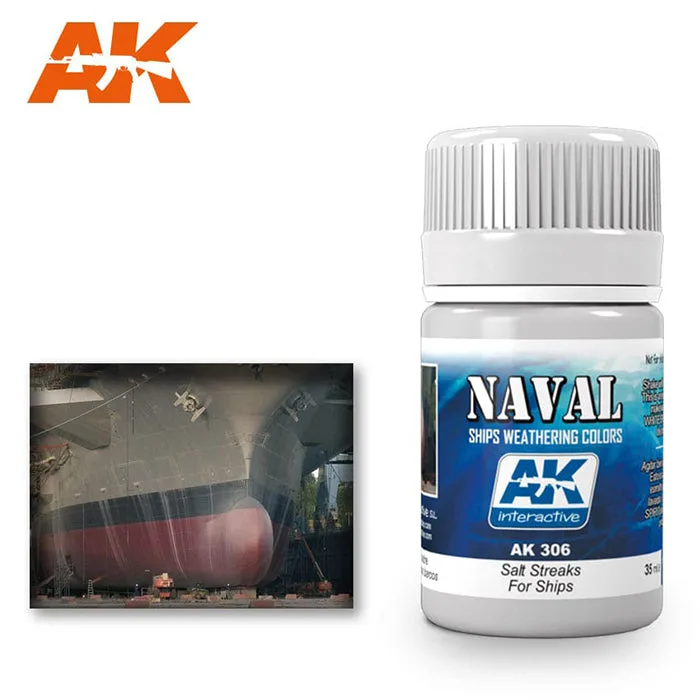
AK306 Salt Streaks For Ships
Watercolor pencils are a fantastic addition to any modeler's toolkit, offering a level of control and subtlety that's hard to achieve with paints alone. With a little practice, you'll be able to create stunning weathering effects, fine details, and smooth gradients. If you're ready to give them a try, check out the AK Watercolor Pencil Red Primer from Panda Hobby to get started on your next project!